


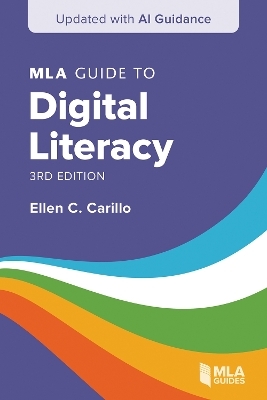
MLA Guide to Digital Literacy
Seiten
2026
|
Third Edition
Modern Language Association of America (Verlag)
978-1-60329-739-4 (ISBN)
Modern Language Association of America (Verlag)
978-1-60329-739-4 (ISBN)
- Noch nicht erschienen (ca. März 2026)
- Portofrei ab CHF 40
- Auch auf Rechnung
- Artikel merken
Updated edition empowering students with practical strategies to evaluate online content, spot fake news, and analyze data. It guides learners in navigating social media and research tools while tackling ethical challenges, deepfakes, and the evolving media landscape with engaging, hands-on activities.
Updated edition providing students with hands-on strategies for digital literacy.
The third edition of this best-selling classroom guide helps students understand why digital literacy is a crucial skill for their education, future careers, and participation in democracy. Offering practical guidance for assessing information online, this guide provides students with the tools to locate reliable sources among the clickbait and viral videos that pervade the web. The guide's hands-on activities, germane readings, and lesson plans give students strategies for reading and analyzing data visualizations; finding and evaluating credible sources; learning how to spot fake news; fact-checking; crafting a research question; effectively conducting searches on Google and on library catalogs and databases; finding peer-reviewed publications; evaluating primary sources; and understanding disinformation and misinformation, filter bubbles, propaganda, and satire in a variety of sources—including websites, social media posts, infographics, videos, and more, on platforms like Facebook, X (formerly Twitter), Instagram, TikTok, and YouTube.
New to the third edition:
• a chapter on generative AI (GenAI) including information on how GenAI is trained, uses of GenAI tools, GenAI-powered search engines, prompting GenAI, and evaluating GenAI output
• a consideration of ethical issues related to GenAI, including impacts on the environment and on intellectual property, privacy, and bias in searches
• a discussion of GenAI and plagiarism
• an updated discussion of deepfakes, fake headlines, and other forms of misinformation
• student exercises on using GenAI
• a lesson plan that invites students to reflect on the benefits and limitations of using GenAI to support their reading practices
Updated with AI Guidance
Updated edition providing students with hands-on strategies for digital literacy.
The third edition of this best-selling classroom guide helps students understand why digital literacy is a crucial skill for their education, future careers, and participation in democracy. Offering practical guidance for assessing information online, this guide provides students with the tools to locate reliable sources among the clickbait and viral videos that pervade the web. The guide's hands-on activities, germane readings, and lesson plans give students strategies for reading and analyzing data visualizations; finding and evaluating credible sources; learning how to spot fake news; fact-checking; crafting a research question; effectively conducting searches on Google and on library catalogs and databases; finding peer-reviewed publications; evaluating primary sources; and understanding disinformation and misinformation, filter bubbles, propaganda, and satire in a variety of sources—including websites, social media posts, infographics, videos, and more, on platforms like Facebook, X (formerly Twitter), Instagram, TikTok, and YouTube.
New to the third edition:
• a chapter on generative AI (GenAI) including information on how GenAI is trained, uses of GenAI tools, GenAI-powered search engines, prompting GenAI, and evaluating GenAI output
• a consideration of ethical issues related to GenAI, including impacts on the environment and on intellectual property, privacy, and bias in searches
• a discussion of GenAI and plagiarism
• an updated discussion of deepfakes, fake headlines, and other forms of misinformation
• student exercises on using GenAI
• a lesson plan that invites students to reflect on the benefits and limitations of using GenAI to support their reading practices
Updated with AI Guidance
Ellen C. Carillo is professor of English and writing coordinator at the University of Connecticut. She is the author of The Radical Case for Teaching Skim Reading in First-Year Writing (2025), The Hidden Inequities in Labor-Based Contract Grading (2021), Teaching Readers in Post-truth America (2018), and Securing a Place for Reading in Composition: The Importance of Teaching for Transfer (2015).
| Erscheint lt. Verlag | 6.3.2026 |
|---|---|
| Reihe/Serie | MLA Guides |
| Verlagsort | New York |
| Sprache | englisch |
| Maße | 152 x 229 mm |
| Themenwelt | Schulbuch / Wörterbuch ► Unterrichtsvorbereitung ► Unterrichts-Handreichungen |
| Sozialwissenschaften ► Kommunikation / Medien ► Buchhandel / Bibliothekswesen | |
| Sozialwissenschaften ► Pädagogik | |
| ISBN-10 | 1-60329-739-1 / 1603297391 |
| ISBN-13 | 978-1-60329-739-4 / 9781603297394 |
| Zustand | Neuware |
| Informationen gemäß Produktsicherheitsverordnung (GPSR) | |
| Haben Sie eine Frage zum Produkt? |
Mehr entdecken
aus dem Bereich



aus dem Bereich
praxiserprobte Arbeitshilfen für Mentorinnen und Mentoren
Buch (2025)
Raabe (Verlag)
CHF 48,85
Flugsimulation mit Microsoft Flight Simulator, X-Plane, AeroflyFS und …
Buch | Softcover (2024)
Springer Fachmedien Wiesbaden (Verlag)
CHF 41,95
elektronische Lehrmittel in den modernen Unterricht integrieren
Buch (2024)
Hanser, Carl (Verlag)
CHF 69,95


