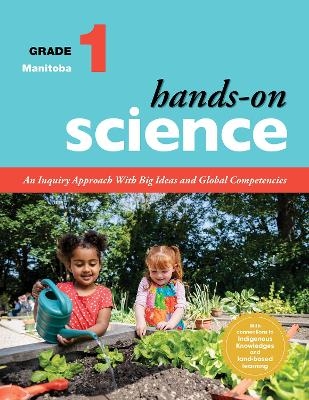
Hands-On Science for Manitoba, Grade 1
Portage & Main Press (Verlag)
978-1-77492-151-7 (ISBN)
- Noch nicht erschienen (ca. Oktober 2026)
- Versandkostenfrei
- Auch auf Rechnung
- Artikel merken
The Big Ideas for grade 1 are addressed in the following units:
Properties of Matter (Matter)
What is Energy? (Energy and Evolution)
Patterns in the Sky and on Earth (Space Science)
Needs and Variety of Living Things (Life Systems and Evolution)
Useful features include:
the components of an inquiry-based approach
a four-part instructional process—engage, explore, embed, and enhance
ideas to incorporate culturally appropriate teaching methodologies from Indigenous worldviews, including Traditional Ecological Knowledge (TEK) and Indigenous ways of knowing, doing, and being
a fully developed assessment plan that includes opportunities for assessment for, as, and of learning
a focus on the six global competencies identified in the Manitoba science curriculum in all lessons
Makerspaces that emphasize practical scientific skills and knowledge through problem-solving and design challenges
Get FREE digital resources with your book purchase. Follow the instructions on the "Access Digital Resources" page at the back of the book to download these resources.
Jennifer E. Lawson, PhD, is the creator of the Hands-On books published by Portage & Main Press. As senior writer and editor for the series, she has contributed to more than 50 publications for teachers and students. Jennifer provides professional development workshops for educators locally, nationally, and virtually, and is a Workplace Wellness Advisor. Her most recent book is a collective effort called Teacher, Take Care: A Guide to Well-Being and Workplace Wellness for Educators. She is also one of the founders of Mission to Mexico, an organization that supports schools in some of the most impoverished communities in Puerto Vallarta. Throughout her extensive career in education, Jennifer has worked as a classroom teacher, resource and special education teacher, consultant, principal, university instructor, and school trustee. She lives with her family in Winnipeg, Manitoba. For over 20 years, Kellie Ierullo (she, her, hers) has been an educator with the Toronto District School Board including as a classroom teacher, special education teacher, and now as a teacher-librarian, technology chair and science/STEM lead educator. Kellie is passionate about helping teachers engage students through meaningful coding and STEM activities and encouraging students to move beyond navigating technology to creating it for themselves. Kellie lives in Woodbridge, Ontario with her family. Greg Johnson, BSc in physics, BEd, is a classroom science teacher in Manitoba. He has taught in rural Manitoba, New Zealand, and in the St. James-Assiniboia School Division. He has been at Westwood Collegiate for 16 years as a teacher and department head. Specializing in physics, Greg teaches grades 11–12 Physics and IB Physics. He has also taught IB Chemistry, Science, and Mathematics. Greg has been a board member of the Science Teachers’ Association of Manitoba since 2008, as member- at-large and vice president. He is interested in technology and maker education, which has led him to create a maker space and maker club at Westwood Collegiate. Greg has been a contributor to several departments of education initiatives and is currently part of the Literacy with Information and Communication Technology (LwICT) coding infusion team. Greg spends his spare time with his family and coaching hockey and baseball. Knowledge Keeper and writer Richelle North Star Scott (Giiwedinong Anong) says Aniin! I am of Anishinaabe and Métis descent, and my Ancestors are from St Peter’s Reserve. I am the mother of three beautiful daughters: Amanda, Tehya, and Riel. I am a KooKoo of a fabulous grandson named Darius, but I call him Noozhis (which means grandchild). I am the Coordinator of Indigenous Inclusion Education for the St James-Assiniboia School Division. I am a Mide woman, Pipe Carrier, Water Carrier, and Sundancer. I have completed my mystery* in land-based education. (*I don’t use "master's" as it is a gender-binary word.)
Introduction to Hands-On Science for Manitoba, Grade 1
About Hands-On Science
The Dimensions of The Manitoba Science Curriculum
Hands-On Science Knowledge Areas and Outcomes
Global Competencies in Science
Enduring Understandings
Guiding Questions
Hands-On Science Principles
The Inquiry Approach to Science
Cultural Connections
Indigenous Ways of Knowing, Being, and Doing
Grade 1 Learning Outcomes
References
How To Use Hands-On Science in Your Classroom
Units
Makerspaces
Classroom Environment
Planning Units—Timelines
Classroom Management
Classroom Safety
Land-Based Learning
Practical Scientific Skills: Guidelines for Teachers
Observing
Questioning
Exploring
Classifying
Measuring
Communicating, Analyzing, and Interpreting
Predicting
Inferring
Inquiry Through Investigation and Experimentation
Inquiry Through Research
Online Considerations
Addressing Students’ Early Literacy Needs
References
The Hands-On Science Assessment Plan
Assessment for Learning
Assessment as Learning
Assessment of Learning
Performance Assessment
Portfolios
Indigenous Perspectives on Assessment
Important Note to Teachers
References
Reproducibles
Unit 1: Properties of Matter
About This Unit
Resources for Students
1 What Do We Know About Matter: Solids, Liquids, and Gases?
2 What Do We Know About Objects and Materials?
3 How Can We Describe and Sort Objects and Materials?
4 Why Are Some Materials Better Than Others for Certain Jobs?
5 How Can Different Materials Be Used to Construct Objects?
6 How Do We Decide Which Materials Are Best to Do a Job?
7 Why Is It Important to Choose the Right Material for Building Structures?
8 How Can We Build Objects With Recycled Materials?
Unit 2: What Is Energy?
About This Unit
Resources for Students
1 What Do We Know About Energy?
2 How Do We Know We Get Energy From the Sun?
3 How Do Living Things Get Energy?
4 What Are Some Everyday Uses of Energy?
5 How Do We Use Energy Safely?
6 What Happens When Energy Is Lost?
7 How Can We Save Electricity?
8 How Do We Use Energy Throughout the Seasons?
Unit 3: Patterns in the Sky and on Earth
About This Unit
Resources for Students
1 What Do We Already Know About Patterns in the Sky and on Earth?
2 What Are Some Differences Between Day and Night?
3 How Are the Months of the Year the Same and Different?
4 How Do We Know the Sun Gives Us Heat?
5 How Does the Temperature Change Throughout the Day?
6 How Do Seasonal Changes Affect Plants?
7 How Do Seasonal Changes Affect Animals?
8 What Activities Do People Do During Different Seasons?
Unit 4: Needs and Variety of Living Things
About This Unit
Resources for Students
1 What Do We Know About Living Things?
2 How Are Living and Non-living Things Different?
3 What Happened to Living Things from Long Ago
4 What Are the Needs of Living Things?
5 How Do Animals Meet Their Needs in Their Local Environment?
6 What Do Plants Need to Stay Alive and Healthy?
7 How Do Plants and Animals Work Together in the Environment?
8 How Do We Maintain a Healthy Environment for All Living Things?
| Erscheint lt. Verlag | 22.10.2026 |
|---|---|
| Co-Autor | Kellie Ierullo |
| Mitarbeit |
Berater: Greg Johnson, Richelle North Star Scott |
| Zusatzinfo | Illustrations |
| Sprache | englisch |
| Maße | 215 x 279 mm |
| Themenwelt | Schulbuch / Wörterbuch ► Unterrichtsvorbereitung |
| Sozialwissenschaften ► Pädagogik ► Schulpädagogik / Grundschule | |
| ISBN-10 | 1-77492-151-0 / 1774921510 |
| ISBN-13 | 978-1-77492-151-7 / 9781774921517 |
| Zustand | Neuware |
| Informationen gemäß Produktsicherheitsverordnung (GPSR) | |
| Haben Sie eine Frage zum Produkt? |
aus dem Bereich