


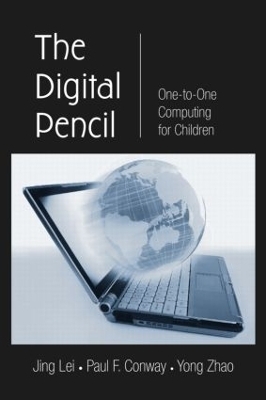
The Digital Pencil
One-to-One Computing for Children
Seiten
2007
Routledge (Verlag)
978-0-8058-6060-3 (ISBN)
Routledge (Verlag)
978-0-8058-6060-3 (ISBN)
Takes a historical and international look at the "digital pencil" movement to equip every student with a computing device with wireless connection. Using an ecological perspective as an overarching framework, this book presents discussions about a set of complex and critical issue facing policy makers, educators, students, parents and the public.
This book takes a serious historical and international look at the "digital pencil" movement to equip every student with a computing device with wireless connection. Using an ecological perspective as an overarching framework, and drawing on their own studies and available literature that illuminate the issues related to one-to-one computing, the authors present well-reasoned discussions about a set of complex and critical issue facing policy makers, educators, students, parents, and the general public.
The Digital Pencil addresses four key questions:
Is the digital pencil a good idea? The authors analyze the costs and benefits of one-to-one computing programs through consideration of multiple indicators and examine the evaluation reports of various projects within their analytical framework to present a comprehensive summary of outcomes of one-to-one computing projects.
What happens when each child has a networked computer? The authors analyze existing data with the goal of gaining insights and making suggestions and recommendations for policy makers, teachers, and parents.
What should schools purchase or lease – is there an ideal device? These authors examine the relative advantages and disadvantages of different devices and implementation schemes.
How do we know if one-to-one computing is making a difference? The authors review the evaluation plans of the various projects and propose a framework for comprehensive evaluation and research on one-to-one computing.
This book is intended for researchers, school administrators, educational technology professionals, and policy makers in the U.S. and around the world, and as a supplemental text for advanced courses in education, technology, and technological innovation.
This book takes a serious historical and international look at the "digital pencil" movement to equip every student with a computing device with wireless connection. Using an ecological perspective as an overarching framework, and drawing on their own studies and available literature that illuminate the issues related to one-to-one computing, the authors present well-reasoned discussions about a set of complex and critical issue facing policy makers, educators, students, parents, and the general public.
The Digital Pencil addresses four key questions:
Is the digital pencil a good idea? The authors analyze the costs and benefits of one-to-one computing programs through consideration of multiple indicators and examine the evaluation reports of various projects within their analytical framework to present a comprehensive summary of outcomes of one-to-one computing projects.
What happens when each child has a networked computer? The authors analyze existing data with the goal of gaining insights and making suggestions and recommendations for policy makers, teachers, and parents.
What should schools purchase or lease – is there an ideal device? These authors examine the relative advantages and disadvantages of different devices and implementation schemes.
How do we know if one-to-one computing is making a difference? The authors review the evaluation plans of the various projects and propose a framework for comprehensive evaluation and research on one-to-one computing.
This book is intended for researchers, school administrators, educational technology professionals, and policy makers in the U.S. and around the world, and as a supplemental text for advanced courses in education, technology, and technological innovation.
Jing Lei
@contents: Selected Contents:
1 The Digital Pencil: An Introduction
2 A Historical View of Technology in Schools
3 Arguments for One-to-One Computing
4 Conditions for Laptop Uses in Schools
5 How Students Use Laptop Computers
6 Laptops vs. Handhelds
7 Parents and One-to-One Computing
8 Evaluating and Studying One-to-One Computing
9 Final Thoughts on Laptops for Children
| Erscheint lt. Verlag | 19.9.2007 |
|---|---|
| Verlagsort | New York |
| Sprache | englisch |
| Maße | 152 x 229 mm |
| Gewicht | 660 g |
| Themenwelt | Schulbuch / Wörterbuch ► Unterrichtsvorbereitung ► Unterrichts-Handreichungen |
| Sozialwissenschaften ► Pädagogik | |
| ISBN-10 | 0-8058-6060-6 / 0805860606 |
| ISBN-13 | 978-0-8058-6060-3 / 9780805860603 |
| Zustand | Neuware |
| Informationen gemäß Produktsicherheitsverordnung (GPSR) | |
| Haben Sie eine Frage zum Produkt? |
Mehr entdecken
aus dem Bereich


aus dem Bereich
praxiserprobte Arbeitshilfen für Mentorinnen und Mentoren
Buch (2025)
Raabe (Verlag)
CHF 48,85
Flugsimulation mit Microsoft Flight Simulator, X-Plane, AeroflyFS und …
Buch | Softcover (2024)
Springer Fachmedien Wiesbaden (Verlag)
CHF 41,95


