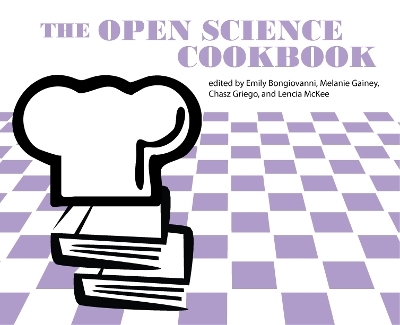
The Open Science Cookbook
Association of College & Research Libraries (Verlag)
9798892552967 (ISBN)
Open science promotes more transparent, accessible, and reproducible research and extends beyond the sciences, fostering this inclusivity across all disciplines. There are many benefits to practicing open science, including opportunities for interdisciplinary collaboration, increased visibility and impact, and enhanced reproducibility and reusability of research.
The Open Science Cookbook provides a wide variety of lesson plans and learning activities for supporting collaborative, transparent, openly accessible, and reproducible research. In five sections, it has something for beginners to more advanced practitioners and for different audience sizes.
Program Development
Instruction
Outreach
Events
Collaborations and Partnerships
Just as freely sharing data and workflows enables key breakthroughs in major fields, sharing open science practices and resources creates an even stronger foundation for this necessary growth at institutions around the world. The Open Science Cookbook offers innovative ways for academic libraries to promote open science through advocacy and education. This book is available as an open access edition.
Emily Bongiovanni (she/her) is the open knowledge librarian at Carnegie Mellon University (CMU), where she supports open science, open access, and open educational resources activities across campus. Before joining CMU, Emily was the scholarly communications librarian at Colorado School of Mines, where she promoted open science and supported faculty and students throughout the research lifecycle. She went to Denison University for her undergraduate degree and earned her master of library and information science at the University of Denver. Melanie A. Gainey (she/her) is director of the Open Science and Data Collaborations Program and a STEM librarian at Carnegie Mellon University. Melanie co-created the Open Science and Data Collaborations Program at Carnegie Mellon University Libraries in 2018. In her current role as director, she continues to create and support open science initiatives. She also supports the research, teaching, and learning of students and faculty in the Biological Sciences, Biomedical Engineering, and Computational Biology Departments and at the Neuroscience Institute. Prior to joining CMU Libraries in 2017, Melanie was a postdoctoral researcher in the Helen Wills Neuroscience Institute at the University of California, Berkeley, studying plasticity of neural circuits in response to changes in sensory experience. She holds a PhD in neuroscience from Brandeis University. Chasz Griego (he/him) is a STEM librarian and former open science postdoctoral associate at Carnegie Mellon University. Chasz supports researchers, educators, and students in the Chemistry, Chemical Engineering, and Materials Science and Engineering Departments at CMU. He also leads and supports open science teaching and research initiatives, particularly in the areas of reproducibility in computational research. Prior to joining CMU Libraries, Chasz was a doctoral student studying computational models to accelerate catalyst material discovery at the University of Pittsburgh. He holds a PhD in chemical engineering. Lencia McKee (she/her) is a research data librarian in the research data and open scholarship (RDOS) department at Cornell University Library. As part of the RDOS team, she supports research data services through data and code curation, management, education, and outreach, while promoting good data and code stewardship throughout the research data lifecycle. She is also a member of the Cornell data services (CDS) consulting team. Before joining Cornell University, Lencia was an open science program coordinator at Carnegie Mellon University and led the design and development of open science program initiatives and coordinated and collaborated with individuals across the university who support open science. Lencia is a first-generation college graduate and holds a BA in speech, language, and hearing, as well as a BA in linguistics from the University of Kansas. She also earned an MLIS with a specialization in archival studies from Emporia State University.
Foreword
Keith Webster
Introduction
Section 1: Program Development
Chapter 1. An Open Science Potluck: Building a Program that Engages your Campus Community
Melanie Gainey, Lencia McKee, Emily Bongiovanni, and Sarah Young
Chapter 2. Establishing an Effective Open Science Team: A Recipe for Cultural Change in Institutions
Gerard Castro-Linares, Sabrina Meindlhumer, Esther Plomp, Xuehang Wang, and Sebastian WeingÄrtner
Chapter 3. Growing Open Science Services from the Ground Up
Devin Soper, Renaine Julian, and Neelam Bharti
Chapter 4. Creating an Open Science Librarian Role
Kassidy Hof-Mahoney and Renaine Julian
Chapter 5. The Library is Not Enough: Building the Data Governance Community at Your Institution
Abigail Goben, Heather Coates, and Kristin Briney
Chapter 6. Operating a Budget-Friendly Open Publishing Buffet
Seth Vuletich, Danielle Ostendorf, Joseph Kraus, and Brianna Buljung
Section 2: Instruction
Chapter 7. Spicy Data Skills Open Science Program with Library Carpentry
Carlene Barton, Jodie Double, Nilani Ganeshwaran, Ann James, Phil Reed, and Jennifer Stubbs
Chapter 8. Undergraduate Chefs Dishing Reproducible Research
Chasz Griego
Chapter 9. Creating a Buffet of Open Datasets and Case Studies for Appetizing Data Science Instruction
Catherine R. Barber and Anna Xiong
Chapter 10. Arts x Eship x Copyright: Teaching Arts Entrepreneurs about Copyright
Ashley Werlinich and Jennifer McKee
Section 3: Outreach
Chapter 11. Engaging Small Group Open Access Education for STEM Students and Faculty
Michelle E. Wilson and Sarah Weiss
Chapter 12. When Plating Matters: Delivering Data Literacy through Graphical Handouts
Renata Goncalves Curty, Greg JanÉe, and Julien Brun
Chapter 13. Creating a Feast to Embrace Open Data Mandates
Katy Smith
Chapter 14. No Substitutions: Preparing for Open Science Training by Sharing Your Own Research Protocol
Stephen Gabrielson and Melissa A. Ratajeski
Chapter 15. Increasing Visibility and Discoverability of Electronic Theses and Dissertations Using Linked Open Data: A Simple Process for Uploading Metadata to Wikidata
Steven J. Baskauf and Shenmeng Xu
Chapter 16. Cooking up a Cloud-Based Research Environment: A Taste of Reproducible Computational Text Analysis with Open Data
Fernando Rios and Jeffrey C. Oliver
Section 4: Events
Chapter 17. Cooking Up an Open Science Campus Symposium
Annette Day
Chapter 18. From Raw to Well-Done: A Successful Undergraduate Research Journey to Open Access
Tatiana Usova and Reya Saliba
Chapter 19. More Cooks in the Kitchen: Hosting a University-Wide Celebration of Faculty Scholarship
Cara Forster
Section 5: Collaborations and Partnerships
Chapter 20. Delicious Synergy: Using DMPs to Build Library Engagement with Data-Intensive Student Programs
Greg JanÉe, Renata Curty, and Julien Brun
Chapter 21. Infusing Open Science Ingredients into Evidence Synthesis to Create a Rich Medley for Researcher Support
Melanie Gainey and Sarah Young
Chapter 22. Bibliometric Fusion: An Open Science Collaborative Project on Research Collaboration Network Mapping
Shenmeng Xu and Steven J. Baskauf
Chapter 23. Layering the Community Cake: Making a Geo-Enabled LibGuide for Community Connection and Development
Barbara MacLennan and Frank Lafone
Chapter 24. Undergraduate Service with a Side of Community Science
Carl O. DiNardo
| Erscheinungsdatum | 05.07.2025 |
|---|---|
| Sprache | englisch |
| Maße | 216 x 267 mm |
| Gewicht | 454 g |
| Themenwelt | Schulbuch / Wörterbuch ► Unterrichtsvorbereitung |
| Sozialwissenschaften ► Kommunikation / Medien ► Buchhandel / Bibliothekswesen | |
| Sozialwissenschaften ► Pädagogik | |
| ISBN-13 | 9798892552967 / 9798892552967 |
| Zustand | Neuware |
| Informationen gemäß Produktsicherheitsverordnung (GPSR) | |
| Haben Sie eine Frage zum Produkt? |
aus dem Bereich