


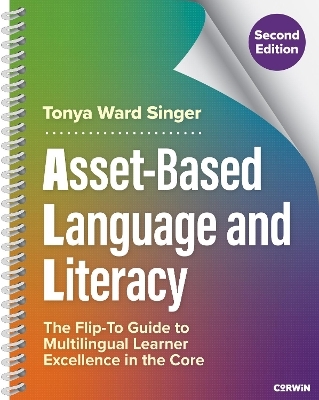
Asset-Based Language and Literacy
Corwin Press Inc (Verlag)
978-1-0719-5531-4 (ISBN)
Asset-Based Language and Literacy is the essential guide for K–12 teachers to ensure all students—including multilingual learners (MLs)—thrive with the rigorous content literacy and language demands of school. Building on the proven pedagogy and practical flip-to format of the best-selling first edition, Tonya Ward Singer offers essential updates that help educators center ML assets and deepen collaborative inquiry to ensure MLs belong and thrive in every classroom, every day.
The user-friendly flip-to format and color-coded resources help busy teachers find exactly what they need when they need it. Popular features include:
Practical strategies for scaffolding language, concepts, and academic literacy in your daily lessons
Differentiation guides for personalizing instruction to students’ assets and learning priorities
Effective teaching routines to strengthen student conversations, close reading, and rigorous writing.
The Six Essentials framework to help teachers, co-teachers, and teams deepen their impact with MLs and all students.
Asset-Based Language and Literacy equips educators with confidence and tools to create high-challenge, high-support learning environments to ensure all students thrive. With a focus on practical research-based strategies, this is your go-to guide for building collective efficacy for every teacher to be an ML teacher!
Tonya Ward Singer is the founder of Courageous Literacy LLC, an organization that helps K-12 educators advance literacy and language learning in culturally and linguistically rich schools. Teachers and administrators describe Tonya’s work as groundbreaking, dynamic, practical, relevant, and impactful. Tonya is the author of bestsellers EL Excellence Every Day and Opening Doors to Equity. She co-authored Breaking Down the Wall and literacy curricula for international publishers. Tonya has taught across multiple grade levels and excels as an international consultant helping schools build collective efficacy of all teachers through job-embedded, impactful professional learning. Beyond her work in schools, Tonya co-facilitates dialogues in non-profit organizations committed to truth seeking and transforming legacies of racial oppression. Contact Tonya at: @TonyaWardSinger www.tonyasinger.com
SECTION I: ESSENTIALS FOR MULTILINGUAL EXCELLENCE
1. INTRODUCTION
Equal Access to Academic Excellence
Every Teacher an ML Teacher
Six Essentials for Equitable Impact
Teaching and Leading Beyond the Labels
Practical Ways to Use This Book
2. ESSENTIAL MINDSETS
Mindsets Matter
Value Multilingual Learners’ Assets
Expect Excellence From Every Learner
Reflect in Inquiry About Your Impact
SECTION II: ENGAGE EVERY LEARNER
3. ENGAGE EVERY LEARNER
Defining Engagement and Active Participation
Structure Peer Conversations in Every Lesson
Practical Planning for Peer Conversations
Integrating Active Participation Strategies
3.1Whole-Class Conversation Structures
3.2Partner Conversation Structures
3.3Small-Group Conversation Structures
3.4Up and Moving Conversation Structures
3.5Fishbowl Structure and Socratic Seminar
3.6Observe and Listen to Conversations as Formative Data
3.7Inquiry for Impact to Strengthen Student Conversations
3.8Total Physical Response Strategies
3.9Shared Reading and Annotation Strategies
3.10Collaborate to Write (and Represent) Strategies
SECTION III: SUPPORT ACCESS TO EXCELLENCE EVERY DAY
4. SCAFFOLDING TO STUDENT ASSETS
Scaffolding through the Six Essentials
Supporting Content and the Language of Instruction
Adapting Supports to Students
Resources to Help You Plan and Adapt Supports
5. BUILD BACKGROUND AND SUPPORT ACCESS
5.1Connect to Students’ Prior Knowledge and Experiences
5.2Build Background in Essential Concepts and Vocabulary
5.3Value Students′ Linguistic Assets in Action
5.4Supporting Access and Active Participation of Emerging MLs
5.5Teach Vocabulary with Direct Instruction or the Frayer Model
5.6 Use Cognates to Teach Vocabulary and Support Comprehension
5.7Model Through Teacher Action
5.8Model Expectations with an Exemplar
5.9Collaborate to Contrast Exemplars
5.10 Collaborate to Evaluate an Exemplar With a Rubric
5.11 Choose Texts that Value and Mirror Students′ Assets
6. SCAFFOLD LANGUAGE DURING A TASK
Anticipating the Linguistic Scaffolds Before a Lesson
Engage-Observe-Support to Adapt Linguistic Scaffolds
Differentiate Linguistic Scaffolds Along a Continuum
Tips to Be Strategic
6.1Linguistic Frames
6.2Word Banks
6.3Word Bank Table
6.4Sentence Chart
6.5Graphic Organizers
7. TEACH LANGUAGE BEYOND A TASK
Prioritizing Language Objectives to Teach
7.1Teach Language From Life Experience
7.2Teach Language From a Text
7.3Syntax (or Paragraph) Surgery
7.4Teach Word Relationships
SECTION IV: APPLY THE ESSENTIALS TO ACADEMIC LITERACY GOALS
8. DEEPEN ACCESS TO ACADEMIC LITERACIES
Why These Priorities?
Introducing the Four-Step Routine
Inquiry for Impact Tools for Teachers, Co-Teachers and Teams
9. ANTICIPATE
What and Why?
9.1Make Predictions
9.2Ask Questions Before Reading
10. READ TO UNDERSTAND
What and Why?
10.1Identify Main Ideas
10.2Self-Monitor and Use Context Clues
10.3Use Affixes and Roots to Figure Out Unknown Words
11. READ TO ANALYZE AND INFER 234
What and Why?
11.1Make Claims About Texts
11.2Justify Claims With Text Evidence and Reasoning
9.2Ask Questions Before Reading
10. READ TO UNDERSTAND
What and Why?
10.1Identify Main Ideas
10.2Self-Monitor and Use Context Clues
10.3Use Affixes and Roots to Figure Out Unknown Words
11. READ TO ANALYZE AND INFER 234
What and Why?
11.1Make Claims About Texts
11.2Justify Claims With Text Evidence and Reasoning
9.2Ask Questions Before Reading
10. READ TO UNDERSTAND
What and Why?
10.1Identify Main Ideas
10.2Self-Monitor and Use Context Clues
10.3Use Affixes and Roots to Figure Out Unknown Words
11. READ TO ANALYZE AND INFER 234
What and Why?
11.1Make Claims About Texts
11.2Justify Claims With Text Evidence and Reasoning
11.3Make Inferences About Characters
11.4Make and Justify Claims About Theme and Author’s Message
11.5Compare and Contrast
| Erscheinungsdatum | 16.09.2025 |
|---|---|
| Verlagsort | Thousand Oaks |
| Sprache | englisch |
| Maße | 215 x 279 mm |
| Gewicht | 1130 g |
| Themenwelt | Schulbuch / Wörterbuch |
| Sozialwissenschaften ► Pädagogik | |
| ISBN-10 | 1-0719-5531-4 / 1071955314 |
| ISBN-13 | 978-1-0719-5531-4 / 9781071955314 |
| Zustand | Neuware |
| Informationen gemäß Produktsicherheitsverordnung (GPSR) | |
| Haben Sie eine Frage zum Produkt? |
aus dem Bereich


