


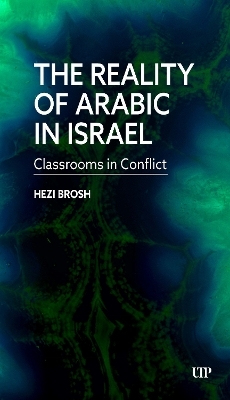
The Reality of Arabic in Israel
University of Toronto Press (Verlag)
9781487570200 (ISBN)
- Noch nicht erschienen (ca. Dezember 2025)
- Versandkostenfrei
- Auch auf Rechnung
- Artikel merken
This book offers a compelling case study on Arabic Teaching and Learning (ATL) as a foreign language within Israel's Jewish educational system. It delves into the intricate interplay among politics, pedagogy, and linguistics. The author argues that ATL has not met expectations, despite investments and pedagogical reforms. The sociopolitical context, particularly the Arab–Israeli conflict, has far-reaching consequences for various aspects of Arabic education, affecting the status and dissemination of the language within Jewish-Israeli society. These aspects encompass language policies, attitudes and motivation, curriculum development, recognizing Arabic as a critical security concern, and the roles of native and non-native teachers. By examining the distinct circumstances, constraints, and challenges encountered in ATL in Israel, this book provides valuable insights into the role of language education in conflict-ridden environments.
Hezi Brosh sheds light on language teaching methodologies, policy, and planning, providing a fresh perspective on the intricate relationship between language and politics. Understanding these dynamics can pave the way for exploring strategies to leverage language as a unifying force rather than a divisive one. The Israeli experience holds valuable lessons and hypotheses that can be applied to other conflict-affected regions worldwide, such as Cyprus, South Africa, Northern Ireland, Bosnia, Serbia, Croatia, Myanmar, and Kosovo. These regions, where specific languages and cultures may bear negative stigmas, can benefit from comprehending how language policies shaped by conflict contribute to discrimination against minority groups. Given the significance of investigating language learning in conflict contexts, there is a need for extensive research to enhance our understanding. Critically evaluating the implications of conflicts on language policies and their impact on minority groups would yield valuable lessons to inform language education practices in conflict-affected regions.
Hezi Brosh is a full professor in the Department of Languages and Cultures at the US Naval Academy and a distinguished scholar in Arabic language teaching and learning.
Preface
Introduction
1. The Arab–Israeli Conflict: A Brief Historical Background
2. The Vital Role of Arabic in Israel's National Security and Diplomacy
3. Language Policy: The Intersection of Politics and Culture
4. The Status of the Arabic Language
5. Sociopolitical Context and Students’ Attitudes and Motivation
6. Arabic Education in Jewish Schools: Challenges and Sociopolitical Dynamics
7. The History of Arabic Teaching and Learning
8. Navigating Current Challenges: Arabic Education in Jewish Schools
9. Bottom-Up Initiatives for Jewish–Arab Integration
10. Arabic Diglossia
11. The Impact of Diglossia on ATL
12. The Arabic Teacher in Israel: Challenges and Significance
13. Culture in the Arabic Language Classroom
14. Implications
15. Building Bridges: The Transformative Potential of ATL in Israel
| Erscheint lt. Verlag | 30.12.2025 |
|---|---|
| Verlagsort | Toronto |
| Sprache | englisch |
| Maße | 152 x 229 mm |
| Gewicht | 1 g |
| Themenwelt | Schulbuch / Wörterbuch ► Wörterbuch / Fremdsprachen |
| Geisteswissenschaften ► Sprach- / Literaturwissenschaft ► Sprachwissenschaft | |
| ISBN-13 | 9781487570200 / 9781487570200 |
| Zustand | Neuware |
| Informationen gemäß Produktsicherheitsverordnung (GPSR) | |
| Haben Sie eine Frage zum Produkt? |
aus dem Bereich


