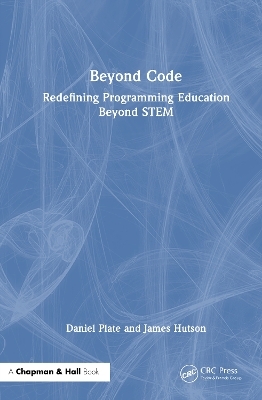
Beyond Code
CRC Press (Verlag)
978-1-041-06900-3 (ISBN)
Dr. Daniel Plate, a preeminent scholar in the field of educational technology, focuses his research and pedagogy on the integration of generative artificial intelligence in pedagogical methodologies. Educated with a Bachelor of Arts in English and Philosophy from Taylor University, a Master of Fine Arts in Creative Writing from the University of Arkansas, and a Ph.D. in Literature from Washington University in St. Louis, Plate presently serves as a faculty member at Lindenwood University. There, he instructs courses in creative writing, literature, and composition. Beyond his contributions to poetry, he has co-authored numerous case studies that explore the nuanced applications of AI in classroom settings. These scholarly works not only contribute to the existing body of literature but also offer practical insights for educators interested in leveraging generative AI to enrich the learning experience. Plate's scholarly endeavors straddle the intersection of technology and pedagogy; he divides his professional time between developing code to augment teaching methods and conducting empirical research to better understand the symbiotic relationship between AI and innovative pedagogy. A prolific author in the field of AI in education, his latest publication is Generative AI in the English Composition Classroom: Practical and Adaptable Strategies (2024). Dr. James Hutson specializes in multidisciplinary research that encompasses artificial intelligence, neurohumanities, neurodiversity, immersive realities, and the gamification of education. Earning a Bachelor of Arts in Art from the University of Tulsa, a Master of Arts in Art History from Southern Methodist University, and a Ph.D. in Art History from the University of Maryland, College Park, he later acquired additional Master's degrees in Leadership and Game Design from Lindenwood University and additional PhD in Artificial Intelligence at Capitol Technology University (2023). Over the span of his academic career since 2006, Hutson has held various pedagogical and administrative positions across five universities, including Chair of Art History, Assistant Dean of Graduate and Online Programs, and most recently, Lead XR Disruptor and Department Head of Art History, AI, and Visual Culture. Notably, his scholarly portfolio includes several books on the application of artificial intelligence in education and cultural heritage, such as Creative Convergence: The AI Renaissance in Art and Design (2024), as well as numerous articles and case studies.
Preface
Chapter 1: Introduction: The Paradigm Shift - From Syntax to Software Literacy
Chapter 2: The Limitations of Traditional Syntax-Focused Coding Education in Non-STEM
Chapter 3: The Power of AI Coding Assistants: Unlocking Computational Potential for All
Chapter 4: Re-Centering Coding Education in the AI Age
Chapter 5: Practical Examples and Case Studies in Non-STEM Classrooms
Chapter 6: Looking Ahead –The Future of AI-Driven Coding Education
Chapter 7: Conclusion: Embracing Software Literacy as a Foundational Skill for the 21st Century
Appendix
| Erscheinungsdatum | 31.07.2025 |
|---|---|
| Zusatzinfo | 13 Tables, color; 1 Tables, black and white; 1 Line drawings, color; 1 Line drawings, black and white; 4 Halftones, color; 5 Illustrations, color; 1 Illustrations, black and white |
| Verlagsort | London |
| Sprache | englisch |
| Maße | 156 x 234 mm |
| Gewicht | 610 g |
| Themenwelt | Schulbuch / Wörterbuch ► Unterrichtsvorbereitung ► Unterrichts-Handreichungen |
| Mathematik / Informatik ► Informatik ► Programmiersprachen / -werkzeuge | |
| Informatik ► Theorie / Studium ► Künstliche Intelligenz / Robotik | |
| Sozialwissenschaften ► Pädagogik ► Erwachsenenbildung | |
| ISBN-10 | 1-041-06900-6 / 1041069006 |
| ISBN-13 | 978-1-041-06900-3 / 9781041069003 |
| Zustand | Neuware |
| Informationen gemäß Produktsicherheitsverordnung (GPSR) | |
| Haben Sie eine Frage zum Produkt? |
aus dem Bereich