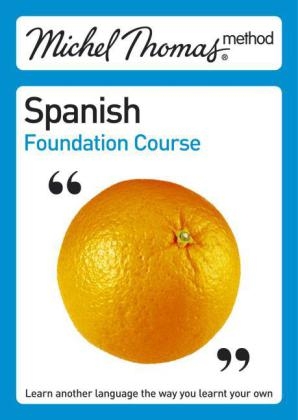
Total Spanish with the Michel Thomas Method
John Murray Learning (Verlag)
978-0-340-93893-5 (ISBN)
- Titel ist leider vergriffen;
keine Neuauflage - Artikel merken
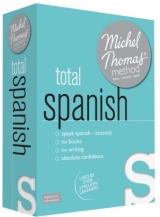
**There is a newer version of this product available with extra features**
The updated version is called Total Spanish with the Michel Thomas Method.
Michel Thomas took the language-learning world by storm.
With no books, no memorising and no homework, Michel teaches the basic grammar of the language painlessly. Using the method he perfected over 50 years, he shares his secret with the world - and 'makes it simple' (Sunday Times).
In only a matter of hours, he gives you a comprehensive grasp of the structure of the language, enabling you to communicate with confidence. The present, future, conditional and past tenses are covered, and you are taught to think about the ideas that you are trying to communicate, rather than to translate words slavishly.
He points out the similarities of the vocabulary in English and Spanish and gives you the tools to guess the words you do not know, or think you do not know.
Join two students as they learn in real time. Become the third member of the class and experience the excitement of learning a language as if by magic!
This new edition has one, very significant, new feature - an additional 'Review' CD. All the main teaching points have been lifted from the Foundation (8-hour) course and are contained on just 2 CDs. The student hears Michel teaching a specific point, there is a pause which allows time for the student to give his/her response to Michel's prompt, followed by Michel giving the correct response. If the student has struggled or given an incorrect answer, s/he can use the index in the accompanying booklet to locate the area of the main course where the specific language point was being taught in depth and can return to the main course to work through the relevant section again, quickly and efficiently. It can also be used very successfully by those coming back to the course after a lapse of time, either to check how much they have retained or as a quick revision tool. Only Michel's words and phrases are on the new CD, so the course is summarised succinctly and with a new, snappy pace.
Finally, the new edition is repackaged, with an up-to-the minute cover treatment and robust DVD-type cases inside a rigid card slip case, to ensure that the CDs remain damage-free and are easy to access and use.
Michel Thomas had an amazing life. Born in Poland, he spent his early years in Germany and then in France, where he studied psychology at the Sorbonne in Paris. When war broke out, he fought with the Resistance and suffered imprisonment in slave labour camps. At the end of the war he joined the US liberation army and later settled in the US where he established his world-famous language school. For more than 50 years he taught languages to the rich and famous and became the world's most sought-after language teacher.
Similarities with English; -ible, -able endings the same; 'es posible' (it is possible) 'para mi' (for me); 'no es posible para mi' (it is not possible for me); 'para usted' (for you) "por que?' (why?); 'asi' (that way); 'lo siento' (it I feel = I feel it = I'm sorry); -o at end of verb espresses 'I'; 'yo' (I) used for emphasis only; 'pero' (but) -ante, -ente endings in Spanish = -ant, -ent endings in English; 'muy, bueno' (very, good); 'tengo, quiero' (I have, I want); 'tiene' (you have) "que?' (what?); 'porque' (because); 'saber' (to know); 'puedo, puede' (I can, you can); 'hacer, comer' (to do, to eat) 'algo' (something); 'tengo hambre' (I have hunger = I am hungry); -ario ending in Spanish = -ary ending in English; 'y' (and); 'ver, verlo' (to see, to see it) -ancia, -encia endings in Spanish = -ance, -ence endings in English; 'la, una' (the, a); 'esta noche' (tonight); "donde?' (where?); 'cena, cenar' (dinner, to dine) -cion ending in Spanish = -tion ending in English; 'de' (of); "que tipo?' (what type?); 'por favor' (please); 'hoy' (today) 'dar' (to give); verbs from English -ation nouns: transformation = transformacion = to transform = transformar; stress in Spanish words; infinitive in Spanish ends in -r; three types of verbs; 'verle, verlos, verme' (to see him, to see them, to see me) 'comprender, decir' (to understand, to say); 'tener, tener que' (to have, to have to); 'salir' (to leave); 'pronto' (soon); "cuando' (when?) -ico ending in Spanish = -ical ending in English; "cuanto?' ('how much'); 'estoy, esta, estar, esta' (I am, you are, to be, this); "como?' (how?); 'voy, voy a' (I'm going, I'm going to); 'tarde, mas o menos' (late, more or less) 'no voy a hacerlo porque voy a estar muy ocupado hoy' (I'm not going to do it because I'm going to be very busy today); 'voy a llamarle mas tarde' (I'm going to call you later); "a que hora?' (at what time?); 'va, va a' (you are going, you are going to): "A que hora va a llamarme? (At what time are you going to call me?); 'el, ella' (he, she) 'estar, ser' (to be: temporarily, permanently): 'estoy/soy' (I am); 'se, no se' (I know, I don't know); revision of three verb groups; nouns, adjectives and verbs; 'venir' (to come) 'con, conmigo, con el, con ella' (with, with me, with him, with her); 'ir, voy, va' (to go, I'm going, you're going); 'comprar, encontrar' (to buy, to find); stress in present tense; 'vender, comprender, escribir' (to sell, to understand, to write) 'me gusta, me gusta escribir' (I like, I like to write); "Sabe donde esta?' (Do you know where it is?); "Por que no lo sabe?' (Why do you not know it?); present continuous tense in Spanish: "que esta haciendo?'(what are you doing?); 'decir' (to say/tell) 'lo que' (that which = what): 'no comprendo lo que dice' (I don't understand what you are saying); 'quiere decir' (you want to say = you mean): 'no comprendo lo que quiere decir' (I don't understand what you mean; three verb types: endings for 'he/she/it/you'; "quien?' (who?); 'nadie, todo el mundo' (no one, all the world = everyone) 'hablar' (to speak); 'lo hacen' (they do it/are doing it); 'tu' (you); giving orders (imperative): 'habla - !hable!' (you speak - speak!); 'este, esta, ese, esa, esto, eso' (this, that): 'este/ese libro' (this/that book), 'esta/esa mesa' (this/that table), 'voy a comprar esto/eso' (I'm going to buy this/that) 'lo, la, los, las' (it, those): 'el lo/la compra; el los/las compra' (he is buying it; he is buying them); negative orders: '!no lo compre!' (don't buy it!); 'contigo' (with you); -mos ending for 'we': 'hablamos, comemos, salimos' (we speak, we eat, we leave); 'vamos, van, vas' (we are going, they are going, you are going) 'llegar' (to arrive); 'go-go' verbs: 'tengo, vengo, salgo' (I have, I come, I leave); 'go-go' verbs become 'ga-ga' in the imperative: '!venga conmigo!' (come with me!); 'llamar' (to call); 'e to ie' verbs: 'tener - tiene' (to have - you have); 'comenzar, empezar, pensar, entender, querer' (to begin, to begin, to think, to understand, to want) 'o to ue' verbs: 'poder - puedo' (to be able to - I am able to = can); 'encontrar, recordar, volver; (to find, to remember, to return); 'nos, se': 'nos levantamos, se levanta' (we get [ourselves] up, you get [yourself] up); 'hay' (there is/are); 'ver' (to see): 'vemos, no lo veo, le veo manana' (we see, I don't see it, I'll see you tomorrow); -re = future ending = 'I will': 'hablare, comere, comprare' (I will talk, I will eat, I will buy) -remos = future ending = 'we will': 'esperaremos' (we will wait); three ways to form future; -ra, -ran, -ras = future endings = you/he/she/it will, you/they will, you will; 'ser, sera' (to be, it will be); 'go-go' verbs add 'd' for future: tener - tengo - tendre; salir - salgo - saldre' (to have, I have, I will have; to leave, I leave, I will leave) 'decir - digo - dire' (to say/tell, I say/tell, I will say/tell); 'hacer - hago - hare' (to do/make, I do/make, I will do/make); -ria ending = would: 'sera necesario - seria necesario; lo hare - lo haria' (it will be necessary - it would be necessary; I will do it - I would do it); 'mandar' (to send); 'quisiera' (I would like) forming the past: -ar verbs - -ado; -er/-ir verbs - -ido; 'he, hemos, ha, han, has' (I have, we have, you/he/she/it has, you have - when forming past tense); 'he comprado algo; lo hemos comprado' (I have bought something; we have bought it); 'hacer - lo he hecho; decir - le he dicho' (to do/make - I have done/made it; to say/tell; I have said/told it); to say 'let's': '!esperemos!; !no lo compremos!' (let's wait!; let's not buy it!) -ing present: 'estoy esperando; lo estoy haciendo' (I am waiting; I am doing/making it); -ing past: -aba for -ar verbs; -ia for -er/-ir verbs: 'esperaba, salia, lo hacia' (I was waiting, I was leaving, I was making/doing it); 'esta hecho, preparado, dicho, visto, puesto' (it is done/made, prepared, said, seen, placed); 'tengo ganas de' (I have the urge to = I want); 'para saber' (for to know = in order to know) 'acabo de salir' (I have just left); 'hace': 'hace diez minutos' (ten minutes ago);
| Erscheint lt. Verlag | 7.12.2006 |
|---|---|
| Reihe/Serie | Michel Thomas Series |
| Sprache | englisch |
| Maße | 138 x 196 mm |
| Gewicht | 690 g |
| Themenwelt | Schulbuch / Wörterbuch ► Wörterbuch / Fremdsprachen |
| Geisteswissenschaften ► Sprach- / Literaturwissenschaft ► Sprachwissenschaft | |
| ISBN-10 | 0-340-93893-5 / 0340938935 |
| ISBN-13 | 978-0-340-93893-5 / 9780340938935 |
| Zustand | Neuware |
| Informationen gemäß Produktsicherheitsverordnung (GPSR) | |
| Haben Sie eine Frage zum Produkt? |
aus dem Bereich