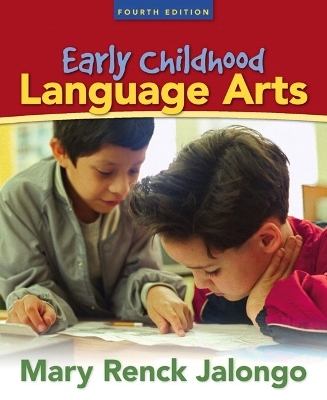
Early Childhood Language Arts
Pearson (Verlag)
978-0-205-49046-2 (ISBN)
- Titel erscheint in neuer Auflage
- Artikel merken

In response to the call for evidence-based reading instruction, the Fourth Edition includes 36 research-based teaching strategies, and every chapter incorporates information on brain research, bilingual education, technology, and the media’s influences on young children. Mary Renck Jalongo provides readers with a synthesis of the information on language arts gleaned from research on emergent literacy, early childhood education, and special education. She also underscores what is being emphasized in early childhood teacher accreditation programs; namely, responding to the increasingly diverse needs of young language learners in inclusive settings, working with parents and families, and collaborating with professionals in other fields.
Preface
PART ONE • Language Learning in Context
1 Appreciating Diversity in Children’s Language
Fact File on Diversity
What Is the Cutural Context and Home Literacy Environment?
Collaboration with Families and Professionals
Contributions and Consequences
Standards to Guide Professional Practice: Diversity in the Language Arts
Meeting the Needs of Children with Language Differences
Overview of Children’s Language Differences
Teacher Concerns and Basic Strategies
Classroom Activities to Support Diverse Language Learners
Conclusion
Research-Based Literacy Strategies
Story Retelling Using Technology
Using Interactive Books with Children with Low Book Interest
Dolch Sight Word List
2 Optimizing Every Child’s Language Growth through Family Literacy
Fact File on Families
What Is Family and Community Engagement in Schools?
Collaboration with Families and Professionals
Contributions and Consequences
Standards to Guide Professional Practice: The National PTA Standards
Overview of Parents’ and Families’ Contributions to Early Literacy
Engaging Families as Observers of Children
Engaging Families as Environment Arrangers
Engaging Families as Interactors
Engaging Families as Motivators and Encouragers
Teacher Concerns and Basic Strategies
Classroom Activities to Support Family Literacy
Conclusion
Research-Based Literacy Strategies
Providing Access to Books through Pediatricians
Training Parents and Families as Reading Partners
Building Vocabulary by Reading Aloud
PART TWO • Oral Language
3 Understanding Language Development in Early Childhood
Fact File on Language Development
What Is Language?
Collaboration with Families and Professionals
Contributions and Consequences
Standards to Guide Professional Practice: NAEYC Code of Ethical Conduct
How Do Children Learn to Communicate?
Components of Language
Pragmatics
Semantics
Syntax
Graphophonics
Overview of Language Development
Theories of Language Acquisition
Teacher Concerns and Basic Strategies
Classroom Activities to Support Language Development
Conclusion
Research-Based Literacy Strategies
Having Phonological Awareness and Learning to Recognize Rhymes
Using Environmental Print
Using Children’s Names to Foster Language Development
4 Helping Young Children Become Better Listeners
Fact File on Listening
What Is Effective Listening?
Collaboration with Families and Professionals
Contributions and Consequences
Standards to Guide Professional Practice: When to Make Referrals for Hearing Assessment
Why Is Listening Important?
Developmental Overview of Children’s Listening Abilities
Teacher Concerns and Basic Strategies
Classroom Activities to Support Listening
Conclusion
Research-Based Literacy Strategies
Audiobooks
Word Families: Onsets and Rimes
Directed Listening/Thinking Activity (DLTA) and Discussion Web
5 Supporting the Speaking Abilities of the Very Young
Fact File on Speaking
What Is a Positive Talk Environment?
Collaboration with Families and Professionals
Contributions and Consequences
Standards to Guide Professional Practice: Bilingual Education
How Do Young Children Use Speech?
Developmental Overview of Children’s Speech
Communicative and Noncommunicative Speech
Understanding Chlidren’s Language Problems
Teacher Concerns and Basic Strategies
Classroom Activities to Develop Children’s Speaking
Conclusion
Research-Based Literacy Strategies
K-W-L Plus
Speech-to-Text Software
Electronic Talking Books
6 Using Narrative and Expository Texts to Foster Growth in Literacy
Fact File on Narrative and Expository Texts
What Are Narrative and Expository Texts?
Collaboration with Families and Professionals
Contributions and Consequences
Standards to Guide Professional Practice: Mastering Narrative and Expository Texts
Overview of Children’s Narrative and Expository Styles
Narrative Text
Expository Text
Teacher Concerns and Basic Strategies
Classroom Activities to Support Children’s Mastery of Narrative and Expository Texts
Conclusion
Research-Based Literacy Strategies
Wordless Books
Reading Information Books Aloud
Captioned Video
PART THREE • Literacy with Print
7 Fostering Growth in Emergent Literacy
Fact File on Emergent Literacy
What Is Emergent Literacy?
Collaboration with Families and Professionals
Contributions and Consequences
Standards to Guide Professional Practice: Language-Learning Disabilities in Young Children
Developmental Overview of Emergent Reading
Understanding What a Book Is
Understanding How a Book Works
Becoming a Listener and a Participant
Inventing Stories to Go with Illustrations
Teacher Concerns and Basic Strategies
Classroom Activities to Support Emergent Reading
Conclusion
Research-Based Literacy Strategies
“Word Walls”
“Talking” Reading Support Programs
The Shared Book Experience and Repeated Reading
Appendix 7.1
8 Supporting Early and Independent Reading with Anita Iaquinta
Fact File on Early and Independent Reading
What Is Early and Independent Reading?
What Children Need to Become Readers
Reading Difficulties
Collaboration with Families and Professionals
Contributions and Consequences
Standards to Guide Professional Practice: Language-Learning Disabilities
Developmental Overview of Early and Independent Reading
Focus on Print, Meaning, and Story Knowledge
Focus on Word Configuration and Sound/Symbol Correspondence
Coordinating Knowledge of Print and Story
Teacher Concerns and Basic Strategies
Classroom Activities to Support Early and Independent Reading
Conclusion
Research-Based Literacy Strategies
Free Voluntary Reading and “Summer Slump”
Readers’ Theater
Guided Reading
Appendix 8.1
9 Leading Young Children to Literature
Fact File on Children’s Literature
What Is Literature for Young Children?
Collaboration with Families and Professionals
Contributions and Consequences
Standards to Guide Professional Practice: Evaluation Questions for Picture Books
Overview of Children’s Literature
Reasons for Using Literature
Ways of Using Literature
Teacher Concerns and Basic Strategies
Classroom Activities to Support Responses to Literature
Conclusion
Research-Based Literacy Strategies
Reading with Companion Animals
Bilingual Children’s Literature and Second-Language Acquisition
Literature Circles and Book Discussions
PART FOUR • Written Language and Symbol Systems
10 Facilitating Expression through Drawing and Writing
Fact File on Drawing and Writing
Relationship between Drawing and Writing
Collaboration with Families and Professionals
Contributions and Consequences
Standards to Guide Professional Practice: The Process Approach to Writing
Developmental Overview of Children’s Drawing and Writing
Prealphabetic Writing and Nonrepresentational Drawing
Alphabetic Writing and Representational Drawing
Teacher Concerns and Basic Strategies
Classroom Activities to Support Children’s Drawing and Writing
Conclusion
Research-Based Literacy Strategies
“Talking” Drawings
Multimedia Composing
Gender Influences on Children’s Drawing and Writing
11 Understanding Media Influences and Applying Technology
Fact File on Media Influences and Technology
What Are the Mass Media?
What Is Media Literacy?
Collaboration with Families and Professionals
Contributions and Consequences
Standards to Guide Professional Practice: The NAEYC on Technology in Early Childhood Programs
Teacher Concerns and Basic Strategies
Classroom Activities to Support Media Awareness and Application of Technology
Conclusion
Research-Based Literacy Strategies
Educational Television and Literacy
Online Publishing of Children’s Drawing and Writing
Internet-Based Communication and E-Pals
PART FIVE • The Teacher of Language Arts
12 Designing and Managing a Language Arts Program
Fact File on Language Arts Programs
What Is a Balanced Curriculum?
Collaborating with Families and Professionals
Contributions and Consequences
Standards to Guide Professional Development: High-Quality Early Literacy Programs
Overview of How Early Childhood Educators Shape the Curriculum
Reflecting on a Philosophy
Arranging the Physical Environment
Grouping for Instruction
Managing Behavior
Designing Learning Experiences
Teacher Concerns and Basic Strategies
Classroom Activities to Support Diverse Language Learners
Conclusion
Research-Based Literacy Strategies
Design Features of Literacy Environments
Effective Learning Centers
Reading Recovery and Tutorial Programs
13 Documenting Children’s Progress in the Language Arts
Fact File on Assessment
What Is Assessment?
Collaboration with Families and Professionals
Contributions and Consequences
Standards to Guide Professional Practice: Assessment Principles and Federal Legislation
Overview of Assessment
Traditional Testing
Evaluating Language Arts Programs
Teacher Concerns and Basic Strategies
Observation
Portfolios
Documentation
Conclusion
Research-Based Literacy Strategies
Assessing Reading Attitudes, Interests, and Motivation
Electronic Literacy Assessment, Feedback, and Management
Text-to-Speech Software
References
Children’s Books and Media
Index
| Erscheint lt. Verlag | 2.6.2006 |
|---|---|
| Sprache | englisch |
| Maße | 191 x 232 mm |
| Gewicht | 608 g |
| Themenwelt | Schulbuch / Wörterbuch |
| Sozialwissenschaften ► Pädagogik ► Schulpädagogik / Grundschule | |
| ISBN-10 | 0-205-49046-8 / 0205490468 |
| ISBN-13 | 978-0-205-49046-2 / 9780205490462 |
| Zustand | Neuware |
| Informationen gemäß Produktsicherheitsverordnung (GPSR) | |
| Haben Sie eine Frage zum Produkt? |
aus dem Bereich