


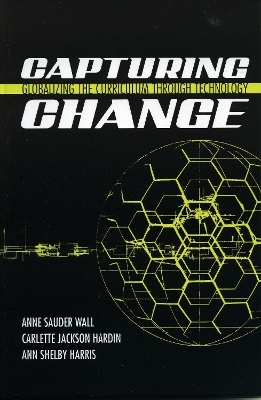
Capturing Change
Globalizing the Curriculum through Technology
Seiten
2005
Rowman & Littlefield Education (Verlag)
978-1-57886-296-2 (ISBN)
Rowman & Littlefield Education (Verlag)
978-1-57886-296-2 (ISBN)
New approaches that include the creative use of technology will help students understand and appreciate those who live in different cultures. The purpose of this book is to provide these approaches by offering: three models for globalizing the classroom, activities that utilize technology, and research on globalizing the curriculum.
Technology has allowed the world to become a smaller place. Today's students will have actual and virtual access to more parts of the world than ever imagined by the previous generation, and teachers must be skilled in providing a global perspective to the curriculum that goes beyond the traditional focus on heroes and holidays. Instead, new approaches will extend the focus of the classroom to a more inclusive, global perspective. Such new approaches that include the creative use of technology will help students understand and appreciate those who live in different cultures. The purpose of Capturing Change is to provide these approaches.
This book offers:
1. Three models for globalizing the classroom. The first model approach promotes a global curriculum, which focuses on understanding of individual differences and on reducing conflict between cultures. The second model is an integration approach, which advocates the inclusion of global issues into all curriculums. The third model reviews the traditional unit approach.
2. Activities that utilize technology. There are four strategies proven effective for using technology in the classroom as suggested by The International Society for Technology in Education (ISTE) in its National Educational Technology Standards for Teachers (NETS-T). The strategies include Web-based lessons, multimedia presentations, telecomputing projects, and online discussions, all four of which can be used by classroom teachers to incorporate technology into the global curriculum.
3. Research on globalizing the curriculum. This research will particularly focus on the teaching of social studies, science, mathematics, literature, related arts and physical education.
For inservice and preservice teachers at all levels.
Technology has allowed the world to become a smaller place. Today's students will have actual and virtual access to more parts of the world than ever imagined by the previous generation, and teachers must be skilled in providing a global perspective to the curriculum that goes beyond the traditional focus on heroes and holidays. Instead, new approaches will extend the focus of the classroom to a more inclusive, global perspective. Such new approaches that include the creative use of technology will help students understand and appreciate those who live in different cultures. The purpose of Capturing Change is to provide these approaches.
This book offers:
1. Three models for globalizing the classroom. The first model approach promotes a global curriculum, which focuses on understanding of individual differences and on reducing conflict between cultures. The second model is an integration approach, which advocates the inclusion of global issues into all curriculums. The third model reviews the traditional unit approach.
2. Activities that utilize technology. There are four strategies proven effective for using technology in the classroom as suggested by The International Society for Technology in Education (ISTE) in its National Educational Technology Standards for Teachers (NETS-T). The strategies include Web-based lessons, multimedia presentations, telecomputing projects, and online discussions, all four of which can be used by classroom teachers to incorporate technology into the global curriculum.
3. Research on globalizing the curriculum. This research will particularly focus on the teaching of social studies, science, mathematics, literature, related arts and physical education.
For inservice and preservice teachers at all levels.
:Anne Sauder Wall is an assistant professor of education at Austin Peay State University in Clarksville, Tennessee. She teaches undergraduate and graduate courses in instructional technology. Carlette Jackson Hardin is a professor of education at Austin Peay State University and has served as president of the National Association for Developmental Education. Ann Shelby Harris is a professor of education at Austin Peay State University and has taught in the public schools for a number of years.
| Erscheint lt. Verlag | 21.11.2005 |
|---|---|
| Sprache | englisch |
| Maße | 155 x 227 mm |
| Gewicht | 304 g |
| Themenwelt | Schulbuch / Wörterbuch ► Unterrichtsvorbereitung ► Unterrichts-Handreichungen |
| Sozialwissenschaften ► Pädagogik | |
| ISBN-10 | 1-57886-296-5 / 1578862965 |
| ISBN-13 | 978-1-57886-296-2 / 9781578862962 |
| Zustand | Neuware |
| Informationen gemäß Produktsicherheitsverordnung (GPSR) | |
| Haben Sie eine Frage zum Produkt? |
Mehr entdecken
aus dem Bereich



aus dem Bereich
praxiserprobte Arbeitshilfen für Mentorinnen und Mentoren
Buch (2025)
Raabe (Verlag)
CHF 48,85
Flugsimulation mit Microsoft Flight Simulator, X-Plane, AeroflyFS und …
Buch | Softcover (2024)
Springer Fachmedien Wiesbaden (Verlag)
CHF 41,95
elektronische Lehrmittel in den modernen Unterricht integrieren
Buch (2024)
Hanser, Carl (Verlag)
CHF 69,95


