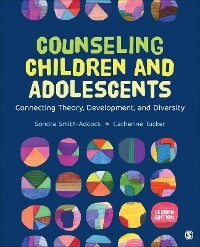
Counseling Children and Adolescents (eBook)
Sage Publications, Inc (Verlag)
978-1-5443-8603-4 (ISBN)
Chapter 1: Historical and Contextual Trends in Counseling Children and Adolescents: Guiding Frameworks
Counseling Youth: A Developmental and Multicultural Perspective
Sociohistorical Context of Childhood and Children’s Mental Health Care in the United States
Current Perspectives on Children’s Mental Health Care
Future Trends
Chapter 2: Legal and Ethical Issues in Counseling Children and Adolescents
The Child and Adolescent Counselor and the Law: Working Within the Legal System
Ethics of Counseling Children and Adolescents—Best Practices and Decision-Making
Legal and Ethical Issues Clinical and Developmental Group Factors
Supervision
Chapter 3: Attachment, Trauma, and Repair From Infant to Adolescent Development: Counseling Implications From Neurobiology
Brain Development and Environment
Hand Model of the Brain
The Cortices—The Executive Control Center
The Limbic System—The Welcoming Center or Guardhouse
Brain Stem—Basic Survival
The Vagus Nerve—The Two-Way Superhighway of Emotion
Neurons—The Building Blocks of the Brain and Nervous System
Mirror Neurons
Neurotransmitters—Brain Chemistry
Adverse Events and Child Development
Developmental Trauma and Diagnosis
Play Counseling for Complex Trauma
Relational, Cultural, Experiential, and Sensory Interventions
Chapter 4: The Counseling Process: Establishing a Therapeutic Alliance
The Culture of Childhood and Adolescence
A Survey of Attitudes Toward Children
Relating to the World of Children
Relating to the World of Adolescents
Relating to Children and Adolescents: “What Works"
Focus on the Child, Not the Problem
Relating the Child’s View to Others
Using Therapeutic Responses
Chapter 5: Psychodynamic Theories
Sociohistorical Context
Theorists
Chapter 6: Humanistic Approaches
Sociohistorical Context
Theorists
Application to Counseling Settings
Existential–Humanistic Counseling Techniques
Outcome Research
Chapter 7: Cognitive–Behavioral Approaches
Sociohistorical Context
Theorists
Merging Cognitive and Behavioral Into CBT
Adapting CBT for Younger Children
Integrative and Cognitive Behavioral Play Therapy
Trauma-Focused CBT
DBT With Adolescents
Acceptance and Commitment Therapy
Creative Techniques for Using CBT With Children and Adolescents
Process and Outcome Research
Chapter 8: Family and Organizational Systems Approaches
Defining Family Systems Counseling
Theorists
Applications in Counseling Settings
Chapter 9: Constructivist Approaches
Theorists and Tenets of Theories
Techniques and Application of Constructivist Counseling Approaches
Chapter 10: Counseling With Very Young Children (0–4) and Their Families
The Brain and Cognitive Development
Psychosocial Development
Issues and Concerns
Developmentally Appropriate Interventions With Children Ages 0–4
Chapter 11: Counseling With Young Children (5–8) and Their Families
The Brain and Cognitive Development
Psychosocial Development
Issues and Concerns
Suggestions for Developmentally Appropriate Intervention With Children Ages 5–8
Chapter 12: Counseling With Older Children (9–11)
The Brain and Cognitive Development
Issues and Concerns
Suggestions for Developmentally Appropriate Interventions With Children Ages 9–11
Chapter 13: Counseling With Young Adolescents (12–14)
Developmental Theory/Considerations
Milestones and Issues Facing Adolescents
Cultural Considerations
Suggested Interventions With Young Adolescents Ages 12–14 Years
Chapter 14: Counseling With Older Adolescents (15–19)
A Time of Rapid Growth and Change
Models of Adolescent Identity Development
Toward a Global Understanding of Adolescent Identity Development
Issues and Concerns: Late Adolescence in the Postmillennial Generation
Suggestions for Developmentally Appropriate Counseling Interventions With Adolescents Ages 15–19 Years
Chapter 15: Counseling Emerging Adults (18–21): A Time of Uncertainty and Hope
Pillars of Emerging Adulthood Theory
Physical and Cognitive Development
Identity Development
Chickering’s Vectors of Identity Development
Milestones and Issues Facing Emerging Adults
Suggestions for Developmentally Appropriate Counseling Interventions for Emerging Adults Ages 18–21
| Erscheint lt. Verlag | 11.4.2023 |
|---|---|
| Reihe/Serie | Counseling and Professional Identity | Counseling and Professional Identity |
| Verlagsort | Thousand Oaks |
| Sprache | englisch |
| Themenwelt | Schulbuch / Wörterbuch ► Schulbuch / Allgemeinbildende Schulen |
| Schlagworte | Child welfare • Counseling children • counseling teenagers • Early childhood trauma • Emerging Adults • Family counseling • gen z |
| ISBN-10 | 1-5443-8603-6 / 1544386036 |
| ISBN-13 | 978-1-5443-8603-4 / 9781544386034 |
| Informationen gemäß Produktsicherheitsverordnung (GPSR) | |
| Haben Sie eine Frage zum Produkt? |
 EPUB (Adobe DRM)
Kopierschutz: Adobe-DRM
Adobe-DRM ist ein Kopierschutz, der das eBook vor Mißbrauch schützen soll. Dabei wird das eBook bereits beim Download auf Ihre persönliche Adobe-ID autorisiert. Lesen können Sie das eBook dann nur auf den Geräten, welche ebenfalls auf Ihre Adobe-ID registriert sind.
Details zum Adobe-DRM
Dateiformat: EPUB (Electronic Publication)
EPUB ist ein offener Standard für eBooks und eignet sich besonders zur Darstellung von Belletristik und Sachbüchern. Der Fließtext wird dynamisch an die Display- und Schriftgröße angepasst. Auch für mobile Lesegeräte ist EPUB daher gut geeignet.
Systemvoraussetzungen:
PC/Mac: Mit einem PC oder Mac können Sie dieses eBook lesen. Sie benötigen eine
eReader: Dieses eBook kann mit (fast) allen eBook-Readern gelesen werden. Mit dem amazon-Kindle ist es aber nicht kompatibel.
Smartphone/Tablet: Egal ob Apple oder Android, dieses eBook können Sie lesen. Sie benötigen eine
Geräteliste und zusätzliche Hinweise
Buying eBooks from abroad
For tax law reasons we can sell eBooks just within Germany and Switzerland. Regrettably we cannot fulfill eBook-orders from other countries.
aus dem Bereich