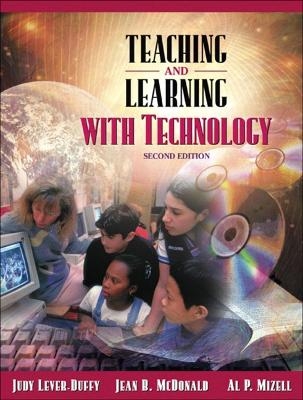
Teaching and Learning with Technology (with Skill Builders CD)
Pearson (Verlag)
978-0-205-43048-2 (ISBN)
- Titel erscheint in neuer Auflage
- Artikel merken
Dr. Judy Lever-Duffy, Professor of Computer Science and Education, at Miami Dade College, Miami, Florida teaches computer and education courses on campus and in MDC's Virtual College. She holds a B.A. degree in Education from Florida Atlantic University, Boca Raton, Florida and an MS in Computer Studies and Ed.D. in School Management and Instructional Leadership from Nova Southeastern University, Ft, Lauderdale, Florida. Dr. Lever-Duffy enjoys teaching, writing, traveling, and living in the Florida Keys. Dr. Jean McDonald, Associate Professor of Education, at Lambuth University, Jackson, Tennessee, teaches educational technology and methods courses for middle school and high school pre-service teachers. She holds a B.S. degree in English and an M.A. in English from Bradley University, Peoria, and an Ed.D. from the University of Memphis, Memphis, Tennessee. Dr. McDonald enjoys international travel, reading, and classical music.
Each chapter begins with “ Chapter Outline With Applicable Nets Standards” and “Real People, Real Stories” and concludes with “On the Web! Activities.”
Foreword by David Thornburg.
Preface.
I. TECHNOLOGIES FOR TEACHING AND LEARNING.
1. Theoretical Foundations.
What is Educational Technology?
Why Study Educational Technology?
Teaching and Learning: A Closer Look at the Educational Event.
Learning As Communication: A Framework for Exploring Teaching and Learning.
What is Perspective?
Toward an Integrated View of Learning.
A View of the Learner.
A View of the Teacher.
Toward a Holistic View of Teaching, Learning, and Technology.
Teaching, Learning, and Educational Technology: A Personal Synthesis.
2. Designing and Planning Technology-Enhanced Instruction.
Building an Effective Learning Environment.
Using and Instructional Planning System.
The Design Phase.
The Dynamic Instructional Design Model.
Using the DID Model to Plan Instruction.
Creating Lesson Plans from the DID Model.
Lesson Planning.
The Lesson Planner: Practical Application of the DID Model.
Instructional Action Planning.
The Instructional Action Planner: Getting Ready to Teach.
Linking Planning, Learning, and Teaching.
Planning for Technology in Teaching and Learning.
Interchapter One.
Special Topic: Evolution of Educational Technology and Instructional Design Timeline.
II. APPLYING TECHNOLOGIES FOR EFFECTIVE INSTRUCTION.
3. Personal Computers in the Learning Environment.
Computers, Teaching, and You.
How Does a Computer Work?
What Do I Need to Know About Software?
What Do I Need to Know About Hardware?
Input Devices.
Output Devices.
Disk Storage.
Hardware for Teaching and Learning.
Special Features.
4. Digital Technologies in the Classroom.
Digital Technologies in the Classroom.
What Input Devices are Helpful to Teachers and Learners?
What Output Devices are Helpful to Teachers and Learners?
Emerging Digital Technologies for the Classroom.
Computer System Enhancements.
From Hardware to Software.
Interchapter Two.
Special Topic: Teachers Buying Guide for Classroom Computers and Peripherals.
5. Administrative Software.
What do Educators Need to Know About Software?
Evaluating and Using Productivity Software.
Word Processing.
Electronic Spreadsheets.
Database Management Systems.
Presentation Software.
Integrated Productivity Packages.
Evaluating and Using School/Classroom Management Support Software.
Software, Teaching, and Learning: A Practical Approach.
6. Using Educational Software for Teaching and Learning.
What is Academic Software?
Authoring Systems.
Desktop Publishing Software.
Graphics Software.
Other Academic Software.
Academic Software in Teaching, and Learning.
Special Features.
7. Networking and the Internet in the Learning Environment.
What Do I Need to Know About Computer Networks?
Networking Basics.
Network Connectivity, Communications, and Security.
Sharing and Communicating Via a Network.
Expanding Connectivity Through Telecommunications.
Telecommunications Technologies.
The Internet: Connecting Networks to Networks Across the Globe.
Internet Tools and Services.
Internet Service Providers.
Internet-based Communications.
Other Internet Services.
Using the Internet in Teaching and Learning.
8. Using the Internet for Teaching and Learning.
What is the World Wide Web?
Creating and Evaluating Web Pages.
Multimedia on the Web.
Search Engines.
Portals.
Educational Resources on the Web.
Web-enhanced Instruction.
Building Bridges to Parents and the Community.
Class Websites.
Web Authoring Tools.
Moving Your Site to the Internet.
Internet Issues and Concerns.
Using the Internet in Teaching and Learning: Final Thoughts.
Interchapter Three.
Special Topic: Designing a Classroom Website.
9. Audio and Visual Technologies in the Learning Environment.
What Do I Need to Know About Audio and Visual Technologies.
Audio, Visual, and Digital Technologies in Instruction.
Audio in Teaching and Learning.
Traditional Audio Media.
Digital Audio Media.
Visual Technologies in Teaching and Learning.
Visual Communications and Learning.
Non-projected Visuals in Teaching and Learning.
Display Technologies for Non-projected Media.
Projected Visuals in Teaching and Learning.
Multimedia in Teaching and Learning.
10. Video Technologies in the Learning Environment.
What Do I Need to Know About Video Technologies?
Understanding Video.
Traditional Video Technologies.
Digital Video Technologies.
Internet Video.
Using Internet Video in Teaching and Learning.
Preview and Evaluation of Video Media.
Creating Videos for Teaching and Learning.
Implementing Video in Instruction.
Videos for Teaching and Learning.
Interchapter Four.
Special Topic: Teachers and Copyrights.
III. TECHNOLOGY IN SCHOOLS: CHANGING TEACHING AND LEARNING.
11. Distance Learning: Using Technologies to Redefine the Classroom.
What Do I Need to Know About Distance Education?
Distance Education: A Brief History.
Distance Education and Alternative Delivery Systems.
Designing Instruction for Alternative Delivery.
Support Technologies for Distance Teaching and Learning.
Providing Interactivity via Distance Support Technologies.
Alternative Delivery to Enhance Traditional Classrooms.
Using Distance Education Tools for Alternative Learning.
Issues in Implementing Distance and Alternative Delivery Systems.
Reinventing the Classroom: The Future of Distance and Alternative Delivery.
12. Issues in Implementing Technology.
Creating Today's Technology-enhanced Schools.
Current Issues in Technology Implementation.
Legal Issues in the Digital Age.
Social Issues in the Digital Age.
Ethical Issues in the Digital Age.
Emerging Technologies.
Emerging Issues: The Changing Face of Instruction in the Digital Age.
Interchapter Five.
Special Topic: Strategic Planning for Technology.
Appendices.
ISTE NETS Standards for Educational Technology for Teachers and Students.
List of Educational Technology Resources with URLs.
Glossary/Index.
Related Materials on the Student Companion Website.
Online Skills Builders.
Download Files.
Chapter Resources.
Chapter Outliners.
Chapter Power Practices.
Chapter Practice Tests.
Chapter Puzzlers.
Chapter Links of Interest.
Chapter Related Readings.
| Erscheint lt. Verlag | 26.8.2004 |
|---|---|
| Sprache | englisch |
| Maße | 217 x 276 mm |
| Gewicht | 1013 g |
| Themenwelt | Schulbuch / Wörterbuch ► Unterrichtsvorbereitung ► Unterrichts-Handreichungen |
| Sozialwissenschaften ► Pädagogik | |
| ISBN-10 | 0-205-43048-1 / 0205430481 |
| ISBN-13 | 978-0-205-43048-2 / 9780205430482 |
| Zustand | Neuware |
| Informationen gemäß Produktsicherheitsverordnung (GPSR) | |
| Haben Sie eine Frage zum Produkt? |
aus dem Bereich