Linguists, anthropologists, educators, and social theorists no longer believe that literacy can be defined as a concrete list of skills that people merely manipulate and use. Rather, they argue that becoming literate is about what people do with literacy—the values people place on various acts and their associated ideologies. In other words, literacy is more than linguistic; it is political and social practice that limits or creates possibilities for who people become as literate beings. Such understandings of literacy have informed and continue to inform our work with teachers who take a sociological or critical perspective toward literacy instruction.
Importantly, as research indicates, the disciplines pose specialized and unique literacy demands. Disciplinary literacy refers to the idea that we should teach the specialized ways of reading, understanding, and thinking used in each academic discipline, such as science, mathematics, engineering, history, or literature. Each field has its own ways of using text to create and communicate meaning. Accordingly, as children advance through school, literacy instruction should shift from general literacy strategies to the more specific or specialized ones from each discipline. Teacher preparation programs emphasizing different disciplinary literacies acknowledge that old approaches to literacy are no longer sufficient.
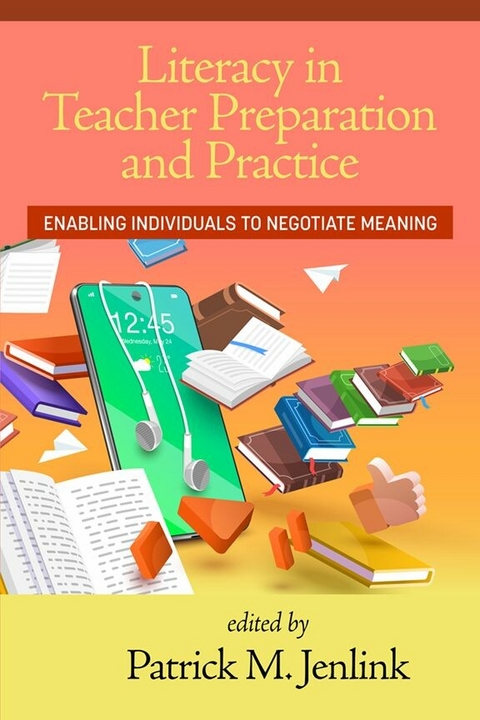
Literacy in Teacher Preparation and Practice: Enabling Individuals to Negotiate Meaning introduces the reader to a collection of thoughtful, research-based works by authors that represent current thinking about literacy across disciplines and the preparation of teachers to enter classrooms. Each chapter focuses on teaching guided by literacies across disciplines and the preparation of teachers who will enter classrooms to instruct the next generation of students.
Today, the meaning of literacy, what it means to be literate, has shifted dramatically. Literacy involves more than a set of conventions to be learned, either through print or technological formats. Rather, literacy enables people to negotiate meaning. The past decade has witnessed increased attention on multiple literacies and modalities of learning associated with teacher preparation and practice. Research recognizes both the increasing cultural and linguistic diversity in the new globalized society and the new variety of text forms from multiple communicative technologies. There is also the need for new skills to operate successfully in the changing literate and increasingly diversified social environment.Linguists, anthropologists, educators, and social theorists no longer believe that literacy can be defined as a concrete list of skills that people merely manipulate and use. Rather, they argue that becoming literate is about what people do with literacy-the values people place on various acts and their associated ideologies. In other words, literacy is more than linguistic; it is political and social practice that limits or creates possibilities for who people become as literate beings. Such understandings of literacy have informed and continue to inform our work with teachers who take a sociological or critical perspective toward literacy instruction.Importantly, as research indicates, the disciplines pose specialized and unique literacy demands. Disciplinary literacy refers to the idea that we should teach the specialized ways of reading, understanding, and thinking used in each academic discipline, such as science, mathematics, engineering, history, or literature. Each field has its own ways of using text to create and communicate meaning. Accordingly, as children advance through school, literacy instruction should shift from general literacy strategies to the more specific or specialized ones from each discipline. Teacher preparation programs emphasizing different disciplinary literacies acknowledge that old approaches to literacy are no longer sufficient.Literacy in Teacher Preparation and Practice: Enabling Individuals to Negotiate Meaning introduces the reader to a collection of thoughtful, research-based works by authors that represent current thinking about literacy across disciplines and the preparation of teachers to enter classrooms. Each chapter focuses on teaching guided by literacies across disciplines and the preparation of teachers who will enter classrooms to instruct the next generation of students.
| Erscheint lt. Verlag | 1.4.2022 |
|---|---|
| Sprache | englisch |
| Themenwelt | Schulbuch / Wörterbuch ► Lexikon / Chroniken |
| Geisteswissenschaften ► Sprach- / Literaturwissenschaft ► Sprachwissenschaft | |
| Sozialwissenschaften ► Pädagogik ► Schulpädagogik / Grundschule | |
| Sozialwissenschaften ► Politik / Verwaltung | |
| ISBN-10 | 1-64802-899-3 / 1648028993 |
| ISBN-13 | 978-1-64802-899-1 / 9781648028991 |
| Informationen gemäß Produktsicherheitsverordnung (GPSR) | |
| Haben Sie eine Frage zum Produkt? |
 PDF (Adobe DRM)
Größe: 4,0 MB
Kopierschutz: Adobe-DRM
Adobe-DRM ist ein Kopierschutz, der das eBook vor Mißbrauch schützen soll. Dabei wird das eBook bereits beim Download auf Ihre persönliche Adobe-ID autorisiert. Lesen können Sie das eBook dann nur auf den Geräten, welche ebenfalls auf Ihre Adobe-ID registriert sind.
Details zum Adobe-DRM
Dateiformat: PDF (Portable Document Format)
Mit einem festen Seitenlayout eignet sich die PDF besonders für Fachbücher mit Spalten, Tabellen und Abbildungen. Eine PDF kann auf fast allen Geräten angezeigt werden, ist aber für kleine Displays (Smartphone, eReader) nur eingeschränkt geeignet.
Systemvoraussetzungen:
PC/Mac: Mit einem PC oder Mac können Sie dieses eBook lesen. Sie benötigen eine
eReader: Dieses eBook kann mit (fast) allen eBook-Readern gelesen werden. Mit dem amazon-Kindle ist es aber nicht kompatibel.
Smartphone/Tablet: Egal ob Apple oder Android, dieses eBook können Sie lesen. Sie benötigen eine
Geräteliste und zusätzliche Hinweise
Buying eBooks from abroad
For tax law reasons we can sell eBooks just within Germany and Switzerland. Regrettably we cannot fulfill eBook-orders from other countries.
 EPUB (Adobe DRM)
Kopierschutz: Adobe-DRM
Adobe-DRM ist ein Kopierschutz, der das eBook vor Mißbrauch schützen soll. Dabei wird das eBook bereits beim Download auf Ihre persönliche Adobe-ID autorisiert. Lesen können Sie das eBook dann nur auf den Geräten, welche ebenfalls auf Ihre Adobe-ID registriert sind.
Details zum Adobe-DRM
Dateiformat: EPUB (Electronic Publication)
EPUB ist ein offener Standard für eBooks und eignet sich besonders zur Darstellung von Belletristik und Sachbüchern. Der Fließtext wird dynamisch an die Display- und Schriftgröße angepasst. Auch für mobile Lesegeräte ist EPUB daher gut geeignet.
Systemvoraussetzungen:
PC/Mac: Mit einem PC oder Mac können Sie dieses eBook lesen. Sie benötigen eine
eReader: Dieses eBook kann mit (fast) allen eBook-Readern gelesen werden. Mit dem amazon-Kindle ist es aber nicht kompatibel.
Smartphone/Tablet: Egal ob Apple oder Android, dieses eBook können Sie lesen. Sie benötigen eine
Geräteliste und zusätzliche Hinweise
Buying eBooks from abroad
For tax law reasons we can sell eBooks just within Germany and Switzerland. Regrettably we cannot fulfill eBook-orders from other countries.
aus dem Bereich