In Part I, the text addresses larger contexts, theories, and frameworks for understanding some of the most recent concerns and issues that have surfaced among international higher education leaders, student affairs professionals, and scholars. The section highlights discourse on directions and praxis that relate to the internationalization of student affairs and the resulting implications. Part II amplifies the larger international issues that have recently surfaced through the context of student affairs practice. International scholars and practitioners share timely concerns and matters that influence the profession on a global scale. This section highlights specific ways that practitioners can think about their work moving forward and implications that can shape research and the profession in the future.
Collectively, these chapters represent a snapshot in time. Written early in the third decade of the 21st century, they emerge from one of the most distinctive—and some would say, one of the most unrelenting and tragic—recent periods of human history. The confluence of the pandemic and other global issues is exerting extensive pressure on higher education in general and the practice of student affairs in specific. Consequently, sustained, significant change seems inevitable. As a text within the series, International Perspectives on Educational Policy, Research and Practice—a series that aids to be a leading forum for global discussion on educational issues, urgent problems, successful experiences, and reflections from educational researchers and practitioners around the world—the editors believe the text is both timely and consequential.
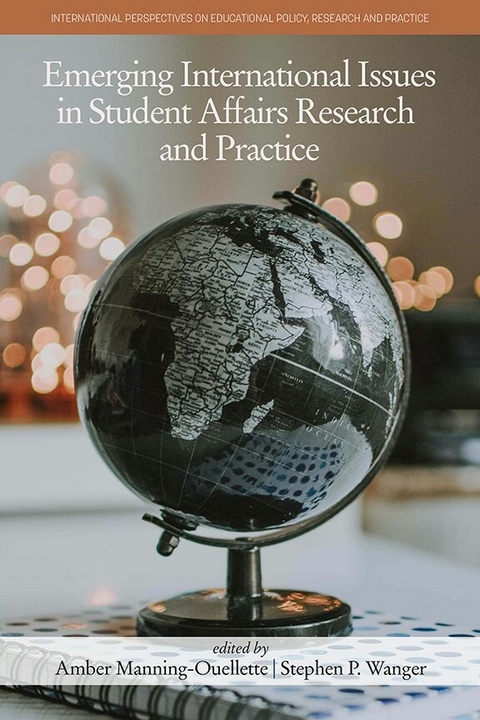
The editors of Emerging International Issues in Student Affairs Research and Practice situate developing issues in student affairs through research, new and emergent methodologies, pedagogies, and practices. The text aims to encourage intercultural perspectives and opportunities across student affairs research and practice, while calling upon international student affairs practitioners, faculty, and staff to engage in international evidence-based research that provides a foundation toward a collective consensus of the field. To accomplish these goals, the editors invited predominant practitioners in student affairs practice and student affairs scholars from across the globe to engage in discourse, share their insights, and offer implications to the student affairs profession at the international level. The editors do this by dividing the text into two parts: Part I: Theoretical, Historical, Cultural, and Ideological Considerations in International Student Affairs and Part II: Emergent International Issues and Practice in Student Affairs.In Part I, the text addresses larger contexts, theories, and frameworks for understanding some of the most recent concerns and issues that have surfaced among international higher education leaders, student affairs professionals, and scholars. The section highlights discourse on directions and praxis that relate to the internationalization of student affairs and the resulting implications. Part II amplifies the larger international issues that have recently surfaced through the context of student affairs practice. International scholars and practitioners share timely concerns and matters that influence the profession on a global scale. This section highlights specific ways that practitioners can think about their work moving forward and implications that can shape research and the profession in the future.Collectively, these chapters represent a snapshot in time. Written early in the third decade of the 21st century, they emerge from one of the most distinctive-and some would say, one of the most unrelenting and tragic-recent periods of human history. The confluence of the pandemic and other global issues is exerting extensive pressure on higher education in general and the practice of student affairs in specific. Consequently, sustained, significant change seems inevitable. As a text within the series, International Perspectives on Educational Policy, Research and Practice-a series that aids to be a leading forum for global discussion on educational issues, urgent problems, successful experiences, and reflections from educational researchers and practitioners around the world-the editors believe the text is both timely and consequential.
| Erscheint lt. Verlag | 15.1.2022 |
|---|---|
| Sprache | englisch |
| Themenwelt | Schulbuch / Wörterbuch ► Lexikon / Chroniken |
| Sozialwissenschaften ► Pädagogik ► Erwachsenenbildung | |
| Sozialwissenschaften ► Politik / Verwaltung | |
| ISBN-10 | 1-64802-811-X / 164802811X |
| ISBN-13 | 978-1-64802-811-3 / 9781648028113 |
| Informationen gemäß Produktsicherheitsverordnung (GPSR) | |
| Haben Sie eine Frage zum Produkt? |
 PDF (Adobe DRM)
Größe: 3,8 MB
Kopierschutz: Adobe-DRM
Adobe-DRM ist ein Kopierschutz, der das eBook vor Mißbrauch schützen soll. Dabei wird das eBook bereits beim Download auf Ihre persönliche Adobe-ID autorisiert. Lesen können Sie das eBook dann nur auf den Geräten, welche ebenfalls auf Ihre Adobe-ID registriert sind.
Details zum Adobe-DRM
Dateiformat: PDF (Portable Document Format)
Mit einem festen Seitenlayout eignet sich die PDF besonders für Fachbücher mit Spalten, Tabellen und Abbildungen. Eine PDF kann auf fast allen Geräten angezeigt werden, ist aber für kleine Displays (Smartphone, eReader) nur eingeschränkt geeignet.
Systemvoraussetzungen:
PC/Mac: Mit einem PC oder Mac können Sie dieses eBook lesen. Sie benötigen eine
eReader: Dieses eBook kann mit (fast) allen eBook-Readern gelesen werden. Mit dem amazon-Kindle ist es aber nicht kompatibel.
Smartphone/Tablet: Egal ob Apple oder Android, dieses eBook können Sie lesen. Sie benötigen eine
Geräteliste und zusätzliche Hinweise
Buying eBooks from abroad
For tax law reasons we can sell eBooks just within Germany and Switzerland. Regrettably we cannot fulfill eBook-orders from other countries.
 EPUB (Adobe DRM)
Kopierschutz: Adobe-DRM
Adobe-DRM ist ein Kopierschutz, der das eBook vor Mißbrauch schützen soll. Dabei wird das eBook bereits beim Download auf Ihre persönliche Adobe-ID autorisiert. Lesen können Sie das eBook dann nur auf den Geräten, welche ebenfalls auf Ihre Adobe-ID registriert sind.
Details zum Adobe-DRM
Dateiformat: EPUB (Electronic Publication)
EPUB ist ein offener Standard für eBooks und eignet sich besonders zur Darstellung von Belletristik und Sachbüchern. Der Fließtext wird dynamisch an die Display- und Schriftgröße angepasst. Auch für mobile Lesegeräte ist EPUB daher gut geeignet.
Systemvoraussetzungen:
PC/Mac: Mit einem PC oder Mac können Sie dieses eBook lesen. Sie benötigen eine
eReader: Dieses eBook kann mit (fast) allen eBook-Readern gelesen werden. Mit dem amazon-Kindle ist es aber nicht kompatibel.
Smartphone/Tablet: Egal ob Apple oder Android, dieses eBook können Sie lesen. Sie benötigen eine
Geräteliste und zusätzliche Hinweise
Buying eBooks from abroad
For tax law reasons we can sell eBooks just within Germany and Switzerland. Regrettably we cannot fulfill eBook-orders from other countries.
aus dem Bereich