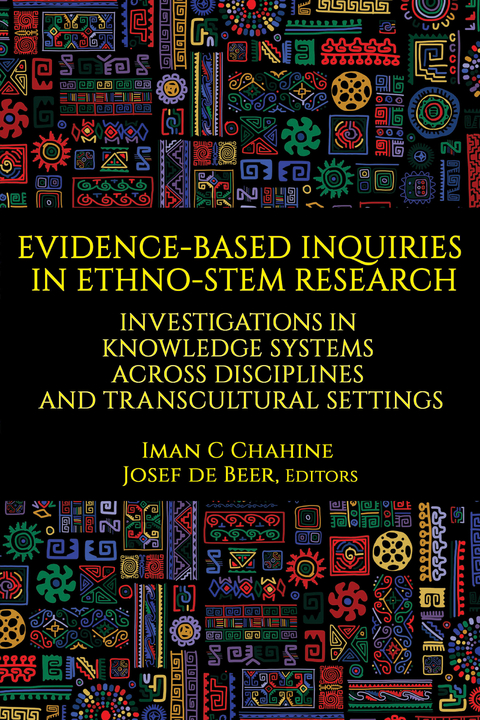
So often ‘western’ science curricula are experienced as irrelevant, since it does not take cognizance of the daily experiences and world in which the learner finds himself. This book takes a socio-cultural look at IKS and applies research in neuroscience to make a case its incorporation in the STEM (Science, Technology, Engineering and Mathematics) classroom. We use the Embodied Situated Distributed Cognition (ESDC) Model as conceptual framework in this book.
Although the value of IKS is often acknowledged in curriculum policy documents, teachers are most often not trained in incorporating IK in the classroom. Teachers’ lack of the necessary pedagogical content knowledge (PCK) in effectively incorporating IK in their classrooms is a tremendous problem internationally. Another problem is that IK is often perceived as “pseudo-science”, and scholars advocating for the incorporation of IK in the school curriculum often do not contextualize their arguments within a convincing theoretical and conceptual framework.
The purpose of the edited volume is to provide an international lens to examine evidence-based investigations in Ethno-STEM research: Ethno-science, Ethno-technology, Ethno-engineering, and Ethno-mathematics. These themes grew out of multi-national, multi-institutional and multi-disciplinary efforts to preserve as well as epitomize the role that Indigenous Knowledge Systems (IKS) play in cognitive development and its vital contributions to successful and meaningful learning in conventional and non-conventional contexts. Principled by the Embodied, Situated, and Distributed Cognition (ESDC), this innovative book will provide evidence supporting the embeddedness of a thinking-in-acting model as a fundamental framework that explains and supports students' acquisition of scientific knowledge.So often 'western' science curricula are experienced as irrelevant, since it does not take cognizance of the daily experiences and world in which the learner finds himself. This book takes a socio-cultural look at IKS and applies research in neuroscience to make a case its incorporation in the STEM (Science, Technology, Engineering and Mathematics) classroom. We use the Embodied Situated Distributed Cognition (ESDC) Model as conceptual framework in this book.Although the value of IKS is often acknowledged in curriculum policy documents, teachers are most often not trained in incorporating IK in the classroom. Teachers' lack of the necessary pedagogical content knowledge (PCK) in effectively incorporating IK in their classrooms is a tremendous problem internationally. Another problem is that IK is often perceived as "e;pseudo-science"e;, and scholars advocating for the incorporation of IK in the school curriculum often do not contextualize their arguments within a convincing theoretical and conceptual framework.
| Erscheint lt. Verlag | 1.1.2021 |
|---|---|
| Sprache | englisch |
| Themenwelt | Schulbuch / Wörterbuch ► Lexikon / Chroniken |
| Geisteswissenschaften ► Psychologie ► Allgemeine Psychologie | |
| Geisteswissenschaften ► Psychologie ► Verhaltenstherapie | |
| Sozialwissenschaften ► Pädagogik | |
| Sozialwissenschaften ► Politik / Verwaltung | |
| ISBN-10 | 1-64802-117-4 / 1648021174 |
| ISBN-13 | 978-1-64802-117-6 / 9781648021176 |
| Informationen gemäß Produktsicherheitsverordnung (GPSR) | |
| Haben Sie eine Frage zum Produkt? |
 PDF (Adobe DRM)
Größe: 41,6 MB
Kopierschutz: Adobe-DRM
Adobe-DRM ist ein Kopierschutz, der das eBook vor Mißbrauch schützen soll. Dabei wird das eBook bereits beim Download auf Ihre persönliche Adobe-ID autorisiert. Lesen können Sie das eBook dann nur auf den Geräten, welche ebenfalls auf Ihre Adobe-ID registriert sind.
Details zum Adobe-DRM
Dateiformat: PDF (Portable Document Format)
Mit einem festen Seitenlayout eignet sich die PDF besonders für Fachbücher mit Spalten, Tabellen und Abbildungen. Eine PDF kann auf fast allen Geräten angezeigt werden, ist aber für kleine Displays (Smartphone, eReader) nur eingeschränkt geeignet.
Systemvoraussetzungen:
PC/Mac: Mit einem PC oder Mac können Sie dieses eBook lesen. Sie benötigen eine
eReader: Dieses eBook kann mit (fast) allen eBook-Readern gelesen werden. Mit dem amazon-Kindle ist es aber nicht kompatibel.
Smartphone/Tablet: Egal ob Apple oder Android, dieses eBook können Sie lesen. Sie benötigen eine
Geräteliste und zusätzliche Hinweise
Buying eBooks from abroad
For tax law reasons we can sell eBooks just within Germany and Switzerland. Regrettably we cannot fulfill eBook-orders from other countries.
 EPUB (Adobe DRM)
Kopierschutz: Adobe-DRM
Adobe-DRM ist ein Kopierschutz, der das eBook vor Mißbrauch schützen soll. Dabei wird das eBook bereits beim Download auf Ihre persönliche Adobe-ID autorisiert. Lesen können Sie das eBook dann nur auf den Geräten, welche ebenfalls auf Ihre Adobe-ID registriert sind.
Details zum Adobe-DRM
Dateiformat: EPUB (Electronic Publication)
EPUB ist ein offener Standard für eBooks und eignet sich besonders zur Darstellung von Belletristik und Sachbüchern. Der Fließtext wird dynamisch an die Display- und Schriftgröße angepasst. Auch für mobile Lesegeräte ist EPUB daher gut geeignet.
Systemvoraussetzungen:
PC/Mac: Mit einem PC oder Mac können Sie dieses eBook lesen. Sie benötigen eine
eReader: Dieses eBook kann mit (fast) allen eBook-Readern gelesen werden. Mit dem amazon-Kindle ist es aber nicht kompatibel.
Smartphone/Tablet: Egal ob Apple oder Android, dieses eBook können Sie lesen. Sie benötigen eine
Geräteliste und zusätzliche Hinweise
Buying eBooks from abroad
For tax law reasons we can sell eBooks just within Germany and Switzerland. Regrettably we cannot fulfill eBook-orders from other countries.
aus dem Bereich