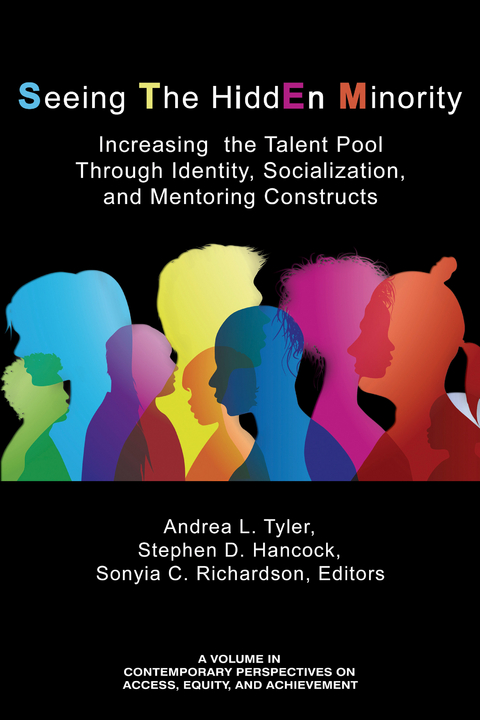
According to Hussar and Bailey (2014), the Black and Latino postsecondary enrollment rates will increase by approximately 25% between 2011 and 2022. It is critical that this projected enrollment increase translates into an increase in Black student STEM enrollment, persistence and consequently STEM workforce. In view of the shifting demographic landscape, addressing access, equity and achievement for Black students in STEM is essential. Institutions, whether they are secondary or postsecondary, all have unique formal and informal academic structures that students must learn to navigate in order to become academically and socially acclimated to the institution (Tyler, Brothers, & Haynes, 2014). Therefore positive experience with the academic environment becomes critical to the success of a student persisting and graduating.
Understanding and addressing the challenges faced by Black students in STEM begins with understanding the complexities they face at all levels of education. A sense of urgency is now needed to explore these complexities and how they impact students at all educational levels. This book will explore hidden figures and concerns of social connectedness, mentoring practices, and identity constructs that uncover unnoticed talent pools and encourage STEM matriculation among Black STEM students’ in preK-12 and post-secondary landscapes.
Section 1-Socialization Social discourse concerning how male and females are supposed to enact their socially sanctioned roles is being played out daily in educational institutions. Individuals who chose STEM education and STEM careers are constantly battling this social discourse. It is necessary for P-20 STEM spaces to examine and integrate understanding of socialization within the larger societal culture for systemic and lasting change to happen.
Section 2-Mentoring A nurturing process in which a more skilled or more experienced person, serving as a role model teaches, sponsors, encourages, counsels, and befriends a less skilled or less experienced person for the purpose of promoting the latter’s academic, professional and/or personal development.
Section 3-Identity Research focusing on identity constructs in STEM has become more common, especially as it relates to student retention and attrition. Researchers have been able to use identity as a way to examine how social stigma can cause students to (dis)identify within STEM spaces.
The participation of Black students in science, technology, engineering, and mathematics (STEM) fields, is an issue of national concern. Educators and policymakers are seeking to promote STEM studies and eventual degree attainment, especially those from underrepresented groups, including Black students, women, economically disadvantaged, and students with disabilities. Literature shows that this has been of great interest to researchers, policymakers, and institutions for several years (Nettles & Millet, 2006; Council of Graduate School (CGS), 2009; National Science Foundation (NSF), 2006), therefore an extensive understanding of access, attrition, and degree completion for Black students in STEM is needed.According to Hussar and Bailey (2014), the Black and Latino postsecondary enrollment rates will increase by approximately 25% between 2011 and 2022. It is critical that this projected enrollment increase translates into an increase in Black student STEM enrollment, persistence and consequently STEM workforce. In view of the shifting demographic landscape, addressing access, equity and achievement for Black students in STEM is essential. Institutions, whether they are secondary or postsecondary, all have unique formal and informal academic structures that students must learn to navigate in order to become academically and socially acclimated to the institution (Tyler, Brothers, & Haynes, 2014). Therefore positive experience with the academic environment becomes critical to the success of a student persisting and graduating.Understanding and addressing the challenges faced by Black students in STEM begins with understanding the complexities they face at all levels of education. A sense of urgency is now needed to explore these complexities and how they impact students at all educational levels. This book will explore hidden figures and concerns of social connectedness, mentoring practices, and identity constructs that uncover unnoticed talent pools and encourage STEM matriculation among Black STEM students' in preK-12 and post-secondary landscapes.Section 1-Socialization Social discourse concerning how male and females are supposed to enact their socially sanctioned roles is being played out daily in educational institutions. Individuals who chose STEM education and STEM careers are constantly battling this social discourse. It is necessary for P-20 STEM spaces to examine and integrate understanding of socialization within the larger societal culture for systemic and lasting change to happen.Section 2-Mentoring A nurturing process in which a more skilled or more experienced person, serving as a role model teaches, sponsors, encourages, counsels, and befriends a less skilled or less experienced person for the purpose of promoting the latter's academic, professional and/or personal development.Section 3-Identity Research focusing on identity constructs in STEM has become more common, especially as it relates to student retention and attrition. Researchers have been able to use identity as a way to examine how social stigma can cause students to (dis)identify within STEM spaces.
| Erscheint lt. Verlag | 1.6.2020 |
|---|---|
| Sprache | englisch |
| Themenwelt | Schulbuch / Wörterbuch ► Lexikon / Chroniken |
| Sozialwissenschaften ► Ethnologie | |
| Sozialwissenschaften ► Pädagogik ► Didaktik | |
| Sozialwissenschaften ► Politik / Verwaltung | |
| Sozialwissenschaften ► Soziologie | |
| ISBN-10 | 1-64113-950-1 / 1641139501 |
| ISBN-13 | 978-1-64113-950-2 / 9781641139502 |
| Informationen gemäß Produktsicherheitsverordnung (GPSR) | |
| Haben Sie eine Frage zum Produkt? |
 PDF (Adobe DRM)
Größe: 12,3 MB
Kopierschutz: Adobe-DRM
Adobe-DRM ist ein Kopierschutz, der das eBook vor Mißbrauch schützen soll. Dabei wird das eBook bereits beim Download auf Ihre persönliche Adobe-ID autorisiert. Lesen können Sie das eBook dann nur auf den Geräten, welche ebenfalls auf Ihre Adobe-ID registriert sind.
Details zum Adobe-DRM
Dateiformat: PDF (Portable Document Format)
Mit einem festen Seitenlayout eignet sich die PDF besonders für Fachbücher mit Spalten, Tabellen und Abbildungen. Eine PDF kann auf fast allen Geräten angezeigt werden, ist aber für kleine Displays (Smartphone, eReader) nur eingeschränkt geeignet.
Systemvoraussetzungen:
PC/Mac: Mit einem PC oder Mac können Sie dieses eBook lesen. Sie benötigen eine
eReader: Dieses eBook kann mit (fast) allen eBook-Readern gelesen werden. Mit dem amazon-Kindle ist es aber nicht kompatibel.
Smartphone/Tablet: Egal ob Apple oder Android, dieses eBook können Sie lesen. Sie benötigen eine
Geräteliste und zusätzliche Hinweise
Buying eBooks from abroad
For tax law reasons we can sell eBooks just within Germany and Switzerland. Regrettably we cannot fulfill eBook-orders from other countries.
 EPUB (Adobe DRM)
Kopierschutz: Adobe-DRM
Adobe-DRM ist ein Kopierschutz, der das eBook vor Mißbrauch schützen soll. Dabei wird das eBook bereits beim Download auf Ihre persönliche Adobe-ID autorisiert. Lesen können Sie das eBook dann nur auf den Geräten, welche ebenfalls auf Ihre Adobe-ID registriert sind.
Details zum Adobe-DRM
Dateiformat: EPUB (Electronic Publication)
EPUB ist ein offener Standard für eBooks und eignet sich besonders zur Darstellung von Belletristik und Sachbüchern. Der Fließtext wird dynamisch an die Display- und Schriftgröße angepasst. Auch für mobile Lesegeräte ist EPUB daher gut geeignet.
Systemvoraussetzungen:
PC/Mac: Mit einem PC oder Mac können Sie dieses eBook lesen. Sie benötigen eine
eReader: Dieses eBook kann mit (fast) allen eBook-Readern gelesen werden. Mit dem amazon-Kindle ist es aber nicht kompatibel.
Smartphone/Tablet: Egal ob Apple oder Android, dieses eBook können Sie lesen. Sie benötigen eine
Geräteliste und zusätzliche Hinweise
Buying eBooks from abroad
For tax law reasons we can sell eBooks just within Germany and Switzerland. Regrettably we cannot fulfill eBook-orders from other countries.
aus dem Bereich