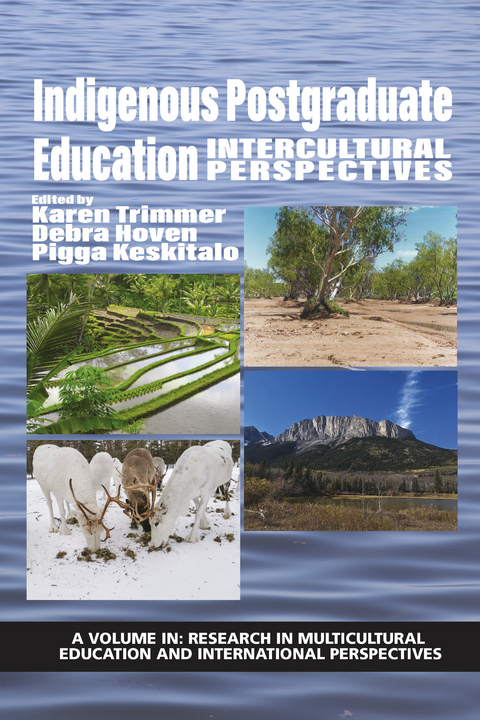
This book will assist higher education providers to develop understanding of how Indigenous postgraduate students and researchers negotiate research cultures and agendas that permeate higher education from the past to ensure the experience of postgraduate students is both rich in regard to data to be collected and culturally safe in approach; what connections, gaps and contradictions occur at the intersections between past models of postgraduate study and emerging theories around intercultural perspectives, including the impact of cultural and linguistic differences on Indigenous students' learning experiences; how Indigenous students’ and researchers’ personal and professional understandings, beliefs and experiences about what typifies knowledge and research or adds value to postgraduate studies are constructed, shared or challenged; and how higher education institutions manage the potential challenges and risks of developing pedagogies to ensure that they give voice and power to Indigenous postgraduate students.
This book focuses on Indigenous participation in postgraduate education. The collaborating editors, from the contexts of Australian, Canadian and Nordic postgraduate education, have brought together voices of Indigenous postgraduate students and researchers about strategies to support postgraduate education for Indigenous students globally and to promote sustainable solution-focused and change-focused strategies to support Indigenous postgraduate students. The role of higher education institutions in meeting the needs of Indigenous students is considered by contributing scholars, including issues related to postgraduate education pedagogies, flexible learning and technologies. On a more fundamental level the book provides a valuable resource by giving voice to Indigenous postgraduate students themselves who share directly the stories of their experience, their inspirations and difficulties in undertaking postgraduate study. This component of the book gives precedence to the issues most relevant and important to students themselves for consideration by universities and researchers. Bringing the topic and the voices of Indigenous students clearly into the public domain provides a catalyst for discussion of the issues and potential strategies to assist future Indigenous postgraduate students.This book will assist higher education providers to develop understanding of how Indigenous postgraduate students and researchers negotiate research cultures and agendas that permeate higher education from the past to ensure the experience of postgraduate students is both rich in regard to data to be collected and culturally safe in approach; what connections, gaps and contradictions occur at the intersections between past models of postgraduate study and emerging theories around intercultural perspectives, including the impact of cultural and linguistic differences on Indigenous students' learning experiences; how Indigenous students' and researchers' personal and professional understandings, beliefs and experiences about what typifies knowledge and research or adds value to postgraduate studies are constructed, shared or challenged; and how higher education institutions manage the potential challenges and risks of developing pedagogies to ensure that they give voice and power to Indigenous postgraduate students.
| Erscheint lt. Verlag | 1.6.2020 |
|---|---|
| Sprache | englisch |
| Themenwelt | Schulbuch / Wörterbuch ► Lexikon / Chroniken |
| Sozialwissenschaften ► Pädagogik ► Erwachsenenbildung | |
| Sozialwissenschaften ► Politik / Verwaltung | |
| Sozialwissenschaften ► Soziologie | |
| ISBN-13 | 9781648021114 / 9781648021114 |
| Informationen gemäß Produktsicherheitsverordnung (GPSR) | |
| Haben Sie eine Frage zum Produkt? |
 PDF (Adobe DRM)
Größe: 4,3 MB
Kopierschutz: Adobe-DRM
Adobe-DRM ist ein Kopierschutz, der das eBook vor Mißbrauch schützen soll. Dabei wird das eBook bereits beim Download auf Ihre persönliche Adobe-ID autorisiert. Lesen können Sie das eBook dann nur auf den Geräten, welche ebenfalls auf Ihre Adobe-ID registriert sind.
Details zum Adobe-DRM
Dateiformat: PDF (Portable Document Format)
Mit einem festen Seitenlayout eignet sich die PDF besonders für Fachbücher mit Spalten, Tabellen und Abbildungen. Eine PDF kann auf fast allen Geräten angezeigt werden, ist aber für kleine Displays (Smartphone, eReader) nur eingeschränkt geeignet.
Systemvoraussetzungen:
PC/Mac: Mit einem PC oder Mac können Sie dieses eBook lesen. Sie benötigen eine
eReader: Dieses eBook kann mit (fast) allen eBook-Readern gelesen werden. Mit dem amazon-Kindle ist es aber nicht kompatibel.
Smartphone/Tablet: Egal ob Apple oder Android, dieses eBook können Sie lesen. Sie benötigen eine
Geräteliste und zusätzliche Hinweise
Buying eBooks from abroad
For tax law reasons we can sell eBooks just within Germany and Switzerland. Regrettably we cannot fulfill eBook-orders from other countries.
 EPUB (Adobe DRM)
Kopierschutz: Adobe-DRM
Adobe-DRM ist ein Kopierschutz, der das eBook vor Mißbrauch schützen soll. Dabei wird das eBook bereits beim Download auf Ihre persönliche Adobe-ID autorisiert. Lesen können Sie das eBook dann nur auf den Geräten, welche ebenfalls auf Ihre Adobe-ID registriert sind.
Details zum Adobe-DRM
Dateiformat: EPUB (Electronic Publication)
EPUB ist ein offener Standard für eBooks und eignet sich besonders zur Darstellung von Belletristik und Sachbüchern. Der Fließtext wird dynamisch an die Display- und Schriftgröße angepasst. Auch für mobile Lesegeräte ist EPUB daher gut geeignet.
Systemvoraussetzungen:
PC/Mac: Mit einem PC oder Mac können Sie dieses eBook lesen. Sie benötigen eine
eReader: Dieses eBook kann mit (fast) allen eBook-Readern gelesen werden. Mit dem amazon-Kindle ist es aber nicht kompatibel.
Smartphone/Tablet: Egal ob Apple oder Android, dieses eBook können Sie lesen. Sie benötigen eine
Geräteliste und zusätzliche Hinweise
Buying eBooks from abroad
For tax law reasons we can sell eBooks just within Germany and Switzerland. Regrettably we cannot fulfill eBook-orders from other countries.
aus dem Bereich