Section One, Susceptibility to Misinformation, focuses on factors that influence the endorsement and persistence of misinformation. This section will include chapters on: the appeal and persistence of “zombie concepts” in education; learner and message factors that underlie the adoption of misinformation in the context of the newly proposed Likelihood of Adoption Model; cognitive and motivational factors that contribute to misinformation revision failure; cognitive biases and bias transfer in criminal justice training; the influence of conspiratorial and political ideation on the use of misinformation; and, how educational culture and policy has historically given rise to quackery in education.
Section Two, Practices in the Service of Reducing Misinformation in Education, focuses on practices aimed at reducing the impact of misinformation, and includes chapters on: misinformation in the education of children with ASD and its influence on educational and intervention practices; the promise of using dynamical systems and computational linguistics to model the spread of misinformation; systematic attempts to reduce misinformation in psychology and education both in and out of the classroom; and the potential perils of constructivism in the classroom, as well as the teaching of critical thinking. Each section has a discussion chapter that explicates emerging themes and lessons learned and fruitful avenues for future research.
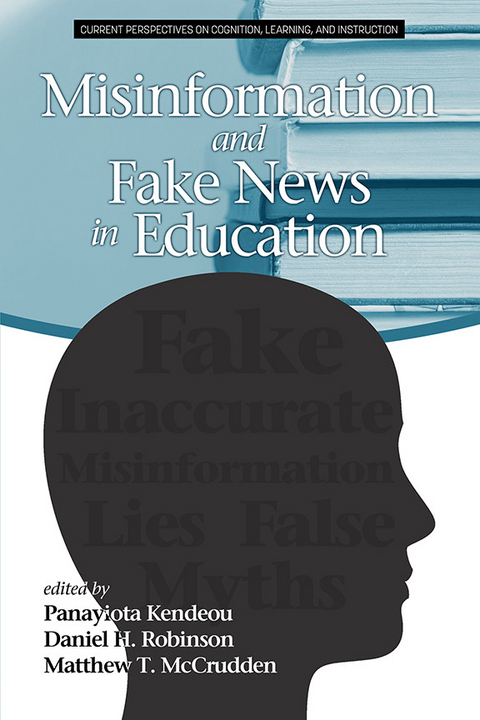
Today, like no other time in our history, the threat of misinformation and disinformation is at an all-time high. This is also true in the field of Education. Misinformation refers to false information shared by a source who intends to inform, but is unaware that the information is false, such as when an educator who recommends the use of a learning strategy that is not actually beneficial. Disinformation is false information shared by a source who has the intent to deceive and is aware that the information is false, such as when a politician claim that high-stakes testing will fix K-12 education when in fact there is no evidence to support this practice. This book provides recent examples of how misinformation and disinformation manifest in the field of education and remedies.Section One, Susceptibility to Misinformation, focuses on factors that influence the endorsement and persistence of misinformation. This section will include chapters on: the appeal and persistence of "e;zombie concepts"e; in education; learner and message factors that underlie the adoption of misinformation in the context of the newly proposed Likelihood of Adoption Model; cognitive and motivational factors that contribute to misinformation revision failure; cognitive biases and bias transfer in criminal justice training; the influence of conspiratorial and political ideation on the use of misinformation; and, how educational culture and policy has historically given rise to quackery in education.Section Two, Practices in the Service of Reducing Misinformation in Education, focuses on practices aimed at reducing the impact of misinformation, and includes chapters on: misinformation in the education of children with ASD and its influence on educational and intervention practices; the promise of using dynamical systems and computational linguistics to model the spread of misinformation; systematic attempts to reduce misinformation in psychology and education both in and out of the classroom; and the potential perils of constructivism in the classroom, as well as the teaching of critical thinking. Each section has a discussion chapter that explicates emerging themes and lessons learned and fruitful avenues for future research.
| Erscheint lt. Verlag | 1.11.2019 |
|---|---|
| Sprache | englisch |
| Themenwelt | Schulbuch / Wörterbuch ► Lexikon / Chroniken |
| Sozialwissenschaften ► Pädagogik ► Didaktik | |
| Sozialwissenschaften ► Politik / Verwaltung | |
| ISBN-10 | 1-64113-853-X / 164113853X |
| ISBN-13 | 978-1-64113-853-6 / 9781641138536 |
| Informationen gemäß Produktsicherheitsverordnung (GPSR) | |
| Haben Sie eine Frage zum Produkt? |
 PDF (Adobe DRM)
Größe: 2,9 MB
Kopierschutz: Adobe-DRM
Adobe-DRM ist ein Kopierschutz, der das eBook vor Mißbrauch schützen soll. Dabei wird das eBook bereits beim Download auf Ihre persönliche Adobe-ID autorisiert. Lesen können Sie das eBook dann nur auf den Geräten, welche ebenfalls auf Ihre Adobe-ID registriert sind.
Details zum Adobe-DRM
Dateiformat: PDF (Portable Document Format)
Mit einem festen Seitenlayout eignet sich die PDF besonders für Fachbücher mit Spalten, Tabellen und Abbildungen. Eine PDF kann auf fast allen Geräten angezeigt werden, ist aber für kleine Displays (Smartphone, eReader) nur eingeschränkt geeignet.
Systemvoraussetzungen:
PC/Mac: Mit einem PC oder Mac können Sie dieses eBook lesen. Sie benötigen eine
eReader: Dieses eBook kann mit (fast) allen eBook-Readern gelesen werden. Mit dem amazon-Kindle ist es aber nicht kompatibel.
Smartphone/Tablet: Egal ob Apple oder Android, dieses eBook können Sie lesen. Sie benötigen eine
Geräteliste und zusätzliche Hinweise
Buying eBooks from abroad
For tax law reasons we can sell eBooks just within Germany and Switzerland. Regrettably we cannot fulfill eBook-orders from other countries.
 EPUB (Adobe DRM)
Kopierschutz: Adobe-DRM
Adobe-DRM ist ein Kopierschutz, der das eBook vor Mißbrauch schützen soll. Dabei wird das eBook bereits beim Download auf Ihre persönliche Adobe-ID autorisiert. Lesen können Sie das eBook dann nur auf den Geräten, welche ebenfalls auf Ihre Adobe-ID registriert sind.
Details zum Adobe-DRM
Dateiformat: EPUB (Electronic Publication)
EPUB ist ein offener Standard für eBooks und eignet sich besonders zur Darstellung von Belletristik und Sachbüchern. Der Fließtext wird dynamisch an die Display- und Schriftgröße angepasst. Auch für mobile Lesegeräte ist EPUB daher gut geeignet.
Systemvoraussetzungen:
PC/Mac: Mit einem PC oder Mac können Sie dieses eBook lesen. Sie benötigen eine
eReader: Dieses eBook kann mit (fast) allen eBook-Readern gelesen werden. Mit dem amazon-Kindle ist es aber nicht kompatibel.
Smartphone/Tablet: Egal ob Apple oder Android, dieses eBook können Sie lesen. Sie benötigen eine
Geräteliste und zusätzliche Hinweise
Buying eBooks from abroad
For tax law reasons we can sell eBooks just within Germany and Switzerland. Regrettably we cannot fulfill eBook-orders from other countries.
aus dem Bereich