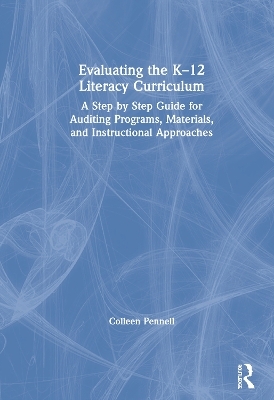
Evaluating the K–12 Literacy Curriculum
Routledge (Verlag)
978-0-367-20362-7 (ISBN)
As your school district undertakes the process of evaluating its K–12 reading program, literacy curriculum, or literacy instructional practices, this book will be your go-to resource. Pennell offers a step-by-step guide for educators, school leaders, or professional learning communities to evaluate high-quality instructional materials and standards-aligned literacy practices. It includes a wealth of tools such as timelines, full meeting agendas, stakeholder surveys, and evaluation rubrics.
Chapters cover key topics, including:
Literacy leadership team meetings
Reviewing foundational skills
Comprehension and vocabulary
Evaluating writing
Selecting new materials
Implementing new literacy materials
Supporting educators through instructional coaching and professional learning
Pennell provides a straightforward framework for how educators can work together collaboratively to analyze, reflect, and ultimately evaluate their school district’s literacy program. Each chapter is grounded in salient research on the why of literacy teaching and learning and helps you understand how instruction can be meaningfully aligned with current standards. The research and theory that support effective literacy instruction—including culturally responsive practices—are explained in an accessible and pragmatic manner.
The practical tools in this book are essential for administrators and educators tasked with evaluating literacy programs and practices, as well as graduate students who must learn how to audit a literacy curriculum. Whether you’re a school administrator, teacher, or reading specialist, this book will ensure all your students can reach success in literacy.
Colleen Pennell is an assistant professor at Carroll University in Wisconsin. She was previously a K–12 reading specialist and elementary teacher in Wisconsin and the Southwest.
Introduction. Chapter 1: Organizing Teams and Gathering the Data. Chapter 2: Literacy Leadership Team Meeting #1. Chapter 3: Evaluating Foundational Skills. Chapter 4: Evaluating Comprehension Grades K-3. Chapter 5: Evaluating Comprehension Grades 4-12. Chapter 6: Evaluating Vocabulary Grades K-12. Chapter 7: Evaluating Writing Grades K-12. Chapter 8: Evaluating Classroom Libraries and Independent Reading. Chapter 9: Literacy Leadership Meeting #2: Concluding the Evaluation and Making Recommendations. Chapter 10: Literacy Leadership Meeting #3: Evaluating New Literacy Program or Materials. Chapter 11: Pilot-Testing Recommendations. Chapter 12: Implementing a New Literacy Program: Professional Learning and Coaching. Appendix A: Pre-Evaluation Forms. Appendix B: Survey and Tools. Appendix C: Composite Score Sheet. Appendix D: Post Evaluation Forms.
| Erscheinungsdatum | 11.03.2020 |
|---|---|
| Zusatzinfo | 69 Tables, black and white; 36 Line drawings, black and white; 36 Illustrations, black and white |
| Verlagsort | London |
| Sprache | englisch |
| Maße | 178 x 254 mm |
| Gewicht | 600 g |
| Themenwelt | Schulbuch / Wörterbuch ► Unterrichtsvorbereitung |
| Sozialwissenschaften ► Pädagogik ► Schulpädagogik / Grundschule | |
| ISBN-10 | 0-367-20362-6 / 0367203626 |
| ISBN-13 | 978-0-367-20362-7 / 9780367203627 |
| Zustand | Neuware |
| Informationen gemäß Produktsicherheitsverordnung (GPSR) | |
| Haben Sie eine Frage zum Produkt? |
aus dem Bereich