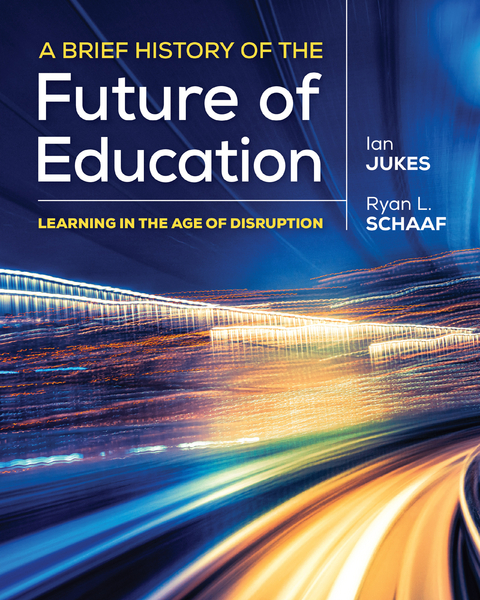
A Brief History of the Future of Education (eBook)
192 Seiten
Corwin (Verlag)
978-1-5443-5505-4 (ISBN)
Foreword By Steve Wozniak
Acknowledgments
About the Authors
INTRODUCTION
Why This Book Is Called A Brief History of the Future of Education
Why Educators Must Adapt
How 20th Century Mindsets Impede Learning
Creating a Movement
How to Approach This Book
1. BEYOND “THAT’S THE WAY WE’VE ALWAYS DONE IT”
A Preamble About Five Monkeys
Why We Do the Things We Do
TTWWADI and School Mindsets
Ways to Demonstrate TTWWADI
Chapter Summary
Questions to Consider
2. WHAT THE FUTURE HOLDS FOR OUR STUDENTS
An Old Mindset for the Modern World
Chapter Summary
Questions to Consider
3. LIFE IN THE AGE OF DISRUPTIVE INNOVATION
How Disruptive Innovation Forces Change
Skill Sets in the New Global Economy
What All This Change Means for Education
Careers in the New Global Economy
The Purpose of Education in Modern Times
Chapter Summary
Questions to Consider
4. THE NINE CORE LEARNING ATTRIBUTES OF DIGITAL GENERATIONS
#1 Digital Learners Prefer Receiving Information From Multiple, Hyperlinked Digital Sources
#2 Digital Learners Prefer Parallel Processing and Multitasking
#3 Digital Learners Prefer Processing Pictures, Sounds, Color, and Video Before They Process Text
#4 Digital Learners Prefer to Network and Collaborate Simultaneously With Many Others
#5 Digital Learners Unconsciously Read Text on a Page or Screen in a Fast Pattern
#6 Digital Learners Prefer Just-in-Time Learning
#7 Digital Learners Are Looking for Instant Gratification and Immediate Rewards, as Well as Simultaneously Deferred Gratification and Delayed Rewards
#8 Digital Learners Are Transfluent Between Digital and Real Worlds
#9 Digital Learners Prefer Learning That Is Simultaneously Relevant, Active, Instantly Useful, and Fun
Instruction for the Digital Generations
Chapter Summary
Questions to Consider
5. HOW TO LOOK BACK TO MOVE FORWARD
Examine the Past to Look to the Future
Consider the Default Future Versus Taking Action
The Biggest Challenges for the Future of Education
Chapter Summary
Questions to Consider
6 LEARNING IN THE YEAR 2038
A Day in the Life of Alice
Eleven Predictions of Learning in the Year 2038
Chapter Summary
Questions to Consider
7 NEW SKILLS FOR MODERN TIMES
How We Have It All
The Eight Essential Skills of Modern Learning
The Path Forward
Chapter Summary
Questions to Consider
8 NEW ROLES FOR EDUCATORS
Role #1: Educators Must Be Future-Focused
Role #2: Educators Must Be Lifelong Learners
Role #3: Educators Must Be Learning Facilitators, Not Sages on the Stage
Role #4: Educators Must Be Expert Generalists, Not Specialists
Role #5: Educators Must Embrace Discovery Learning
Role #6: Educators Must Enhance Instruction With Real-World Meaning
Role #7: Educators Must Broaden the Perspective of the Curriculum
Role #8: Educators Must Be Evaluators of the Level of Thought
Role #9: Educators Must Teach to the Whole Mind
Role #10: Educators Must Use Technology as a Learning Tool
Role #11: Educators Must Be Holistic Evaluators
Chapter Summary
Questions to Consider
Epilogue
Where We Begin
The Committed Sardine
Questions to Consider
References and Resources
Index
| Erscheint lt. Verlag | 28.12.2018 |
|---|---|
| Verlagsort | Thousand Oaks |
| Sprache | englisch |
| Themenwelt | Schulbuch / Wörterbuch ► Unterrichtsvorbereitung ► Unterrichts-Handreichungen |
| Sozialwissenschaften ► Pädagogik ► Allgemeines / Lexika | |
| Sozialwissenschaften ► Pädagogik ► Bildungstheorie | |
| Schlagworte | Digital Learning • Future Focused • Innovation • Leadership • Learning Environments • personalized learning • School reform |
| ISBN-10 | 1-5443-5505-X / 154435505X |
| ISBN-13 | 978-1-5443-5505-4 / 9781544355054 |
| Informationen gemäß Produktsicherheitsverordnung (GPSR) | |
| Haben Sie eine Frage zum Produkt? |
 PDF (Adobe DRM)
Kopierschutz: Adobe-DRM
Adobe-DRM ist ein Kopierschutz, der das eBook vor Mißbrauch schützen soll. Dabei wird das eBook bereits beim Download auf Ihre persönliche Adobe-ID autorisiert. Lesen können Sie das eBook dann nur auf den Geräten, welche ebenfalls auf Ihre Adobe-ID registriert sind.
Details zum Adobe-DRM
Dateiformat: PDF (Portable Document Format)
Mit einem festen Seitenlayout eignet sich die PDF besonders für Fachbücher mit Spalten, Tabellen und Abbildungen. Eine PDF kann auf fast allen Geräten angezeigt werden, ist aber für kleine Displays (Smartphone, eReader) nur eingeschränkt geeignet.
Systemvoraussetzungen:
PC/Mac: Mit einem PC oder Mac können Sie dieses eBook lesen. Sie benötigen eine
eReader: Dieses eBook kann mit (fast) allen eBook-Readern gelesen werden. Mit dem amazon-Kindle ist es aber nicht kompatibel.
Smartphone/Tablet: Egal ob Apple oder Android, dieses eBook können Sie lesen. Sie benötigen eine
Geräteliste und zusätzliche Hinweise
Buying eBooks from abroad
For tax law reasons we can sell eBooks just within Germany and Switzerland. Regrettably we cannot fulfill eBook-orders from other countries.
aus dem Bereich