


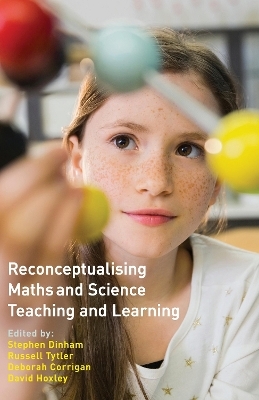
Reconceptualising Maths and Science Teaching and Learning
Seiten
2018
Australian Council for Educational Research (ACER) (Verlag)
978-1-74286-482-2 (ISBN)
Australian Council for Educational Research (ACER) (Verlag)
978-1-74286-482-2 (ISBN)
- Titel nicht im Sortiment
- Artikel merken
Highlights the need to reconceptualise Maths and Science Teacher Education Programs (ReMSTEP) in order to revitalise teaching approaches within schools. Through a series of seven’innovations, ReMSTEP recognises that teacher graduates are powerful change agents for making maths and science curricula more engaging, challenging and relevant.
How do we enable young people to imagine themselves as the next generation of STEM professionals?
How do we do this in a way that engages the desire to learn and explore?
In Australia, there is increasing concern at the declining participation in advanced-level school mathematics and physical sciences; fewer students electing to study STEM programs at university; and, evidence of declining performance of Australian students on international comparative tests in mathematics and science.
This timely book highlights the need to reconceptualise Maths and Science Teacher Education Programs (ReMSTEP) in order to revitalise maths and science teaching approaches within primary and secondary schools. Through a series of seven ‘innovations’, such as offering maths and science specialisations within primary pre-service teaching programs, or creating opportunities to connect scientists and mathematicians with both pre-service teachers and practitioners in developing activities for school contexts, ReMSTEP recognises that teacher graduates are powerful change agents for making maths and science curricula more engaging, challenging and relevant for primary and secondary students.
This substantively researched text, based on ReMSTEP’s extensive trialling and exhaustive consultation with researchers and practitioners alike, enriches the debate on the educational relevance of maths and science, and is a crucial reference for educational decision-makers, lecturers and pre-service teachers, and school leaders.
Part A examines the challenges around science and maths education.
Part B explores, through case studies, the seven ReMSTEP innovations around which the activities were organised.
Part C provides an overview of the impacts of the innovations and explores the implications of the findings.
How do we enable young people to imagine themselves as the next generation of STEM professionals?
How do we do this in a way that engages the desire to learn and explore?
In Australia, there is increasing concern at the declining participation in advanced-level school mathematics and physical sciences; fewer students electing to study STEM programs at university; and, evidence of declining performance of Australian students on international comparative tests in mathematics and science.
This timely book highlights the need to reconceptualise Maths and Science Teacher Education Programs (ReMSTEP) in order to revitalise maths and science teaching approaches within primary and secondary schools. Through a series of seven ‘innovations’, such as offering maths and science specialisations within primary pre-service teaching programs, or creating opportunities to connect scientists and mathematicians with both pre-service teachers and practitioners in developing activities for school contexts, ReMSTEP recognises that teacher graduates are powerful change agents for making maths and science curricula more engaging, challenging and relevant for primary and secondary students.
This substantively researched text, based on ReMSTEP’s extensive trialling and exhaustive consultation with researchers and practitioners alike, enriches the debate on the educational relevance of maths and science, and is a crucial reference for educational decision-makers, lecturers and pre-service teachers, and school leaders.
Part A examines the challenges around science and maths education.
Part B explores, through case studies, the seven ReMSTEP innovations around which the activities were organised.
Part C provides an overview of the impacts of the innovations and explores the implications of the findings.
Stephen Dinham, Emeritus Professor, Melbourne Graduate School of Education, The University of Melbourne. Russell Tytler, Alfred Deakin Professor and Chair in Science Education, Faculty of Arts and Education, Deakin University, Burwood. Deborah Corrigan, Professor, Education Futures, Faculty of Education, Monash University. David Hoxley, Lecturer, La Trobe Institute for Molecular Science, Department of Chemistry and Physics, La Trobe University, Bundoora.
| Erscheinungsdatum | 04.01.2019 |
|---|---|
| Verlagsort | Camberwell |
| Sprache | englisch |
| Maße | 152 x 234 mm |
| Gewicht | 380 g |
| Themenwelt | Schulbuch / Wörterbuch |
| Sozialwissenschaften ► Pädagogik ► Schulpädagogik / Grundschule | |
| ISBN-10 | 1-74286-482-1 / 1742864821 |
| ISBN-13 | 978-1-74286-482-2 / 9781742864822 |
| Zustand | Neuware |
| Informationen gemäß Produktsicherheitsverordnung (GPSR) | |
| Haben Sie eine Frage zum Produkt? |
Mehr entdecken
aus dem Bereich

aus dem Bereich
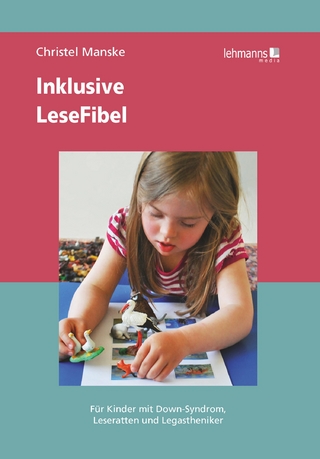
für Kinder mit Down-Syndrom, Leseratten und Legastheniker
Buch | Softcover (2023)
Lehmanns Media (Verlag)
CHF 27,90
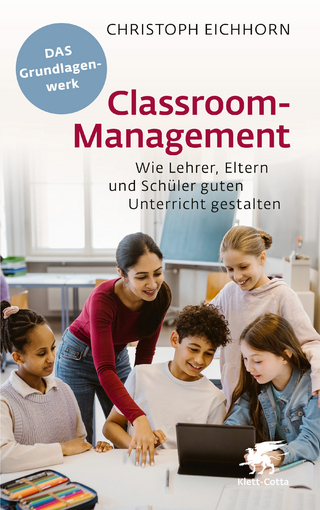
wie Lehrer, Eltern und Schüler guten Unterricht gestalten
Buch | Softcover (2024)
Klett-Cotta (Verlag)
CHF 33,55
Unterrichtsstörungen, Beleidigungen und Gewalt erfolgreich eingrenzen
Buch | Softcover (2025)
Klett-Cotta (Verlag)
CHF 30,80


