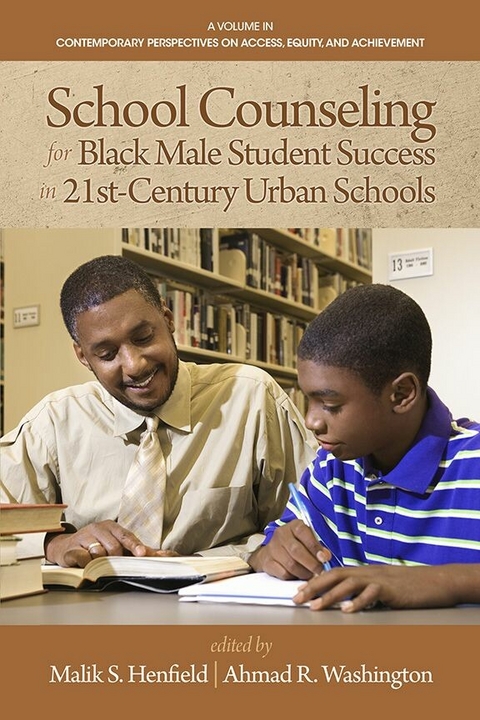
School counselors are in a unique position, nonetheless, to lend their considerable expertise—insights, training and skills—to improving life outcomes among Black males—a population who are consistently in positions of risk according to a number of quality of life indicators. Without knowledge and awareness of Black males’ masculine identity development in urban areas, coupled with the requisite skills to influence the myriad factors that enhance and impede healthy development in such environments, they are missing out on tremendous opportunities which other professions appear to understand and, quite frankly, seem to take more seriously. As such, this book proposes to accomplish two specific goals:
1. Highlight the plight of Black males with specific emphasis on the ecological components of their lives in relation to current school culture and trends.
2. Encourage school counselors to give more thought to Black male identity development that takes into consideration differential experiences in society as a whole, and schools in particular, as a function of the intersection of their race, as well as their gender.
The first rationale for this book, then, is to highlight the plight of Black males with specific emphasis on the ecological components of their lives in relation to current school culture and trends (e.g., standards?based accountability practices) in urban environments. However, I recognize the role of school counselors has never been fully integrated into educational reform programs. As such, their positions are often unregulated and determined by people in positions of power who do not understand their training, job?specific standards and, thus, potential impact on the lives of Black male students. As a result, their vast potential to develop strong interventions designed to address the myriad racial and masculine factors that serve to enhance and impede Black males’ academic achievement is often unrealized. Therefore, the second reason for this special issue is to include the scholarship of professional school counselors and counselor educators with policy change in mind. Scholars will be invited to contribute manuscripts that explore race, masculinity and academic achievement in relation to the role of school counselors. This is designed to encourage school counselors and counselor educators to give more thought to Black male identity development that takes into consideration differential experiences in society as a whole, and schools in particular, as a function of the intersection of their race, as well as their gender.
Discussions and research related to the salience of Black male student needs and development in relation to their general success and wellbeing is welldocumented in many fields. Indeed, many studies have found that healthy masculine identity development is associated with a number of positive outcomes for males in general, including Black males. In school counseling literature, however, this discussion has been relatively absent-particularly regarding those students living in urban contexts. Indeed, research devoted to the study of Black males in the school counseling literature focuses almost exclusively on race and issues associated with its social construction with only cursory, if any, attention given to their masculine identity development as a function of living in urban communities and attending urban schools. Based on this lack of information, it is probably a safe assumption that intentional, systematic, culturally relevant efforts to assist Black males in developing healthy achievement and masculine identities based on their unique personal, social, academic experiences and future career goals are not being applied by school counselors concerned with meeting students' needs.School counselors are in a unique position, nonetheless, to lend their considerable expertise-insights, training and skills-to improving life outcomes among Black males-a population who are consistently in positions of risk according to a number of quality of life indicators. Without knowledge and awareness of Black males' masculine identity development in urban areas, coupled with the requisite skills to influence the myriad factors that enhance and impede healthy development in such environments, they are missing out on tremendous opportunities which other professions appear to understand and, quite frankly, seem to take more seriously. As such, this book proposes to accomplish two specific goals:1. Highlight the plight of Black males with specific emphasis on the ecological components of their lives in relation to current school culture and trends.2. Encourage school counselors to give more thought to Black male identity development that takes into consideration differential experiences in society as a whole, and schools in particular, as a function of the intersection of their race, as well as their gender.The first rationale for this book, then, is to highlight the plight of Black males with specific emphasis on the ecological components of their lives in relation to current school culture and trends (e.g., standardsbased accountability practices) in urban environments. However, I recognize the role of school counselors has never been fully integrated into educational reform programs. As such, their positions are often unregulated and determined by people in positions of power who do not understand their training, jobspecific standards and, thus, potential impact on the lives of Black male students. As a result, their vast potential to develop strong interventions designed to address the myriad racial and masculine factors that serve to enhance and impede Black males' academic achievement is often unrealized. Therefore, the second reason for this special issue is to include the scholarship of professional school counselors and counselor educators with policy change in mind. Scholars will be invited to contribute manuscripts that explore race, masculinity and academic achievement in relation to the role of school counselors. This is designed to encourage school counselors and counselor educators to give more thought to Black male identity development that takes into consideration differential experiences in society as a whole, and schools in particular, as a function of the intersection of their race, as well as their gender.
| Erscheint lt. Verlag | 1.11.2015 |
|---|---|
| Sprache | englisch |
| Themenwelt | Schulbuch / Wörterbuch ► Lexikon / Chroniken |
| Sozialwissenschaften ► Ethnologie | |
| Sozialwissenschaften ► Pädagogik ► Didaktik | |
| Sozialwissenschaften ► Politik / Verwaltung | |
| Sozialwissenschaften ► Soziologie | |
| ISBN-10 | 1-68123-196-4 / 1681231964 |
| ISBN-13 | 978-1-68123-196-9 / 9781681231969 |
| Informationen gemäß Produktsicherheitsverordnung (GPSR) | |
| Haben Sie eine Frage zum Produkt? |
 PDF (Adobe DRM)
Größe: 3,0 MB
Kopierschutz: Adobe-DRM
Adobe-DRM ist ein Kopierschutz, der das eBook vor Mißbrauch schützen soll. Dabei wird das eBook bereits beim Download auf Ihre persönliche Adobe-ID autorisiert. Lesen können Sie das eBook dann nur auf den Geräten, welche ebenfalls auf Ihre Adobe-ID registriert sind.
Details zum Adobe-DRM
Dateiformat: PDF (Portable Document Format)
Mit einem festen Seitenlayout eignet sich die PDF besonders für Fachbücher mit Spalten, Tabellen und Abbildungen. Eine PDF kann auf fast allen Geräten angezeigt werden, ist aber für kleine Displays (Smartphone, eReader) nur eingeschränkt geeignet.
Systemvoraussetzungen:
PC/Mac: Mit einem PC oder Mac können Sie dieses eBook lesen. Sie benötigen eine
eReader: Dieses eBook kann mit (fast) allen eBook-Readern gelesen werden. Mit dem amazon-Kindle ist es aber nicht kompatibel.
Smartphone/Tablet: Egal ob Apple oder Android, dieses eBook können Sie lesen. Sie benötigen eine
Geräteliste und zusätzliche Hinweise
Buying eBooks from abroad
For tax law reasons we can sell eBooks just within Germany and Switzerland. Regrettably we cannot fulfill eBook-orders from other countries.
 EPUB (Adobe DRM)
Kopierschutz: Adobe-DRM
Adobe-DRM ist ein Kopierschutz, der das eBook vor Mißbrauch schützen soll. Dabei wird das eBook bereits beim Download auf Ihre persönliche Adobe-ID autorisiert. Lesen können Sie das eBook dann nur auf den Geräten, welche ebenfalls auf Ihre Adobe-ID registriert sind.
Details zum Adobe-DRM
Dateiformat: EPUB (Electronic Publication)
EPUB ist ein offener Standard für eBooks und eignet sich besonders zur Darstellung von Belletristik und Sachbüchern. Der Fließtext wird dynamisch an die Display- und Schriftgröße angepasst. Auch für mobile Lesegeräte ist EPUB daher gut geeignet.
Systemvoraussetzungen:
PC/Mac: Mit einem PC oder Mac können Sie dieses eBook lesen. Sie benötigen eine
eReader: Dieses eBook kann mit (fast) allen eBook-Readern gelesen werden. Mit dem amazon-Kindle ist es aber nicht kompatibel.
Smartphone/Tablet: Egal ob Apple oder Android, dieses eBook können Sie lesen. Sie benötigen eine
Geräteliste und zusätzliche Hinweise
Buying eBooks from abroad
For tax law reasons we can sell eBooks just within Germany and Switzerland. Regrettably we cannot fulfill eBook-orders from other countries.
aus dem Bereich