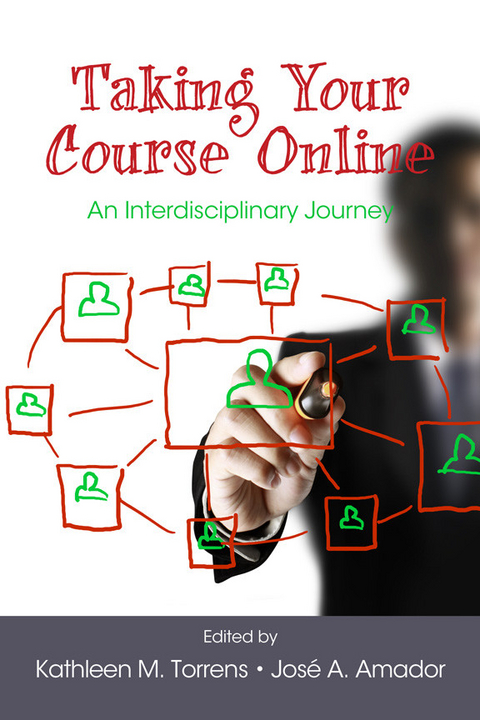
This book focuses on online pedagogy and the challenges and opportunities incumbent in the transformation of a face-to-face college course. It is intended as a resource and support for new online teachers - a source of ideas and strategies from a variety of disciplinary perspectives as well as pedagogical perspectives - and for those experienced in the online environment. The book meets the needs of faculty new to online teaching by providing them a wide variety of perspectives on the online transition - e.g. pedagogical, multidisciplinary, class size and level - by faculty with varying degrees of previous experience who have recently made the transition from face-to-face to online. Their advice and recollections offer a fresh, contemporary perspective on the subject. For administrators and faculty experienced with online instruction, the collection works as a resource for ideas intended to sustain the vibrancy and efficacy of the online environment.Taking Your Course Online includes the experiences of a cohort of faculty that responded to a University - wide call for faculty interested in developing online courses for summer session. This group participated in a series of workshops that addressed various aspects of developing online courses and online pedagogy. All of the authors taught their new online course over a subsequent 10-week summer session, and many of them have done so subsequently as well. Their experiences have great currency in the ever-changing world of online teaching. Because the collection represents the work of teachers exposed to best practices and many discussions concerning rigor, assessment, and accountability, it provides support for the viability of online teaching/learning in an environment frequently plagued by doubts about its effectiveness.Practitioners using this book will learn how to turn their face-to-face course into an online course successfully, understand best practices for transitioning courses/online teaching, minimize errors and avoid pitfalls in the transition process, and maximize learning. Faculty development professionals can use this book as a resource to teach faculty from a wide range of disciplines how to transition from the actual to the virtual classroom. Administrators such as deans and program chairs will gain useful insights into ways to think about taking entire programs online, as well as how to guide faculty in their development of pedagogicalskills pertinent to online learning.
Cover 1
Half Title 2
Taking Your Course Online 4
Library of Congress Cataloging-in-Publication Data 5
Dedication 6
Contents 8
Preface 10
Foreword 12
Acknowledgements 14
Chapter 1: Introduction 16
Section I: Humanities 20
Chapter 2: Transforming a Media Studies Course 22
Chapter 3: Toward Universal Design In Learning 34
Chapter 4: Transformative Teaching 50
Chapter 5: Converting Immediacy to the Online Classroom 68
Section II: Science and Mathematics 82
Chapter 6: Teaching Sociology Online 84
Chapter 7: Introduction to Soil Science 94
Chapter 8: Creating a First Online Course in the Mathematics Department 108
Section III: The Professions 116
Chapter 9: Design Professions and Online Instruction 118
Chapter 10: Professional Practice in Health and Illness 128
Conclusions 146
Chapter 11: And in Conclusion . . . 148
About the Authors 152
Contributor List 153
| Erscheint lt. Verlag | 1.1.2012 |
|---|---|
| Sprache | englisch |
| Themenwelt | Schulbuch / Wörterbuch ► Lexikon / Chroniken |
| Schulbuch / Wörterbuch ► Unterrichtsvorbereitung ► Unterrichts-Handreichungen | |
| Sozialwissenschaften ► Pädagogik ► Erwachsenenbildung | |
| Sozialwissenschaften ► Soziologie ► Empirische Sozialforschung | |
| ISBN-10 | 1-61735-595-X / 161735595X |
| ISBN-13 | 978-1-61735-595-0 / 9781617355950 |
| Informationen gemäß Produktsicherheitsverordnung (GPSR) | |
| Haben Sie eine Frage zum Produkt? |
 PDF (Adobe DRM)
Größe: 1,9 MB
Kopierschutz: Adobe-DRM
Adobe-DRM ist ein Kopierschutz, der das eBook vor Mißbrauch schützen soll. Dabei wird das eBook bereits beim Download auf Ihre persönliche Adobe-ID autorisiert. Lesen können Sie das eBook dann nur auf den Geräten, welche ebenfalls auf Ihre Adobe-ID registriert sind.
Details zum Adobe-DRM
Dateiformat: PDF (Portable Document Format)
Mit einem festen Seitenlayout eignet sich die PDF besonders für Fachbücher mit Spalten, Tabellen und Abbildungen. Eine PDF kann auf fast allen Geräten angezeigt werden, ist aber für kleine Displays (Smartphone, eReader) nur eingeschränkt geeignet.
Systemvoraussetzungen:
PC/Mac: Mit einem PC oder Mac können Sie dieses eBook lesen. Sie benötigen eine
eReader: Dieses eBook kann mit (fast) allen eBook-Readern gelesen werden. Mit dem amazon-Kindle ist es aber nicht kompatibel.
Smartphone/Tablet: Egal ob Apple oder Android, dieses eBook können Sie lesen. Sie benötigen eine
Geräteliste und zusätzliche Hinweise
Buying eBooks from abroad
For tax law reasons we can sell eBooks just within Germany and Switzerland. Regrettably we cannot fulfill eBook-orders from other countries.
 EPUB (Adobe DRM)
Kopierschutz: Adobe-DRM
Adobe-DRM ist ein Kopierschutz, der das eBook vor Mißbrauch schützen soll. Dabei wird das eBook bereits beim Download auf Ihre persönliche Adobe-ID autorisiert. Lesen können Sie das eBook dann nur auf den Geräten, welche ebenfalls auf Ihre Adobe-ID registriert sind.
Details zum Adobe-DRM
Dateiformat: EPUB (Electronic Publication)
EPUB ist ein offener Standard für eBooks und eignet sich besonders zur Darstellung von Belletristik und Sachbüchern. Der Fließtext wird dynamisch an die Display- und Schriftgröße angepasst. Auch für mobile Lesegeräte ist EPUB daher gut geeignet.
Systemvoraussetzungen:
PC/Mac: Mit einem PC oder Mac können Sie dieses eBook lesen. Sie benötigen eine
eReader: Dieses eBook kann mit (fast) allen eBook-Readern gelesen werden. Mit dem amazon-Kindle ist es aber nicht kompatibel.
Smartphone/Tablet: Egal ob Apple oder Android, dieses eBook können Sie lesen. Sie benötigen eine
Geräteliste und zusätzliche Hinweise
Buying eBooks from abroad
For tax law reasons we can sell eBooks just within Germany and Switzerland. Regrettably we cannot fulfill eBook-orders from other countries.
aus dem Bereich