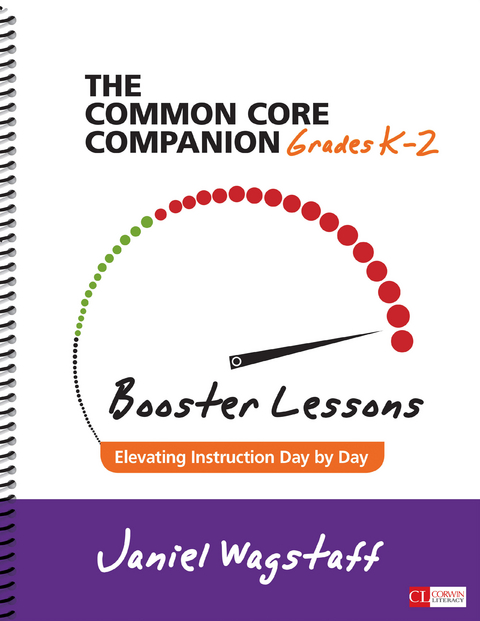
The Common Core Companion: Booster Lessons, Grades K-2 (eBook)
288 Seiten
Corwin (Verlag)
978-1-5063-3241-3 (ISBN)
Introduction
Lesson Sequence 1: Integrating Writing Personal Narratives With Identifying Sensory Words in Text
What Teachers Guide Across the Week
What Students Do Across the Week
Booster Reading Lesson 1: Narrative Reading
Companion Writing Lesson 1: Quick Sketch Retelling
Booster Reading Lesson 2: Narrative Reading, Brainstorm Topics, Tell Stories
Companion Writing Lesson 2: Story Planning
Booster Reading Lesson 3: Narrative Reading
Companion Writing Lesson 3: Review Story Plan, Add Onomatopoetic Element(s), Begin Drafting
Booster Reading Lesson 4: Compare Narrative Readings
Companion Writing Lesson 4: Continue Drafting, Connect Anchor Chart to Our Own Writing
Booster Reading Lesson 5: Poetry Reading
Companion Writing Lesson 5: Quick Write Noisy Poems, Finish Stories, Share, Celebrate
A Snapshot of the Talk-It-Out Strategy
Kindergarten Adaptation
Second-Grade Adaptation
NEXT INSTRUCTIONAL STEPS
What Do I See? A Student Sample of Story Planning
What Do I See? A Student Sample of Personal Narrative
Authentic Assessment: Ideas for Evaluating Students’ Learning
Peer Power: Using Student Work as Mentor Texts
If/Then Chart
Mentor Texts
Extending the Work
Lesson Sequence 2: Integrating Research to Build and Present Knowledge With Identifying Topic and Details
What Teachers Guide Across the Week
What Students Do Across the Week
Booster Reading Lesson 1: Viewing Media to Begin Information Gathering and Discussion
Companion Writing Lesson 1: Jot Topic and Details Using Interactive Writing
Booster Reading Lesson 2: Narrative Reading, Comparing Sources
Companion Writing Lesson 2: Informal Opinion Drawing and Writing
Booster Reading Lesson 3: Narrative Reading to Increase Background Knowledge
Companion Writing Lesson 3: Interviewing and Opinion Writing
Booster Reading Lesson 4: Reading and Discussing Our Fourth-Grade Partners’ Opinions
Companion Writing Lesson 4: Interactive Writing to Record Data
Booster Reading Lesson 5: Reading Mentor Texts for Parts of a Letter
Companion Writing Lesson 5: Interactive Writing to Inform About and Present Knowledge
A Snapshot of the Varied Writing Modes
First-Grade Adaptation
Second-Grade Adaptation
NEXT INSTRUCTIONAL STEPS
What Do I See? A Kindergarten Opinion Sample
What Do I See? Another Kindergarten Opinion Sample
Authentic Assessment: Ideas for Evaluating Students’ Learning
Peer Power: Using Student Work as Mentor Texts
If/Then Chart
Mentor Texts
Extending the Work
Lesson Sequence 3: Integrating Opinion Writing With Close Reading for Text Evidence
What Teachers Guide Across the Week
What Students Do Across the Week
Booster Writing Lesson 1: What Is an Opinion?
Companion Reading Lesson 1: Re-Identify Elements of the Text Type Using a Mentor Text
Booster Reading Lesson 2: Deeply Understanding a Text to Stimulate Opinion Writing
Companion Writing Lesson 2: Revisiting the Text to Quick Jot Opinion Notes, Followed by Collaborative Conversation
Booster Reading Lesson 3: Charting Character Development and Character Traits
Companion Writing Lesson 3: Organizing Our Opinions With Thinking Boxes
Booster Reading Lesson 4: Studying Mentor Texts: Concluding Opinions
Companion Writing Lesson 4: Completing Thinking Boxes and Drafting Opinions
Booster Reading Lesson 5: Exploring Multiple Forms and Purposes for Opinion Writing
Companion Writing Lesson 5: Completing and Reviewing Drafts, Sharing, Celebration and Delivering Opinions to the School Librarian OR Finish Writing and Celebrate!
A Snapshot of Moving From Opinions About Texts to Opinions About Topics
Kindergarten Adaptation
First-Grade Adaptation
NEXT INSTRUCTIONAL STEPS
What Do I See? A Student Sample of Opinion Writing
What Do I See? A Student Sample of Thinking Boxes
Authentic Assessment: Ideas for Evaluating Students’ Learning
Peer Power: Using Student Work as Mentor Texts
If/Then Chart
Mentor Texts
Extending the Work
Lesson Sequence 4: Integrating Comparing and Contrasting With Publishing Using Digital Tools
What Teachers Guide Across the Week
What Students Do Across the Week
Booster Reading Lesson 1: Reading Narrative Text
Companion Writing Lesson 1: Jot Sticky Note Details
Booster Reading Lesson 2: Reading Informational Text
Companion Writing Lesson 2: Jot Sticky Note Details Then Compare and Contrast
Booster Reading Lesson 3: View Short Video Clips to Build Knowledge
Companion Writing Lesson 3: Jot Sticky Note Details Then Compare and Contrast
Booster Reading Lesson 4: Which Ideas Are Most Important? Sort and Categorize
Companion Writing Lesson 4: Organizing Ideas With Thinking Boxes
Booster Writing Lesson 5: Compose Shared Text, Celebrate With Photo Story
Companion Reading Lesson 5: Mentor Text: Picture Glossaries
A Snapshot of Comparing and Contrasting With Narrative Text
Kindergarten Adaptation
Second-Grade Adaptation
NEXT INSTRUCTIONAL STEPS
What Do I See? A Sample of Shared Writing
What Do I See? A Student Sample of Thinking Boxes
Authentic Assessment: Ideas for Evaluating Students’ Learning
Peer Power: Using Student Work as Mentor Texts
If/Then Chart
Mentor Texts
Extending the Work
Lesson Sequence 5: Integrating Informative Writing With Use of Text Features
What Teachers Guide Across the Week
What Students Do Across the Week
Booster Reading Lesson 1: Reading With Purpose and an Eye for Evidence
Companion Writing Lesson 1: Two-Column Notes
Booster Reading Lesson 2: Close Reading of Media: Caine’s Arcade Video 1
Companion Writing Lesson 2: Revisit Media and Add to Two-Column Notes
Booster Reading Lesson 3: Close Reading of Media: Sections of Caine’s Arcade Video 2
Companion Writing Lesson 3: Two-Column Note Additions, Organizing Notes, Talking Out Caine’s Story
Booster Reading Lesson 4: Study Mentor Texts: Newsela Newspaper Articles
Companion Writing Lesson 4: Compose Headlines, Headings, and Begin to Draft
Booster Reading Lesson 5: Exploring Deeper Meanings: Caine’s Arcade Updates and Conversation
Companion Writing Lesson 5: Finish Draft, Peer Check, Teacher Conference, Publish! (will require several writing periods)
A Snapshot of Using Volunteers to Help Students Prepare to Publish
Kindergarten Adaptation
First-Grade Adaptation
NEXT INSTRUCTIONAL STEPS
What Do I See? A Student Sample of Informative Writing
What Do I See? A Student Sample of Two-Column Notes
Authentic Assessment: Ideas for Evaluating Students’ Learning
Peer Power: Using Student Work as Mentor Texts
If/Then Chart
Mentor Texts
Extending the Work
Integrating Foundational and Language Standards
References
| Erscheint lt. Verlag | 6.10.2015 |
|---|---|
| Reihe/Serie | Corwin Literacy | Corwin Literacy |
| Verlagsort | Thousand Oaks |
| Sprache | englisch |
| Themenwelt | Schulbuch / Wörterbuch ► Schulbuch / Allgemeinbildende Schulen |
| Schlagworte | CCSS • Early Literacy • foundational skills • integrated reading and writing • K-2 reading • K-2 writing • Literacy |
| ISBN-10 | 1-5063-3241-2 / 1506332412 |
| ISBN-13 | 978-1-5063-3241-3 / 9781506332413 |
| Informationen gemäß Produktsicherheitsverordnung (GPSR) | |
| Haben Sie eine Frage zum Produkt? |
 EPUB (Adobe DRM)
Kopierschutz: Adobe-DRM
Adobe-DRM ist ein Kopierschutz, der das eBook vor Mißbrauch schützen soll. Dabei wird das eBook bereits beim Download auf Ihre persönliche Adobe-ID autorisiert. Lesen können Sie das eBook dann nur auf den Geräten, welche ebenfalls auf Ihre Adobe-ID registriert sind.
Details zum Adobe-DRM
Dateiformat: EPUB (Electronic Publication)
EPUB ist ein offener Standard für eBooks und eignet sich besonders zur Darstellung von Belletristik und Sachbüchern. Der Fließtext wird dynamisch an die Display- und Schriftgröße angepasst. Auch für mobile Lesegeräte ist EPUB daher gut geeignet.
Systemvoraussetzungen:
PC/Mac: Mit einem PC oder Mac können Sie dieses eBook lesen. Sie benötigen eine
eReader: Dieses eBook kann mit (fast) allen eBook-Readern gelesen werden. Mit dem amazon-Kindle ist es aber nicht kompatibel.
Smartphone/Tablet: Egal ob Apple oder Android, dieses eBook können Sie lesen. Sie benötigen eine
Geräteliste und zusätzliche Hinweise
Buying eBooks from abroad
For tax law reasons we can sell eBooks just within Germany and Switzerland. Regrettably we cannot fulfill eBook-orders from other countries.
aus dem Bereich