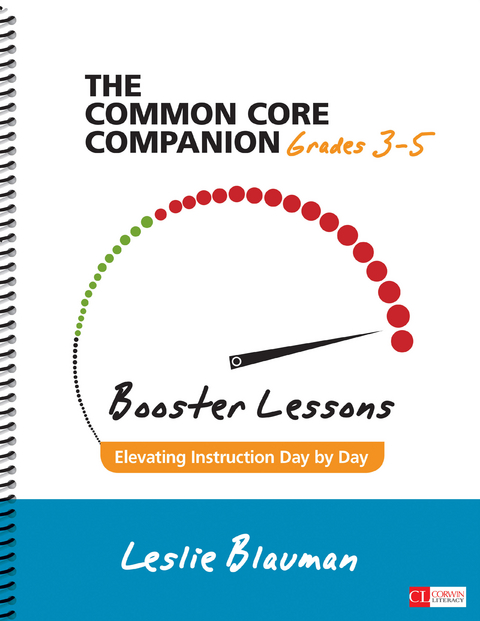
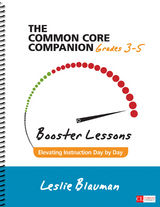
The Common Core Companion: Booster Lessons, Grades 3-5 (eBook)
280 Seiten
Corwin (Verlag)
978-1-5063-2500-2 (ISBN)
Introduction
LESSON SEQUENCE 1: Integrating Opinion Writing With Evaluating Argument
What Teachers Guide Across the Week
What Students Do Across the Week
Booster Reading Lesson 1: Understanding Point of View
Adapting This Lesson for Other Text Types: Informational
Companion Writing Lesson 1: Launching Opinion and Persuasive Writing
Snapshot of a Turn-and-Talk Peer Conference on POV
Booster Reading Lesson 2: Co-Constructing and Close Reading
Companion Writing Lesson 2: Determine Structure and Essential Elements
Language Connections: Formal Versus Informal English
Booster Reading Lesson 3: Reading and Annotating Fairy Tales
Companion Writing Lesson 3: Planning and Drafting
Booster Reading Lesson 4: Compare/Contrast Writing
Companion Writing Lesson 4: Revision Focus on Transition Words
Booster Reading Lesson 5: Complete Compare/Contrast Piece
Companion Writing Lesson 5: Edit and Finalize Piece
Third-Grade Adaptation
Fifth-Grade Adaptation
NEXT INSTRUCTIONAL STEPS
What Do I See? A Student Sample of Persuasive Writing
What Do I See? A Student Sample of Compare and Contrast
Authentic Assessment: Student Reflection and Evaluation
Peer Power: How to Use Student Work as Mentor Texts
If/Then Chart
Mentor Texts
Unit Planning: How to Build Out Three Weeks
LESSON SEQUENCE 2: Integrating Reading Craft and Structure With Opinion Writing
What Teachers Guide Across the Week
What Students Do Across the Week
Booster Reading Lesson 1: Explaining How an Author Uses Reasons and Evidence in Informational Text
Companion Writing Lesson 1: Expressing an Opinion in Response to Text
Booster Reading Lesson 2: Examining How Text Features Help With Main Idea and Evidence
Companion Writing Lesson 2: Modeling Opinion Writing
Language Connections: Determine or Clarify the Meaning of Unknown Words
Booster Reading Lesson 3: Using Essential Questions to Dig Deeper
Companion Writing Lesson 3: Launching Opinion Writing
Booster Reading Lesson 4: Moving to Independence
Companion Writing Lesson 4: Working Through the Writing Process
Booster Reading Lesson 5: Assessing Our Learning
Companion Writing Lesson 5: Wrapping Up the Writing
Snapshot of How to Move From a Written Opinion Piece to a Speech
Third-Grade Adaptation
Fourth-Grade Adaptation
NEXT INSTRUCTIONAL STEPS
What Do I See? A Student Sample of Response to Reading
What Do I See? A Student Sample of Response to Reading
Authentic Assessment: Student Reflection and Evaluation
Peer Power: How to Use Student Work as Mentor Texts
If/Then Chart
Mentor Texts
Unit Planning: How to Build Out Three Weeks
LESSON SEQUENCE 3: Integrating Narrative Writing With Craft and Structure
What Teachers Guide Across the Week
What Students Do Across the Week
Booster Reading Lesson 1: Elements of Myths
Companion Writing Lesson 1: Starting to Envision an Original Myth
Adapting This Lesson for Other Text Types: Informational
Booster Reading Lesson 2: Co-Constructing a Summary and Independent Reading
Companion Writing Lesson 2: Planning a Myth
Booster Reading Lesson 3: Mini-Book Clubs
Companion Writing Lesson 3: Adding Character Description and Dialogue
Language Connections: Eavesdropping on a Book Club Conversation
Booster Reading Lesson 4: Looking at Language
Companion Writing Lesson 4: Rich Language Equals Rich Writing
Booster Reading Lesson 5: Wrapping Up and Assessment
Companion Writing Lesson 5: Finalizing the Myths
Langage Connections: Reading With Fluency
Third-Grade Adaptation
Fifth-Grade Adaptation
NEXT INSTRUCTIONAL STEPS
What Do I See? A Student Response to Literary Elements
What Do I See? A Student Sample of an Original Myth
Authentic Assessment: Student Reflection and Evaluation
Peer Power: How to Use Student Work as Mentor Texts
If/Then Chart
Mentor Texts
Unit Planning: How to Build Out Three Weeks
LESSON SEQUENCE 4: Integrating Explanatory Text Writing With Reading for Key Ideas
What Teachers Guide Across the Week
What Students Do Across the Week
Booster Writing Lesson 1: Informative/Explanatory Text Makes the World Go ′Round
Companion Reading Lesson 1: Noticing Text Features
Adapting This Lesson for Other Text Types: Literature
Booster Writing Lesson 2: Grouping by Headings
Companion Reading Lesson 2: How Authors Use Headings
Booster Writing Lesson 3: Sequencing Information
Companion Reading Lesson 3: Close Reading a Text and Visuals
Language Connections: Vocabulary
Booster Writing Lesson 4: Vocabulary and Elaboration
Companion Reading Lesson 4: Assessing Understanding With Annotating and Summarizing Text
Booster Writing Lesson 5: Presenting the “All About” Pieces
Companion Reading Lesson 5: Presenting the “All About” Pieces
Snapshot of a Presentation
Fourth-Grade Adaptation
Fifth-Grade Adaptation
NEXT INSTRUCTIONAL STEPS
What Do I See? A Student Sample of Informative Text
What Do I See? A Student Sample of a Topic Written in Two Different Formats
Authentic Assessment: Student Reflection and Evaluation
Peer Power: How to Use Student Work as Mentor Texts
If/Then Chart
Mentor Texts
Unit Planning: How to Build Out Three Weeks
LESSON SEQUENCE 5: Integrating Research With Presentation
What Teachers Guide Across the Week
What Students Do Across the Week
Booster Writing Lesson 1: Introducing Research and Questions
Companion Reading Lesson 1: Evaluating Print and Digital Content
Adapting This Lesson for Other Text Types: Literature
Booster Writing Lesson 2: Determining Importance and Note-Taking
Companion Reading Lesson 2: Becoming a Media-Savvy, Critical Reader
Snapshot of Student Collaboration
Language Connections: Words in Their Best Order
Booster Writing Lesson 3: A Focus on Note-Taking
Companion Reading Lesson 3: Analyzing Notes
Booster Writing Lesson 4: Drafting
Companion Reading Lesson 4: Re-Reading and Refining Drafts
Booster Writing Lesson 5: Putting It All Together
Companion Reading Lesson 5: Compelling Conclusions
Third-Grade Adaptation
Fourth-Grade Adaptation
NEXT INSTRUCTIONAL STEPS
What Do I See? A Student Sample of a Nonfiction Article
What Do I See? A Student Sample of a Nonfiction Research Piece
Authentic Assessment: Student Reflection and Evaluation
Peer Power: How to Use Student Work as Mentor Texts
If/Then Chart
Mentor Texts
Unit Planning: How to Build Out Three Weeks
References
| Erscheint lt. Verlag | 14.7.2015 |
|---|---|
| Reihe/Serie | Corwin Literacy | Corwin Literacy |
| Verlagsort | Thousand Oaks |
| Sprache | englisch |
| Themenwelt | Schulbuch / Wörterbuch ► Schulbuch / Allgemeinbildende Schulen |
| Schlagworte | cccs • Comprehension • craft and structure • Literacy • Mentor Texts • Peer Feedback • Reading & Writing Integration |
| ISBN-10 | 1-5063-2500-9 / 1506325009 |
| ISBN-13 | 978-1-5063-2500-2 / 9781506325002 |
| Informationen gemäß Produktsicherheitsverordnung (GPSR) | |
| Haben Sie eine Frage zum Produkt? |
 EPUB (Adobe DRM)
Kopierschutz: Adobe-DRM
Adobe-DRM ist ein Kopierschutz, der das eBook vor Mißbrauch schützen soll. Dabei wird das eBook bereits beim Download auf Ihre persönliche Adobe-ID autorisiert. Lesen können Sie das eBook dann nur auf den Geräten, welche ebenfalls auf Ihre Adobe-ID registriert sind.
Details zum Adobe-DRM
Dateiformat: EPUB (Electronic Publication)
EPUB ist ein offener Standard für eBooks und eignet sich besonders zur Darstellung von Belletristik und Sachbüchern. Der Fließtext wird dynamisch an die Display- und Schriftgröße angepasst. Auch für mobile Lesegeräte ist EPUB daher gut geeignet.
Systemvoraussetzungen:
PC/Mac: Mit einem PC oder Mac können Sie dieses eBook lesen. Sie benötigen eine
eReader: Dieses eBook kann mit (fast) allen eBook-Readern gelesen werden. Mit dem amazon-Kindle ist es aber nicht kompatibel.
Smartphone/Tablet: Egal ob Apple oder Android, dieses eBook können Sie lesen. Sie benötigen eine
Geräteliste und zusätzliche Hinweise
Buying eBooks from abroad
For tax law reasons we can sell eBooks just within Germany and Switzerland. Regrettably we cannot fulfill eBook-orders from other countries.
aus dem Bereich