



Epa's Clean Air Act Toxics Database
Seiten
1992
Crc Press Inc
9780873718196 (ISBN)
Crc Press Inc
9780873718196 (ISBN)
- Titel ist leider vergriffen;
keine Neuauflage - Artikel merken
Volume 1 in a four-volume series of databases that focus on 189 toxic airborne substances regulated by the US Environmental Protection Agency (EPA) as a result of the 1990 Clean Air Act Amendments. This volume summarizes over 50 sampling and analytical methods.
"EPA's Clean Air Act Toxics Database" is a four-volume series of databases that focus on 189 toxic airborne substances regulated by the US Environmental Protection Agency (EPA) as a result of the 1990 Clean Air Act Amendments. Each database features an automatic installation programme, advanced menu-driven search capabilities, and an automatic printing feature that can output data to hard-copy reports or electronic files, which can then be easily imported into popular word processing software packages. The databases will run on any IBM or IBM-compatible personal computer with 640K RAM, a hard drive and at least 1MB of available hard disk space. DOS 2.0 or higher is also required, and a manual is included with each database. Information provided in "EPA's Clean Air Act Toxics Database" has been drawn from EPA reports, ACS-sponsored publications, the National Toxicology Program's Chemical Database, and other sources. The four-volume set represents a complete source for frequently needed information for air toxics sampling and analysis, pollution abatement, regulatory decisions and occupational health and safety support required for complying with the Clean Air Act.
Volume 1, "Air Toxics Sampling and Analysis Methods Database" summarizes over 50 sampling and analytical methods. For each method, the database presents the scope and application of each method, a brief summary including detection limits and QA/QC requirements, and equipment needed, such as instrumentation, chromatographic columns and dispersive optics. The source of each method is referenced. In addition, the accompanying manual includes a summary of problems unique to air sampling; considerations important for collecting representative samples; a discussion on selecting sampling devices for volatile, semi-volatile and non-volatile compounds; and a brief discourse on the influence of meteorology and topography in collecting air samples.
"EPA's Clean Air Act Toxics Database" is a four-volume series of databases that focus on 189 toxic airborne substances regulated by the US Environmental Protection Agency (EPA) as a result of the 1990 Clean Air Act Amendments. Each database features an automatic installation programme, advanced menu-driven search capabilities, and an automatic printing feature that can output data to hard-copy reports or electronic files, which can then be easily imported into popular word processing software packages. The databases will run on any IBM or IBM-compatible personal computer with 640K RAM, a hard drive and at least 1MB of available hard disk space. DOS 2.0 or higher is also required, and a manual is included with each database. Information provided in "EPA's Clean Air Act Toxics Database" has been drawn from EPA reports, ACS-sponsored publications, the National Toxicology Program's Chemical Database, and other sources. The four-volume set represents a complete source for frequently needed information for air toxics sampling and analysis, pollution abatement, regulatory decisions and occupational health and safety support required for complying with the Clean Air Act.
Volume 1, "Air Toxics Sampling and Analysis Methods Database" summarizes over 50 sampling and analytical methods. For each method, the database presents the scope and application of each method, a brief summary including detection limits and QA/QC requirements, and equipment needed, such as instrumentation, chromatographic columns and dispersive optics. The source of each method is referenced. In addition, the accompanying manual includes a summary of problems unique to air sampling; considerations important for collecting representative samples; a discussion on selecting sampling devices for volatile, semi-volatile and non-volatile compounds; and a brief discourse on the influence of meteorology and topography in collecting air samples.
| Verlagsort | Bosa Roca |
|---|---|
| Sprache | englisch |
| Maße | 184 x 267 mm |
| Gewicht | 383 g |
| Themenwelt | Schulbuch / Wörterbuch ► Lexikon / Chroniken |
| Naturwissenschaften ► Biologie ► Ökologie / Naturschutz | |
| Recht / Steuern ► EU / Internationales Recht | |
| Recht / Steuern ► Öffentliches Recht ► Umweltrecht | |
| Recht / Steuern ► Privatrecht / Bürgerliches Recht ► Sachenrecht | |
| ISBN-13 | 9780873718196 / 9780873718196 |
| Zustand | Neuware |
| Informationen gemäß Produktsicherheitsverordnung (GPSR) | |
| Haben Sie eine Frage zum Produkt? |
Mehr entdecken
aus dem Bereich

aus dem Bereich
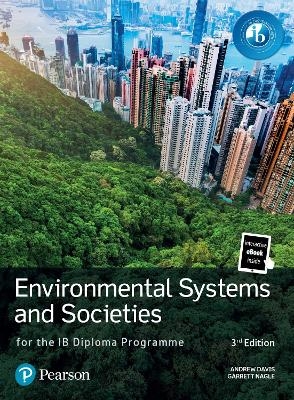
Media-Kombination (2024)
Pearson Education Limited
CHF 115,75
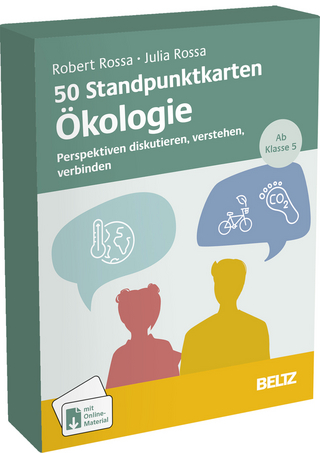
Perspektiven diskutieren, verstehen, verbinden
Lehr- oder Lernkarte (2024)
Beltz
CHF 44,75
Media-Kombination (2025)
Pearson Education Limited
CHF 153,20


