A Companion to Critical and Cultural Theory (eBook)
John Wiley & Sons (Verlag)
978-1-118-47229-3 (ISBN)

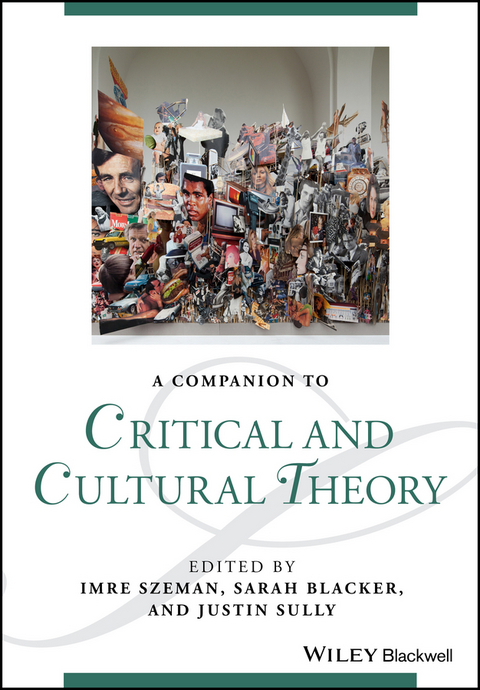
This Companion addresses the contemporary transformation of critical and cultural theory, with special emphasis on the way debates in the field have changed in recent decades.
- Features original essays from an international team of cultural theorists which offer fresh and compelling perspectives and sketch out exciting new areas of theoretical inquiry Thoughtfully organized into two sections - lineages and problematics - that facilitate its use both by students new to the field and
advanced scholars and researchers - Explains key schools and movements clearly and succinctly, situating them in relation to broader developments in culture, society, and politics
- Tackles issues that have shaped and energized the field since the Second World War, with discussion of familiar and under-theorized topics related to living and laboring, being and knowing, and agency and belonging
Imre Szeman is a Canada Research Chair of Cultural Studies and Professor of English and Film Studies at the University of Alberta, and adjunct professor of Visual and Critical Studies at the Ontario College of Art and Design University. He is the founder of the Canadian Association of Cultural Studies and a founding member of the US Cultural Studies Association. He is the author or editor of many books, including most recently, Contemporary Marxist Theory: An Anthology (2014), Popular Culture: A User's Guide (3rd revised edition, 2013), After Globalization (Wiley Blackwell, 2011), and Cultural Theory: An Anthology (Wiley Blackwell, 2010).
Sarah Blacker is a Postdoctoral Research Fellow at the Max Planck Institute for the History of Science, Berlin, Germany. Located at the intersection of science and technology studies, critical theory, and cultural studies, her research explores the politics of genomic medicine and health disparities' relation to racial inequalities in North America. She is co-editor of the journal Reviews in Cultural Theory.
Justin Sully teaches literary and cultural studies at Queen's University, Kingston, Ontario, Canada. His research tracks the cultural history of statistics and the political aesthetics of enumeration in film, television, and digital media. He is co-editor of the journal Reviews in Cultural Theory.
This Companion addresses the contemporary transformation of critical and cultural theory, with special emphasis on the way debates in the field have changed in recent decades. Features original essays from an international team of cultural theorists which offer fresh and compelling perspectives and sketch out exciting new areas of theoretical inquiry Thoughtfully organized into two sections lineages and problematics that facilitate its use both by students new to the field andadvanced scholars and researchers Explains key schools and movements clearly and succinctly, situating them in relation to broader developments in culture, society, and politics Tackles issues that have shaped and energized the field since the Second World War, with discussion of familiar and under-theorized topics related to living and laboring, being and knowing, and agency and belonging
Imre Szeman is a Canada Research Chair of Cultural Studies and Professor of English and Film Studies at the University of Alberta, and adjunct professor of Visual and Critical Studies at the Ontario College of Art and Design University. He is the founder of the Canadian Association of Cultural Studies and a founding member of the US Cultural Studies Association. He is the author or editor of many books, including most recently, Contemporary Marxist Theory: An Anthology (2014), Popular Culture: A User's Guide (3rd revised edition, 2013), After Globalization (Wiley Blackwell, 2011), and Cultural Theory: An Anthology (Wiley Blackwell, 2010). Sarah Blacker is a Postdoctoral Research Fellow at the Max Planck Institute for the History of Science, Berlin, Germany. Located at the intersection of science and technology studies, critical theory, and cultural studies, her research explores the politics of genomic medicine and health disparities' relation to racial inequalities in North America. She is co-editor of the journal Reviews in Cultural Theory. Justin Sully teaches literary and cultural studies at Queen's University, Kingston, Ontario, Canada. His research tracks the cultural history of statistics and the political aesthetics of enumeration in film, television, and digital media. He is co-editor of the journal Reviews in Cultural Theory.
Title Page 5
Copyright Page 6
Contents 7
Contributors 11
Acknowledgments 17
Introduction 19
Part I Lineages 27
Chapter 1 Frankfurt – New York – San Diego 1924–1968 or, Critical Theory
Frankfurt 1924–1935, The Welter of Method 30
New York 1935–1953, Life Subsumed 38
San Diego 1965–, Quandary of the Riot 44
Notes 48
References 49
Chapter 2 Vienna 1899 – Paris 1981 or, Psychoanalysis
Notes 64
References 64
Chapter 3 Paris 1955–1968 or, Structuralism
Foundations 67
Structure 69
Theoretical Anti-Humanism 71
The Scientific Turn 72
History as Structure without a Subject 73
The Split Subject 76
High Structuralism 78
The Revenge of History 80
Notes 82
References 82
Chapter 4 Birmingham – Urbana?Champaign 1964–1990 or, Cultural Studies
Notes 97
References 97
Chapter 5 Baltimore – New Haven 1966–1983 or, Deconstruction
Deconstruction, Without Limit… (Introduction) 99
DerridAmerica (Phase I) 101
“Boa-Deconstructors” (Phase II) 105
Deconstruction, Engaged (Phase III) 108
Momentous Inconclusions 110
References 113
Chapter 6 Paris – Boston – Berkeley – the Mexico/Texas Borderlands 1949–1990 or, Gender and Sexuality
On the Times of Gender and Sexuality 117
1979/1949/1989: Situating Consciousness 120
1980/1995–1997/2006/2012: Presses, Anthologies, Counter-Public Spheres 125
1976/1961/1990/1983: Other Foucaults 128
Incendiary Legacies 131
Notes 134
References 135
Chapter 7 Delhi/Ahmednagar Fort – Washington, DC/Birmingham Jail – Pretoria/Robben Island 1947–1994 or, Race, Colonialism, Postcolonialism
Colonialism 143
Race 145
Decolonization 147
Postcolonialism 150
References 153
Chapter 8 Petrograd/Leningrad – Havana – Beijing 1917–1991 or, Marxist Theory and Socialist Practice
References 169
Chapter 9 Chile – Seattle – Cairo 1973–2017? or, Globalization and Neoliberalism
Chile and New York City 1973–1975 176
Chiapas and Seattle 1994–1999 179
Cairo and Greece 2008–Present 183
Addendum 186
Notes 187
References 189
Part II Problematics 193
Section A: Living and Laboring 193
Chapter 10 Subjectivity 199
Subjectivity and Power: Marxist Lineages 200
From the Subject of Production to the Production of the Subject 202
Neoliberal Subjectivity 206
Notes 212
References 213
Chapter 11 Diaspora and Migration 217
Towards an Analytics of Diasporic Culture 219
Jalleh’s Diasporic Culture 222
Diasporic Culture as a Culture of Capitalist Modernity 223
The Diasporic Condition 225
References 229
Chapter 12 Community, Collectivity, Affinities 231
The Critique of Community 232
Alternative Terms and Alternative Formulations: Queer World?Building 233
The Supplementarity of Affective Collectivity with Capitalism? 241
Notes 242
References 245
Chapter 13 Feminism 249
Feminist Theory and the Value of Materialism 249
Materialism and Feminist Praxis 250
Body: The Labor of Social Reproduction 253
Mind: Feminist Knowledge 256
Heart: The Value of Affect and Collective Action 258
Notes 260
References 262
Chapter 14 Gender and Queer Theory 269
Public Feelings: Affective Responses to Precarity 270
Rethinking Terms: Queer of Color Analyses and Precarity 273
After Sexuality? 276
Note 279
References 279
Chapter 15 Social Divisions and Hierarchies 281
Abundance from Scarcity 282
Derivative Logics 284
Rationalization, Solidarity, Socialization 285
Decolonizing Divisions 287
Reclaiming the Wealth of Society 291
References 292
Chapter 16 Work and Precarity 295
Hegel 296
Marx 299
Spinoza 302
Conclusion 305
References 306
Note 196
References 196
Section B: Being and Knowing 309
References 312
Chapter 17 Religion and Secularism 313
Narratives of Secularization 315
Constructing Religion 316
Contemporary Secularism 319
Conclusion 322
Notes 324
References 325
Chapter 18 Affect 327
Romanticism/Realism 328
Speculation/Materialism 333
Notes 336
References 337
Chapter 19 Indigenous Epistemes 339
Indigenous Epistemes 340
Epistemic Ignorance 343
Knowing the Other 344
Responsibility for Doing Homework 346
“Learning from Below” 348
Acknowledgments 349
Notes 349
References 350
Chapter 20 The Everyday, Taste, Class 353
Taste: Classifying the Classifiers 355
Attachment, Deliberation, and Dreams 358
Coda 362
References 363
Chapter 21 Disability Studies 365
Getting Familiar with Disability Studies: Introducing the Social Model 366
Defamiliarizing Disability: Complicating the Social Model 371
Are We Familiar Yet? 378
Note 378
References 378
Chapter 22 Unsound 383
“A True Sound Which Is Not in Reality,” or Duverney’s Dilemma 383
“Sounds That We Have Never Heard Before We Remember Them,” or Benjamin’s Déjà Entendu 387
“No-Point-of-Audition,” or McLuhan’s Acoustic Space 389
Conclusion 392
Note 393
References 393
Chapter 23 Screen Life 397
What to Do 399
Futurity 400
Prosumer and Cognitarian 402
Creative Industries 404
Waste 406
Conclusion 407
Notes 408
References 408
Chapter 24 Digital and New Media 413
Digital Culture: From Cyberspace to Social Media 415
Effects on Knowledge and Theory 418
New Media as Leak 419
Coda: Habitual New Media 422
Notes 424
References 425
Chapter 25 Science and Technology 429
Natural History and its Discontents 431
Science Fictional Environments 434
The State of the Species 438
Acknowledgments 441
Notes 441
References 443
Section C: Structures of Agency and Belonging 445
References 448
Chapter 26 Circulation 449
The Circulatory Economy 450
Circulation and the City 452
Circulation in the Domain of Discourse 453
Conclusion: Circulation Forever? 457
References 458
Chapter 27 Cultural Production 461
References 472
Chapter 28 Decolonization 475
Objects 476
Subjects 484
Coda: Decolonizing Theory 487
Notes 488
References 489
Chapter 29 Race and Ethnicity 491
Ethnicity’s Origins 492
The Many-Headed Hydra of Race 496
Biological Caesuras 498
References 501
Chapter 30 Humanism 503
Back to the 1840s: Political Humanism in Hegel, Feuerbach, and Marx 507
Notes 512
References 512
Chapter 31 Nature 515
Empty/Full 516
Time/Space 520
Beginning/End 523
References 526
Chapter 32 Scale 529
An Epoch of Space: From the Urban Question to the Modern World-System 530
Henri Lefebvre and the Dialectic of Scale 533
Scale and the Sublime 535
Scale without Humans 538
Notes 541
References 541
Chapter 33 Narrative 543
Narratological Approaches to Narrative 544
Narrative, Culture, Identity 552
References 555
Index 557
EULA 591
| Erscheint lt. Verlag | 7.7.2017 |
|---|---|
| Sprache | englisch |
| Themenwelt | Schulbuch / Wörterbuch ► Wörterbuch / Fremdsprachen |
| Geisteswissenschaften ► Sprach- / Literaturwissenschaft ► Anglistik / Amerikanistik | |
| Geisteswissenschaften ► Sprach- / Literaturwissenschaft ► Literaturwissenschaft | |
| Geisteswissenschaften ► Sprach- / Literaturwissenschaft ► Sprachwissenschaft | |
| Sozialwissenschaften | |
| Schlagworte | Being • Canadian Association of Cultural Studies • Colonialism • Critical Race Studies • Critical theory • Cultural Studies • Cultural Theory • Deconstruction • Disability Studies • Englische Literatur • English literature • Feminism • Gender • Ideology • Kulturtheorie • Literary Theory • Literatur • Literature • Literaturwissenschaft • Marxist theory • Mass media • Neoliberalism • Postcolonialism • Psychoanalysis • Representation • Reviews in Cultural Theory • Sexuality • Structuralism |
| ISBN-10 | 1-118-47229-2 / 1118472292 |
| ISBN-13 | 978-1-118-47229-3 / 9781118472293 |
| Informationen gemäß Produktsicherheitsverordnung (GPSR) | |
| Haben Sie eine Frage zum Produkt? |
 PDF (Adobe DRM)
Kopierschutz: Adobe-DRM
Adobe-DRM ist ein Kopierschutz, der das eBook vor Mißbrauch schützen soll. Dabei wird das eBook bereits beim Download auf Ihre persönliche Adobe-ID autorisiert. Lesen können Sie das eBook dann nur auf den Geräten, welche ebenfalls auf Ihre Adobe-ID registriert sind.
Details zum Adobe-DRM
Dateiformat: PDF (Portable Document Format)
Mit einem festen Seitenlayout eignet sich die PDF besonders für Fachbücher mit Spalten, Tabellen und Abbildungen. Eine PDF kann auf fast allen Geräten angezeigt werden, ist aber für kleine Displays (Smartphone, eReader) nur eingeschränkt geeignet.
Systemvoraussetzungen:
PC/Mac: Mit einem PC oder Mac können Sie dieses eBook lesen. Sie benötigen eine
eReader: Dieses eBook kann mit (fast) allen eBook-Readern gelesen werden. Mit dem amazon-Kindle ist es aber nicht kompatibel.
Smartphone/Tablet: Egal ob Apple oder Android, dieses eBook können Sie lesen. Sie benötigen eine
Geräteliste und zusätzliche Hinweise
Buying eBooks from abroad
For tax law reasons we can sell eBooks just within Germany and Switzerland. Regrettably we cannot fulfill eBook-orders from other countries.
aus dem Bereich