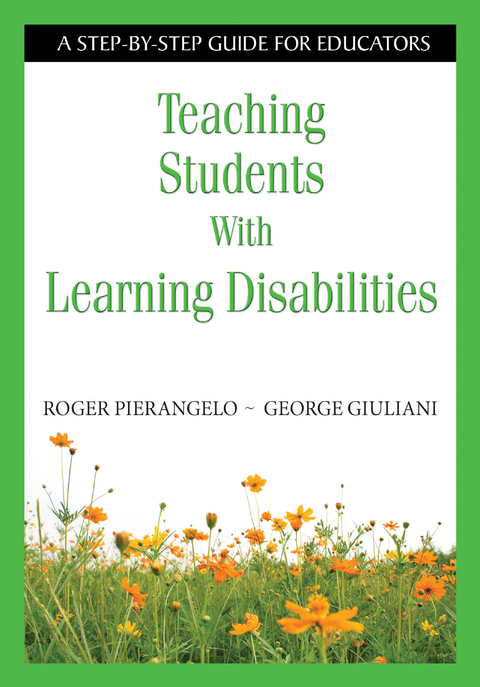
Teaching Students With Learning Disabilities (eBook)
192 Seiten
Corwin (Verlag)
978-1-4522-9313-4 (ISBN)
Dedications
About the Authors
Preface
1. Overview of Learning Disabilities
IDEA Definition of a Specific Learning Disability
Overview of Specific Learning Disabilities
Key Facts About Learning Disabilities
Causes of a Specific Learning Disability
Age of Onset for Specific Learning Disabilities
Gender Features for Specific Learning Disabilities
Cultural Features for Specific Learning Disabilities
Familial Patterns for Specific Learning Disabilities
Co-morbidity for Specific Learning Disabilities
Discrepancy in Diagnosing a Learning Disability
The Exclusionary Clause
Characteristics of Specific Learning Disabilities
Educational Implications of Specific Learning Disabilities
2. Characteristics of Children With Learning Disabilities
Overview
Academic Achievement Deficits
Language Deficits
Disorders of Attention
Achievement Discrepancy
Memory Deficits
Cognitive Deficits
Metacognition Deficits
Social-Emotional Problems
Nonverbal Learning Disorders (NLD)
Motivational and Attribution Problems
Perceptual Deficits
3. Types of Learning Disabilities
Auditory Processing Disorders
Dyscalculia (Arithmetic Disorder)
Dysgraphia (Writing Disorders)
Dyslexia (Reading Disorders)
Dysorthographia (Spelling Disorders)
Nonverbal Learning Disabilities (Nonverbal Learning Disorders or NLD)
Organizational Learning Disorders
Social Cue Disorder
Visual Processing Disorders
4. Eligibility Criteria for Learning Disabilities
Step I. Becoming Familiar With the Characteristics of Students With Specific Learning Disabilities
Step II. Determining the Procedures and Assessment Measures To Be Used
Step III. Determination of Eligibility for a Diagnosis of a Specific Learning Disability
5. Responsiveness to Intervention (RTI)
Overview of Responsiveness to Intervention (RTI)
Purpose of RTI
Importance of RTI
Is RTI a New Approach?
Core Principles of RTI
Rationale for Replacing the Discrepancy Model With RTI
Major Issues Related to the Use of the Concept of Achievement-Ability Discrepancy
Why RTI Was Considered in the Process of SLD Determination
The Role RTI Should Play in the Identification of Children With Specific Learning Disabilities
Can RTI Be Used as the Sole Determinant for SLD Classification?
In the Big Picture, How Does RTI Fit Into the Determination of LD Process?
Continuum of Intervention Support for At-Risk Students
Parent Involvement, An Important Component for Successful RTI Programs
Fidelity
The RTI Process for Teachers
What Teachers Need in Terms of Professional Development and RTI
6. Effective Teaching Strategies for Students With LD
Academic Instruction
Behavioral Interventions
Classroom Accommodations
7. Promoting Positive Social Interactions Among Students With and Without Learning Disabilities in an Inclusion Setting
Introduction
Review of Inclusion
Principles of Effective Inclusion
Why Are Social Skills Important?
Social-Cognitive Skill Development
The Role of Social Skills at School
Strategies to Foster a Sense of Belonging in the Inclusion Classroom
Creating a Positive Inclusion Classroom Climate
Teaching Social Skills Through Role-Playing and Observation
The Inclusion Classroom Teacher′s Power to Model Acceptance
Promoting Positive Social Interactions Among Students With and Without Learning Disabilities in an Inclusion Setting
8. IEP Development and Educational Placement Options for Students With Learning Disabilities
Overview of the IEP Committee
Members of the IEP Committee
Responsibilities of the IEP Committee
IDEA 2004 and IEP Committee Meeting: What to Know
Development of the Information Packet for Presentation to the IEP Committee
Required Forms
How Recommendations for Classification Are Made by the IEP Committee
Specific Educational Placement (LRE) Considerations According to IDEA 2004
Appealing the Decision of the IEP Committee
Other Roles of the IEP Committee
IEP Development
Components to Be Included in the IEP
Questions and Answers About the IEP Under IDEA 2004
9. Transition Services for Students With Learning Disabilities
The Transitional Process
The Intent of Transition Services
The Importance of Transition Services for Individuals With Learning Disabilities
The Introduction of Transition Services
The Individualized Transition Plan (ITP)
Transition Services
Special Considerations for Students With Learning Disabilities
Employment Services
Vocational Assessments
Leisure/Recreational Experiences
Advantages of Special Leisure Programs
Individual Concerns When Faced With Leisure Activities
Postsecondary Education Options
When to Begin College Planning
Understanding Legal Rights Pertaining to Postsecondary Education
Identifying the Desirable Characteristics of a College
Disability-Related Support Services
Assistive Technology
Glossary
References
Index
| Erscheint lt. Verlag | 29.5.2008 |
|---|---|
| Verlagsort | Thousand Oaks |
| Sprache | englisch |
| Themenwelt | Schulbuch / Wörterbuch ► Lernhilfen |
| Sozialwissenschaften ► Pädagogik ► Sonder-, Heil- und Förderpädagogik | |
| Schlagworte | Arithmetic Disorder • auditory processing disorders • Behavioral Interventions • Dyscalculia • dysgraphia • dyslexia • Dysorthographia • Idea • IEP development • Inclusion • inclusive • Inclusive classroom • Nonverbal Learning Disabilities • Nonverbal Learning Disorders • Organizational Learning Disorders • Parent involvement • reading disorders • Response to Intervention • RTI • Social Cue Disorder • Special education • Spelling Disorders • Transition • Transition Services • Visual Processing Disorders • Writing disorders |
| ISBN-10 | 1-4522-9313-9 / 1452293139 |
| ISBN-13 | 978-1-4522-9313-4 / 9781452293134 |
| Informationen gemäß Produktsicherheitsverordnung (GPSR) | |
| Haben Sie eine Frage zum Produkt? |
 EPUB (Adobe DRM)
Kopierschutz: Adobe-DRM
Adobe-DRM ist ein Kopierschutz, der das eBook vor Mißbrauch schützen soll. Dabei wird das eBook bereits beim Download auf Ihre persönliche Adobe-ID autorisiert. Lesen können Sie das eBook dann nur auf den Geräten, welche ebenfalls auf Ihre Adobe-ID registriert sind.
Details zum Adobe-DRM
Dateiformat: EPUB (Electronic Publication)
EPUB ist ein offener Standard für eBooks und eignet sich besonders zur Darstellung von Belletristik und Sachbüchern. Der Fließtext wird dynamisch an die Display- und Schriftgröße angepasst. Auch für mobile Lesegeräte ist EPUB daher gut geeignet.
Systemvoraussetzungen:
PC/Mac: Mit einem PC oder Mac können Sie dieses eBook lesen. Sie benötigen eine
eReader: Dieses eBook kann mit (fast) allen eBook-Readern gelesen werden. Mit dem amazon-Kindle ist es aber nicht kompatibel.
Smartphone/Tablet: Egal ob Apple oder Android, dieses eBook können Sie lesen. Sie benötigen eine
Geräteliste und zusätzliche Hinweise
Buying eBooks from abroad
For tax law reasons we can sell eBooks just within Germany and Switzerland. Regrettably we cannot fulfill eBook-orders from other countries.
aus dem Bereich