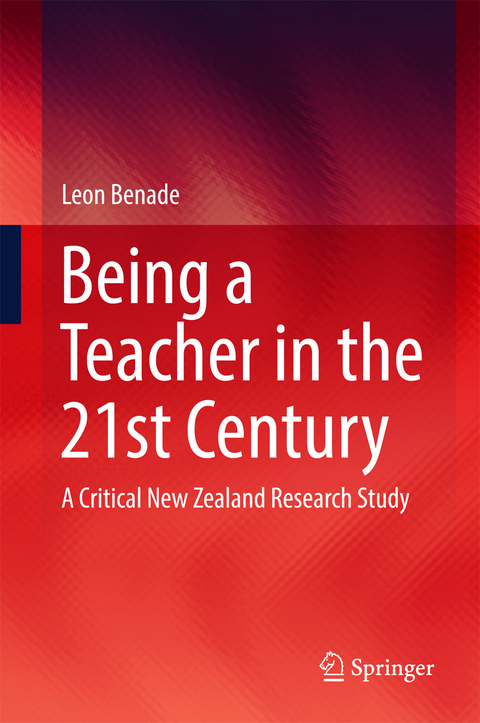
Being A Teacher in the 21st Century (eBook)
XI, 211 Seiten
Springer Singapore (Verlag)
978-981-10-3782-5 (ISBN)
This book provides scholars, teacher educators, as well as reflective school leaders and teachers with valuable insights into what it is to be a teacher in the 21st century. It does so by presenting original research based on a study of several New Zealand schools between 2013 and 2015, and in particular, a focussed study of four of those schools in 2015.
The book draws on the findings to take stock of some of the central manifestations of 21st-century learning, especially digital pedagogies and the collaborative practices associated with teaching and learning in modern learning environments. It reflects on the mental shifts and sometimes-painful transitions teachers and leaders are making and experiencing as they enter uncharted waters, moving from traditional classroom practices to ones that emphasise collaboration, teamwork and the radical de-centring of their personal roles. It outlines a blueprint for understanding how to navigate these changes, and describes and explains the nature of pedagogical shifts apparent in digital classrooms and modern learning environments.
Leon Benade is the Co-ordinator of Research of the School of Education, Auckland University of Technology, New Zealand. His education career spans 30 years, the last 20 of which have been in New Zealand. His main research interests are teachers' work, school policy, ethics, philosophy in schools, critical pedagogy, and the New Zealand Curriculum. Leon's current research is on the way the focus on '21st century learning' impacts on the work of teachers and school leaders. Related areas of interest include the question of teachers' critical reflective practice and the evolving role and nature of the concept of 'knowledge' in the 21st century curriculum.
A member of the Executive Committee of Philosophy of Education Society of Australasia (PESA), Leon is also a member of the New Zealand Association for Research in Education (NZARE).
This book provides scholars, teacher educators, as well as reflective school leaders and teachers with valuable insights into what it is to be a teacher in the 21st century. It does so by presenting original research based on a study of several New Zealand schools between 2013 and 2015, and in particular, a focussed study of four of those schools in 2015. The book draws on the findings to take stock of some of the central manifestations of 21st-century learning, especially digital pedagogies and the collaborative practices associated with teaching and learning in modern learning environments. It reflects on the mental shifts and sometimes-painful transitions teachers and leaders are making and experiencing as they enter uncharted waters, moving from traditional classroom practices to ones that emphasise collaboration, teamwork and the radical de-centring of their personal roles. It outlines a blueprint for understanding how to navigate these changes, and describes and explains the nature of pedagogical shifts apparent in digital classrooms and modern learning environments.
Leon Benade is the Co-ordinator of Research of the School of Education, Auckland University of Technology, New Zealand. His education career spans 30 years, the last 20 of which have been in New Zealand. His main research interests are teachers' work, school policy, ethics, philosophy in schools, critical pedagogy, and the New Zealand Curriculum. Leon's current research is on the way the focus on '21st century learning' impacts on the work of teachers and school leaders. Related areas of interest include the question of teachers' critical reflective practice and the evolving role and nature of the concept of 'knowledge' in the 21st century curriculum.A member of the Executive Committee of Philosophy of Education Society of Australasia (PESA), Leon is also a member of the New Zealand Association for Research in Education (NZARE).Leon is a founding member of the Knowledge and Education Research Unit (KERU) at the School of Critical Studies in Education at the University of Auckland. He is a consulting reviewer for the Australian Journal of Teacher Education and Educational Philosophy and Theory, a member of the Editorial Board of the New Zealand Journal of Educational Studies, and is also co-editor of the New Zealand Journal of Teachers’ Work and Associate Editor of the Open Review of Educational Research.
Acknowledgements 5
Contents 6
1 Introduction 11
Context 11
Conceptual Framework 13
A Bricolage of Critical Theory, Critical Hermeneutics and Post-Intentional Phenomenology 13
Hermeneutics 14
Critical Theory 14
Critical Research and Education 15
Developing a Critical Hermeneutics 17
Post-Intentional Phenomenology 18
A Personal Note 19
Division of Content 20
References 21
2 Presenting the Research 23
Introduction 23
Design and Participants 25
Ethics 30
The Four Schools 31
Innovation Primary 31
Angelus School 31
Millennial College 31
Holyoake College 32
Conclusion 32
References 32
3 The Future Is Now: What ‘21st-Century Learning’ Means for Teaching 34
Introduction 34
Futures Discourse and the Status of Knowledge 35
Character of the Digital Age 36
Technological Determinism 36
Digital Natives 37
21st-Century Learning 38
Skills Students Need for the 21st Century 38
Lifelong Learning 40
Learning at the Centre 40
21st-Century Learning and Modern Learning Practices 41
Personalised Learning 42
Culturally Responsive Pedagogy 42
Authentic Learning 44
Project-Based, Problem-Based and Design-Based Approaches to Learning 45
Time 45
‘Stage, Not Age’ 46
Innovation 47
Collaborative Teaching 47
Learning Environments 48
The Imperative of Workspaces 49
Design Initiative 50
The Place of Learning 51
Learning Space Design Principles 53
Furniture 55
Influence of Environment on Teaching and Learning 56
Critical Perspectives on the Technology of Space 59
Materiality 59
Lefebvre 61
ICT in Schools/BYOD 62
‘Digital Revolution’ 62
Student Access 63
Infrastructure 63
Staff PD/L 64
Integrating ICT in Schools 64
Digital Pedagogy 65
ICT and Student Learning 66
Teachers’ Reflective Practice 68
Definition 68
Becoming Reflective 69
Being Reflective 69
Implications for Practice 71
Change Management 72
Teacher Stress and Work Intensification 72
Change Management for Leadership 73
Staff Development and Learning 74
Conclusion 75
References 76
4 The Impacts on Teachers’ Work: 21st-Century Learning 83
The Demands of Modern Teaching and Learning Practices: A Critical Perspective 84
The Practical Studies 87
Modern Teaching and Learning Practice 87
Approach to Curriculum 88
Integrated Curriculum 90
Personalised Learning 93
Tracking and Reporting 98
Assessment 99
Classroom Management 101
Student Agency and Engagement 102
Student Attitudes and Opinions 105
On Reflection 107
Personalisation and the ‘Knowledge Problem’ 107
Intentionality 108
In Conclusion 110
References 111
5 The Impacts on Teachers’ Work: Working in Flexible Learning Environments 114
Flexible Learning Environments and Space: Some Critical Perspectives on Policy 115
AC Nielsen Study: Best Practice in School Design 116
Ministry of Education: Learning Studio Pilot Review 118
The Practical Studies: Working in Flexible (Innovative) Learning Environments 122
Innovation Primary 123
Angelus School 123
Millennial College 123
Design and Set-Up of the Working Space 124
Student Work and Attitudes 126
Classroom Management 128
Teachers’ Work and Attitudes 129
On Reflection 131
Spatiality 131
Design 133
Design Assumptions 134
Design May (Not) Support Pedagogy 135
Intentionality 136
In Conclusion 138
References 139
6 The Impacts on Teachers’ Work: ICT/BYOD and Digital Pedagogy 141
Digital Technology Implementation in Education: Critical Perspectives 142
The Practical Studies: The Challenge of Undertaking a BYOD Implementation 145
Holyoake College 146
The BYOD Policy at Holyoake: Arguments for and Against 146
BYOD at Innovation Primary, Millennial College and Angelus School 148
Digital pedagogy: Holyoake College 148
Digital pedagogy at Innovation Primary, Millennial College and Angelus School 152
The Relationship Between Device Use and Student Learning: Holyoake College 153
The Relationship Between Device Use and Student Learning: At Innovation Primary, Millennial College and Angelus School 155
Strategic and Management Considerations: Holyoake College 155
Strategic and Management Considerations: Innovation Primary, Millennial College and Angelus School 157
On Reflection: Critical Perspectives on Technology and ICT in Education 158
Materiality 159
Technology 159
Heidegger 159
Horkheimer and Marcuse 161
Intentionality 163
In Conclusion 165
References 167
7 The Impacts on Teachers’ Work: Practitioner Attitudes and Reflective Transitions 169
Critically Reflective Practice, Trust and Teaching as Inquiry 170
Teachers’ Critical Reflective Practice in the Context of Twenty-First Century Learning 170
The Role of Trust in Reflective Practice 171
Teaching as Inquiry: Well Intentioned, but Fundamentally Flawed 172
The Practical Studies 173
Introduction 173
Open to New Learning 174
Reflection–In, –On and For–Action 175
The Changes that e-Learning Demands 176
On Reflection 177
Intentionality 177
Transitions in Flexible Learning Environments 178
Transitions in a BYOD Environment 179
In Conclusion 180
References 182
8 Responding to 21st Century Learning Policy Demands 183
Policy: The New Zealand Context 183
Critical Considerations 185
The Policy Framework: A Critical Perspective 185
How Might Change be Effected? Theory and Practice 187
The Practical Studies 191
Introduction 191
Vision of, and Support for, Progressive Practices 191
Recruitment and Team Construction 193
Angelus School 193
Millennial College 194
Innovation Primary 195
Beginning Teachers (BT) 196
Supporting Staff 198
Looking Outward—The Community 200
The Quality of Relationship 200
Nature and Forms of Contact 200
Cultural Connection 201
Community Attitudes and Expectations 202
On Reflection 203
Intentionality 203
In Conclusion 207
References 208
9 Lessons to Be Learned? 210
Lessons for Practitioners in Schools 210
Lessons for Teacher Educators 211
Lessons for Policy-Makers 213
Lessons for Designers 214
The Final Word 215
References 215
| Erscheint lt. Verlag | 1.3.2017 |
|---|---|
| Zusatzinfo | XI, 211 p. 7 illus. |
| Verlagsort | Singapore |
| Sprache | englisch |
| Themenwelt | Schulbuch / Wörterbuch ► Unterrichtsvorbereitung ► Unterrichts-Handreichungen |
| Geisteswissenschaften | |
| Sozialwissenschaften ► Pädagogik ► Bildungstheorie | |
| Schlagworte | 21st-century learning • Collaborative Learning • Digital pedagogy • Education in New Zealand • E-Learning • Modern learning environments • Modern teaching and learning practice • One to one devices • rapidly changing school environments • reflective practice • reflective school leaders |
| ISBN-10 | 981-10-3782-5 / 9811037825 |
| ISBN-13 | 978-981-10-3782-5 / 9789811037825 |
| Informationen gemäß Produktsicherheitsverordnung (GPSR) | |
| Haben Sie eine Frage zum Produkt? |
 PDF (Wasserzeichen)
DRM: Digitales Wasserzeichen
Dieses eBook enthält ein digitales Wasserzeichen und ist damit für Sie personalisiert. Bei einer missbräuchlichen Weitergabe des eBooks an Dritte ist eine Rückverfolgung an die Quelle möglich.
Dateiformat: PDF (Portable Document Format)
Mit einem festen Seitenlayout eignet sich die PDF besonders für Fachbücher mit Spalten, Tabellen und Abbildungen. Eine PDF kann auf fast allen Geräten angezeigt werden, ist aber für kleine Displays (Smartphone, eReader) nur eingeschränkt geeignet.
Systemvoraussetzungen:
PC/Mac: Mit einem PC oder Mac können Sie dieses eBook lesen. Sie benötigen dafür einen PDF-Viewer - z.B. den Adobe Reader oder Adobe Digital Editions.
eReader: Dieses eBook kann mit (fast) allen eBook-Readern gelesen werden. Mit dem amazon-Kindle ist es aber nicht kompatibel.
Smartphone/Tablet: Egal ob Apple oder Android, dieses eBook können Sie lesen. Sie benötigen dafür einen PDF-Viewer - z.B. die kostenlose Adobe Digital Editions-App.
Buying eBooks from abroad
For tax law reasons we can sell eBooks just within Germany and Switzerland. Regrettably we cannot fulfill eBook-orders from other countries.
aus dem Bereich