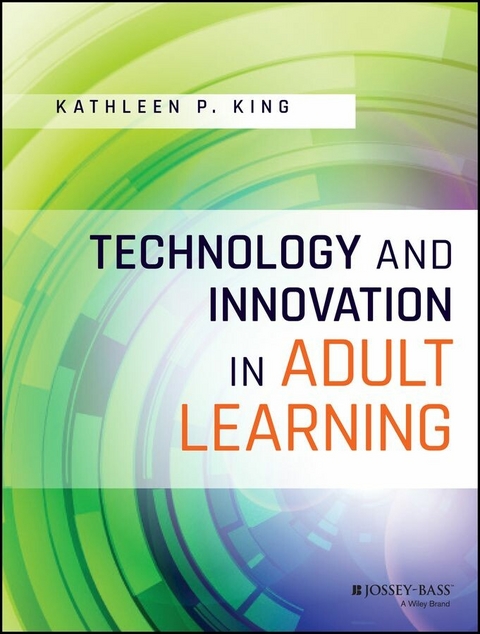
Technology and Innovation in Adult Learning (eBook)
John Wiley & Sons (Verlag)
978-1-119-05100-8 (ISBN)
Technology and Innovation in Adult Learning introduces educators and students to the intersection of adult learning and the growing technological revolution. Written by an internationally recognized expert in the field, this book explores the theory, research, and practice driving innovation in both adult learning and learning technology, and illuminates a powerful approach to recognize and leverage these opportunities. Building on current trends and research in technology and its use, each chapter illustrates the need, opportunities, and examples of current and future technologies that scaffold adult learning, and provides comprehensive coverage of both current and emerging challenges.
Many adult learning faculty, practitioners, and students realize that technology presents a growing and ever-present set of issues, yet few feel confident in identifying the opportunities that arise with each step forward. This book clarifies the interplay between adult learning and learning technology, and characterizes the cyclic exchange of information and opportunities that link these fields now and in the future.
- Understand the critical issues currently affecting adult learning
- Learn how technology is presenting both opportunities and challenges for the teaching and learning of adults in different contexts
- Examine recent research on learning technology for adult learners
- Discover how technological innovation can be applied now and how it will continue to shape the future of learning
Adult learning is on the rise, and there is no mistaking technology's role; whether they're learning with or about technology, today's adult learners come with unique sets of needs and skills that demand specialized approaches. Traditional pedagogical techniques don't transfer directly, and learning technology requires its own unique approach to development and use. Technology and Innovation in Adult Learning equips practitioners to further adult learning and shape the future of the field, while providing a rich perspective for classroom inquiry and research.
KATHLEEN P. KING is professor of education at the University of Central Florida, and coordinator of the graduate programs in higher education and policy studies. She has written extensively on using technology in adult education and has published 33 books, 56 journal articles, and 85 book chapters. As president of Transformation Education, LLC, she consults on matters such as distance learning, digital media, and instructional design. She has been recognized for her achievements and contributions to adult and higher education in many ways, including induction into the International Adult and Continuing Education Hall of Fame (2011); appointment as Visiting Professor at Nankai University, Tianjin, People's Republic of China (2012); and receiving an Outstanding Research Publication Award (Division I), American Educational Research Association (AERA) award (2009). She serves on the editorial board of several journals, including the Adult Education Quarterly, the Journal of Transformative Education, and New Horizons in Adult Education and Human Resource Development. With 20 years experience as a faculty development speaker on teaching with technology and transformative learning, she has spoken and given presentations at many conferences and universities worldwide.
A comprehensive exploration of technology's role in adult learning Technology and Innovation in Adult Learning introduces educators and students to the intersection of adult learning and the growing technological revolution. Written by an internationally recognized expert in the field, this book explores the theory, research, and practice driving innovation in both adult learning and learning technology, and illuminates a powerful approach to recognize and leverage these opportunities. Building on current trends and research in technology and its use, each chapter illustrates the need, opportunities, and examples of current and future technologies that scaffold adult learning, and provides comprehensive coverage of both current and emerging challenges. Many adult learning faculty, practitioners, and students realize that technology presents a growing and ever-present set of issues, yet few feel confident in identifying the opportunities that arise with each step forward. This book clarifies the interplay between adult learning and learning technology, and characterizes the cyclic exchange of information and opportunities that link these fields now and in the future. Understand the critical issues currently affecting adult learning Learn how technology is presenting both opportunities and challenges for the teaching and learning of adults in different contexts Examine recent research on learning technology for adult learners Discover how technological innovation can be applied now and how it will continue to shape the future of learning Adult learning is on the rise, and there is no mistaking technology's role; whether they're learning with or about technology, today's adult learners come with unique sets of needs and skills that demand specialized approaches. Traditional pedagogical techniques don't transfer directly, and learning technology requires its own unique approach to development and use. Technology and Innovation in Adult Learning equips practitioners to further adult learning and shape the future of the field, while providing a rich perspective for classroom inquiry and research.
KATHLEEN P. KING is professor of education at the University of Central Florida, and coordinator of the graduate programs in higher education and policy studies. She has written extensively on using technology in adult education and has published 33 books, 56 journal articles, and 85 book chapters. As president of Transformation Education, LLC, she consults on matters such as distance learning, digital media, and instructional design. She has been recognized for her achievements and contributions to adult and higher education in many ways, including induction into the International Adult and Continuing Education Hall of Fame (2011); appointment as Visiting Professor at Nankai University, Tianjin, People's Republic of China (2012); and receiving an Outstanding Research Publication Award (Division I), American Educational Research Association (AERA) award (2009). She serves on the editorial board of several journals, including the Adult Education Quarterly, the Journal of Transformative Education, and New Horizons in Adult Education and Human Resource Development. With 20 years experience as a faculty development speaker on teaching with technology and transformative learning, she has spoken and given presentations at many conferences and universities worldwide.
Cover 1
Title Page 5
Copyright 6
Contents 9
Preface 11
Acknowledgments 17
Part 1: A Foundation for New Learning 19
Chapter 1: The Digital Age Secret for Success: Adult Learning 21
The Lifesaver 23
Conclusion 33
Chapter 2: Understanding the Evolution of the Digital Age 35
How Did We Get Here? 36
Spurring Change Trends and Demands 37
Conclusion 59
Chapter 3: Adult Learning and Living in the Digital Age 61
Personal Development 65
Wellness 68
The Workplace 69
Entertainment 73
Spirituality 75
Informal and Formal Education 78
Conclusion 82
Chapter 4: Biological Concerns: Development, Aging, and Neuroscience 83
Models and Stages 84
Cognitive Development Theories 86
Intrinsic Motivation 91
Learning Preferences 93
Neuroplasticity 94
Critical Connections with Prior Experiences 98
Conclusion 100
Part 2: Scaffolding Essential Skills for Learning in the Digital Age 101
Chapter 5: Andragogy Illustrated 103
Andragogy Concepts and Background 104
Learning Developing from Social Role Tasks 110
Applications of Andragogy 112
Conclusion 118
Chapter 6: Motivation’s Essential Role 119
Motivation Defined 120
Motivation Needed 121
Extrinsic Motivation 122
Intrinsic Motivation 122
Leveraging Intrinsic Motivation with Technology Toolkit (LIMT Toolkit) 124
Conclusion 129
Chapter 7: Critical Thinking and Problem-Solving 131
Critical Thinking and Problem-Solving 132
Strategies to Cultivate: Critical Thinking and Problem-Based Learning 148
Conclusion 160
Chapter 8: Self?Directed Learning Discovered 161
Background of SDL 163
Strategies for Cultivating SDL 165
Conclusion 172
Chapter 9: Required Intercultural Competencies 173
Understanding Diversity in a Globally Connected World 175
Diversity Theories and Models 181
Strategies for Diversity Awareness 184
Conclusion 185
Chapter 10: Transformative Learning Perspectives 187
Transformative Learning Theory Specifics 190
Digital Age Needs for Transformative Learning 191
TL Research and Theory for the Digital Age 192
Transformative Learning Experience Strategies 194
Conclusion 201
Part 3: New Vistas in a Digital World 203
Chapter 11: Mind, Body, and Spirit Connections 205
Digital Age Needs for MBS Awareness 207
Mindfulness and Learning 211
MBS Theories and Models to Consider 212
Strategies to Incorporate MBS Awareness in Adult Learning 214
Conclusion 220
Chapter 12: e?Learning Models: Distance, Mobile, Virtual, and Informal Learning 221
Innovation Sweeps Across Adult Learning Sectors 222
Innovation and Adoption 223
e?Learning 224
e?Learning Theories and Models for the Digital Age 227
Strategies for Using e-Learning in the Digital Age 229
Conclusion 237
Chapter 13: Psychology of Technology Use and Adoption 239
Psychology of Technology 240
Theories and Models 243
Strategic Applications 249
Conclusion 253
Chapter 14: Conclusion: Emergent Research Opportunities 255
Adult Learning: New Vistas of Possibilities 256
Types of Learning Needed 259
Contexts of Adult Learning 261
Adult Learning Research: Opportunities 266
The Model of Researching Adult Learning and Innovation (MoRALI) 266
Strategy 14.1: Technology?Assisted Research Inquiry 270
Conclusion 271
References 273
Index 299
EULA 307
| Erscheint lt. Verlag | 10.2.2017 |
|---|---|
| Sprache | englisch |
| Themenwelt | Schulbuch / Wörterbuch ► Unterrichtsvorbereitung ► Unterrichts-Handreichungen |
| Geisteswissenschaften | |
| Sozialwissenschaften ► Pädagogik ► Erwachsenenbildung | |
| Schlagworte | Adult & Continuing Education • adult learning • adult learning challenges • adult learning enhancement • adult learning practices • adult learning research • adult learning technology • Adult Learning Theory • Bildungswesen • digital adult learning • Education • Educational technology • emerging learning technology • Erwachsenenbildung • Erwachsenenbildung, Weiterbildung • future of adult learning • future of learning technology • Hochschulen / Lehren u. Lernen • Instructional Design • Instructional Technology • issues in adult learning • learning technology • learning technology opportunities • Lifelong Learning • Online-Lernen • Onlinestudium • Online Teaching and Learning • Teaching & Learning (Higher Education) • Teaching with technology • technology in adult education |
| ISBN-10 | 1-119-05100-2 / 1119051002 |
| ISBN-13 | 978-1-119-05100-8 / 9781119051008 |
| Informationen gemäß Produktsicherheitsverordnung (GPSR) | |
| Haben Sie eine Frage zum Produkt? |
 PDF (Adobe DRM)
Kopierschutz: Adobe-DRM
Adobe-DRM ist ein Kopierschutz, der das eBook vor Mißbrauch schützen soll. Dabei wird das eBook bereits beim Download auf Ihre persönliche Adobe-ID autorisiert. Lesen können Sie das eBook dann nur auf den Geräten, welche ebenfalls auf Ihre Adobe-ID registriert sind.
Details zum Adobe-DRM
Dateiformat: PDF (Portable Document Format)
Mit einem festen Seitenlayout eignet sich die PDF besonders für Fachbücher mit Spalten, Tabellen und Abbildungen. Eine PDF kann auf fast allen Geräten angezeigt werden, ist aber für kleine Displays (Smartphone, eReader) nur eingeschränkt geeignet.
Systemvoraussetzungen:
PC/Mac: Mit einem PC oder Mac können Sie dieses eBook lesen. Sie benötigen eine
eReader: Dieses eBook kann mit (fast) allen eBook-Readern gelesen werden. Mit dem amazon-Kindle ist es aber nicht kompatibel.
Smartphone/Tablet: Egal ob Apple oder Android, dieses eBook können Sie lesen. Sie benötigen eine
Geräteliste und zusätzliche Hinweise
Buying eBooks from abroad
For tax law reasons we can sell eBooks just within Germany and Switzerland. Regrettably we cannot fulfill eBook-orders from other countries.
aus dem Bereich