


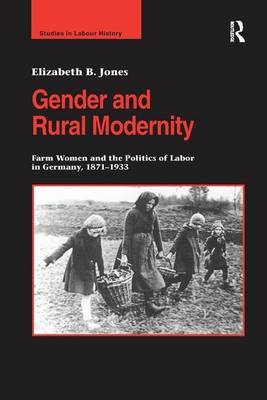
Gender and Rural Modernity
Farm Women and the Politics of Labor in Germany, 1871–1933
Seiten
2016
Routledge (Verlag)
978-1-138-26192-1 (ISBN)
Routledge (Verlag)
978-1-138-26192-1 (ISBN)
Gender and Rural Modernity explores how and why women's productive, reproductive and symbolic roles on German family farms assumed ever larger importance in the eyes of contemporary observers and how German farm women themselves shaped debates over agricultural labor and the nation's future before, during and after the First World War.
By the end of the First World War, women's labor was viewed by contemporary observers as fundamental to the survival of family farms in Germany and consequently to the nation's economic and social stability. At the same time, however, the overburdening of farm women sparked increasingly acrimonious conflicts between young hired women, or Mägde, their employers, and state officials. The progressive feminization of agricultural work in Germany during the prewar decades and attempts after the war to prevent young women's flight from family farms is the focus of this new study. Concentrating principally on developments in the Kingdom, later the Freestate, of Saxony, the author highlights the ways that previously invisible historical actors -young rural women- actively shaped state policies: in disputes over work between Mägde and their employers before village magistrates; in the thorny debates over rural social welfare reform and the campaigns to professionalize farm wives and daughters; and in state officials' uneven enforcement of agricultural employment laws and their struggles to maintain the food supply during and after the First World War. The book furthermore challenges established narratives of German history that equate modernity with the industrial and the urban, instead suggesting that rural inhabitants participated actively in the broader debates and crises that defined modernity in the Imperial and Weimar eras, particularly concerning debates over individual rights versus collective national duties, the future health and prosperity of the Volk, and the meanings of Germanness.
By the end of the First World War, women's labor was viewed by contemporary observers as fundamental to the survival of family farms in Germany and consequently to the nation's economic and social stability. At the same time, however, the overburdening of farm women sparked increasingly acrimonious conflicts between young hired women, or Mägde, their employers, and state officials. The progressive feminization of agricultural work in Germany during the prewar decades and attempts after the war to prevent young women's flight from family farms is the focus of this new study. Concentrating principally on developments in the Kingdom, later the Freestate, of Saxony, the author highlights the ways that previously invisible historical actors -young rural women- actively shaped state policies: in disputes over work between Mägde and their employers before village magistrates; in the thorny debates over rural social welfare reform and the campaigns to professionalize farm wives and daughters; and in state officials' uneven enforcement of agricultural employment laws and their struggles to maintain the food supply during and after the First World War. The book furthermore challenges established narratives of German history that equate modernity with the industrial and the urban, instead suggesting that rural inhabitants participated actively in the broader debates and crises that defined modernity in the Imperial and Weimar eras, particularly concerning debates over individual rights versus collective national duties, the future health and prosperity of the Volk, and the meanings of Germanness.
Dr Elizabeth B. Jones, Department of History, Colorado State University, USA
Contents: Introduction: Gender and politics in the German countryside, 1871-1933; Surviving the family farm: women, work, and agricultural politics in the German Empire; Contesting the family farm: young women’s challenges to the rural ideal during the Kaiserreich; 'Compelling duty?': the First World War and the crisis of rural female youth, 1914 -1922; The campaigns to rationalize farm women’s work in Weimar Germany; The farm wife as preserver of the nation: gender and conservative agrarian politics in Weimar Germany; Conclusion: gender history, rural history, and the making of modern Germany; Bibliography; Index.
| Erscheinungsdatum | 08.01.2017 |
|---|---|
| Reihe/Serie | Studies in Labour History |
| Verlagsort | London |
| Sprache | englisch |
| Maße | 156 x 234 mm |
| Gewicht | 453 g |
| Themenwelt | Schulbuch / Wörterbuch ► Wörterbuch / Fremdsprachen |
| Geisteswissenschaften ► Archäologie | |
| Geschichte ► Allgemeine Geschichte ► Neuzeit (bis 1918) | |
| Geisteswissenschaften ► Geschichte ► Regional- / Ländergeschichte | |
| Geschichte ► Teilgebiete der Geschichte ► Kulturgeschichte | |
| Geisteswissenschaften ► Sprach- / Literaturwissenschaft ► Anglistik / Amerikanistik | |
| Geisteswissenschaften ► Sprach- / Literaturwissenschaft ► Literaturwissenschaft | |
| Geisteswissenschaften ► Sprach- / Literaturwissenschaft ► Sprachwissenschaft | |
| ISBN-10 | 1-138-26192-0 / 1138261920 |
| ISBN-13 | 978-1-138-26192-1 / 9781138261921 |
| Zustand | Neuware |
| Informationen gemäß Produktsicherheitsverordnung (GPSR) | |
| Haben Sie eine Frage zum Produkt? |
Mehr entdecken
aus dem Bereich

aus dem Bereich
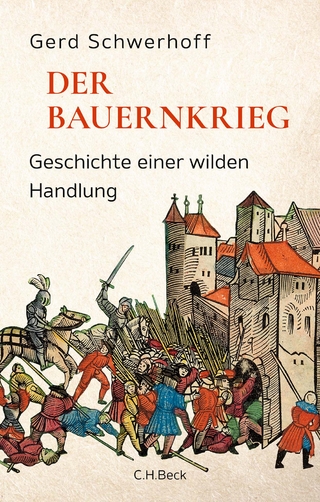
Geschichte einer wilden Handlung
Buch | Hardcover (2024)
C.H.Beck (Verlag)
CHF 47,60


