


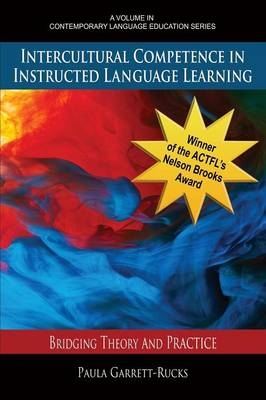
This book provides a framework to foster learners’ deep cultural reflection at beginning levels of instruction while preserving target language use policies, bridging CLT pedagogies to intercultural communicative competence (ICC) literacy-based approaches. It starts by synthesizing prominent definitions of culture and culture learning models and then summarizes disparate sources of research findings on culture learning projects (which primarily take place at advanced levels of language learning) to the Standards-based classroom at all levels of instruction, K-16. Although research on fostering learners’ intercultural competence at beginning levels of language instruction is in its infancy, it is of utmost concern given that the vast majority of U.S. language learners rarely continue to advanced levels of instruction (Zimmer-Lowe, 2008). In addition, this book challenges FL educators to advocate for their FL programs and to give greater visibility and credibility to the profession in institutional internationalization efforts.
The theoretical components of this book deconstruct the connections between language, thought and culture and problematize developmental models in the IC field that neglect to consider the important role of language. This book provides K-16 FL educators with the discourse needed to 1) explain to administrators, parents and students how world language study prepares learners to compete in an increasingly global market beyond the learner’s development of linguistic proficiency and 2) convince administrators of the value in and the need for world language study in order to support institutional internationalization efforts. The last chapter of this book provides guidance and suggestions on ways to expand K-12 teacher preparation programs and continuing education training to foster learners’ intercultural communicative competence while preserv-ing a Standards-based curriculum. In sum, this book is intended to 1) support all K-16 world language educa-tors with their program advocacy and instruction; 2) serve as a reference manual or course book in teacher preparation programs; 3) serve as a reference manual or course book for research and graduate courses on the teaching and learning of languages.
There is pressure on world language educators to prepare learners with 21st century skills to meet the challenges of an increasingly interconnected globalized world. The need for change was summarized in the 2007 report of the MLA Ad Hoc Committee on Foreign Languages that suggested the implementation of curricular reform by developing students' "e;translingual and transcultural competence"e; (p. 3) which allows someone "e;to operate between languages"e; (p.237). However, the integration of such a meaningful cultural component in instructed language learning is a complex topic. This book recognizes the difficulty world language educators face to achieve the goals of the MLA report, particularly at beginning levels of instruction in target language use classrooms. Accordingly, this book informs instructed language learning and teaching by bridging developmental theories from the fields of intercultural competence with second language pedagogies-particularly communicative language teaching (CLT) and literacy-based approaches-providing examples of practical applications inside the classroom and beyond. It is intended to support the many FL educators who have consistently reported that they are struggling to incorporate meaningful cultural instruction into their practice (Fox & Diaz-Greenberg 2006; Phillips & Abbott, 2011; Sercu, 2005).This book provides a framework to foster learners' deep cultural reflection at beginning levels of instruction while preserving target language use policies, bridging CLT pedagogies to intercultural communicative competence (ICC) literacy-based approaches. It starts by synthesizing prominent definitions of culture and culture learning models and then summarizes disparate sources of research findings on culture learning projects (which primarily take place at advanced levels of language learning) to the Standards-based classroom at all levels of instruction, K-16. Although research on fostering learners' intercultural competence at beginning levels of language instruction is in its infancy, it is of utmost concern given that the vast majority of U.S. language learners rarely continue to advanced levels of instruction (Zimmer-Lowe, 2008). In addition, this book challenges FL educators to advocate for their FL programs and to give greater visibility and credibility to the profession in institutional internationalization efforts.The theoretical components of this book deconstruct the connections between language, thought and culture and problematize developmental models in the IC field that neglect to consider the important role of language. This book provides K-16 FL educators with the discourse needed to 1) explain to administrators, parents and students how world language study prepares learners to compete in an increasingly global market beyond the learner's development of linguistic proficiency and 2) convince administrators of the value in and the need for world language study in order to support institutional internationalization efforts. The last chapter of this book provides guidance and suggestions on ways to expand K-12 teacher preparation programs and continuing education training to foster learners' intercultural communicative competence while preserv-ing a Standards-based curriculum. In sum, this book is intended to 1) support all K-16 world language educa-tors with their program advocacy and instruction; 2) serve as a reference manual or course book in teacher preparation programs; 3) serve as a reference manual or course book for research and graduate courses on the teaching and learning of languages.
| Erscheint lt. Verlag | 1.3.2016 |
|---|---|
| Sprache | englisch |
| Themenwelt | Schulbuch / Wörterbuch ► Lexikon / Chroniken |
| Schulbuch / Wörterbuch ► Wörterbuch / Fremdsprachen | |
| Geisteswissenschaften ► Sprach- / Literaturwissenschaft ► Sprachwissenschaft | |
| Sozialwissenschaften ► Pädagogik | |
| ISBN-10 | 1-68123-419-X / 168123419X |
| ISBN-13 | 978-1-68123-419-9 / 9781681234199 |
| Informationen gemäß Produktsicherheitsverordnung (GPSR) | |
| Haben Sie eine Frage zum Produkt? |
 PDF (Adobe DRM)
Größe: 50,3 MB
Kopierschutz: Adobe-DRM
Adobe-DRM ist ein Kopierschutz, der das eBook vor Mißbrauch schützen soll. Dabei wird das eBook bereits beim Download auf Ihre persönliche Adobe-ID autorisiert. Lesen können Sie das eBook dann nur auf den Geräten, welche ebenfalls auf Ihre Adobe-ID registriert sind.
Details zum Adobe-DRM
Dateiformat: PDF (Portable Document Format)
Mit einem festen Seitenlayout eignet sich die PDF besonders für Fachbücher mit Spalten, Tabellen und Abbildungen. Eine PDF kann auf fast allen Geräten angezeigt werden, ist aber für kleine Displays (Smartphone, eReader) nur eingeschränkt geeignet.
Systemvoraussetzungen:
PC/Mac: Mit einem PC oder Mac können Sie dieses eBook lesen. Sie benötigen eine
eReader: Dieses eBook kann mit (fast) allen eBook-Readern gelesen werden. Mit dem amazon-Kindle ist es aber nicht kompatibel.
Smartphone/Tablet: Egal ob Apple oder Android, dieses eBook können Sie lesen. Sie benötigen eine
Geräteliste und zusätzliche Hinweise
Zusätzliches Feature: Online Lesen
Dieses eBook können Sie zusätzlich zum Download auch online im Webbrowser lesen.
Buying eBooks from abroad
For tax law reasons we can sell eBooks just within Germany and Switzerland. Regrettably we cannot fulfill eBook-orders from other countries.
 EPUB (Adobe DRM)
Kopierschutz: Adobe-DRM
Adobe-DRM ist ein Kopierschutz, der das eBook vor Mißbrauch schützen soll. Dabei wird das eBook bereits beim Download auf Ihre persönliche Adobe-ID autorisiert. Lesen können Sie das eBook dann nur auf den Geräten, welche ebenfalls auf Ihre Adobe-ID registriert sind.
Details zum Adobe-DRM
Dateiformat: EPUB (Electronic Publication)
EPUB ist ein offener Standard für eBooks und eignet sich besonders zur Darstellung von Belletristik und Sachbüchern. Der Fließtext wird dynamisch an die Display- und Schriftgröße angepasst. Auch für mobile Lesegeräte ist EPUB daher gut geeignet.
Systemvoraussetzungen:
PC/Mac: Mit einem PC oder Mac können Sie dieses eBook lesen. Sie benötigen eine
eReader: Dieses eBook kann mit (fast) allen eBook-Readern gelesen werden. Mit dem amazon-Kindle ist es aber nicht kompatibel.
Smartphone/Tablet: Egal ob Apple oder Android, dieses eBook können Sie lesen. Sie benötigen eine
Geräteliste und zusätzliche Hinweise
Buying eBooks from abroad
For tax law reasons we can sell eBooks just within Germany and Switzerland. Regrettably we cannot fulfill eBook-orders from other countries.
aus dem Bereich


