For example, the first article by Cleveland and Murphy considers a very controversial issue (i.e., the reasons that organizations are abandoning the use of performance appraisal). The next article by Harris, Ferris, Summers, and Munyon is extremely interesting, and focuses on how composite political skills (e.g., social astuteness, interpersonal influence ) helps individuals develop productive work relationships in organizations. The third article by Scandura and Sharif presents a very innovative model of gratitude in organizations, and the authors argue that gratitude is essential for maintaining positive social relations in organizations.
The fourth article by Suazo and Stone-Romero provides an extremely comprehensive review of the theory and research on psychological contracts in organizations from 1960-2015. The subsequent article by Bae, Kang and Kim presents a very unique perspective on HRM, and considers the philosophical underpinnings of the field. The sixth article by Murray, Dulebohn, Roehling, and Werling presents a very innovative model to explain the role that organizational messages about changes in pay or compensation systems have on anticipatory pay satisfaction. The final article in the series by Johnson, Thatcher, and Burleson presents a thought-provoking framework for understanding the key role that information technology (IT) plays in the field of HRM.
The series should be useful to researchers and doctoral students in the fields of HRM, OB, and Industrial and Organizational Psychology. It should also be relevant for doctoral courses and scientist-practitioners in these fields.
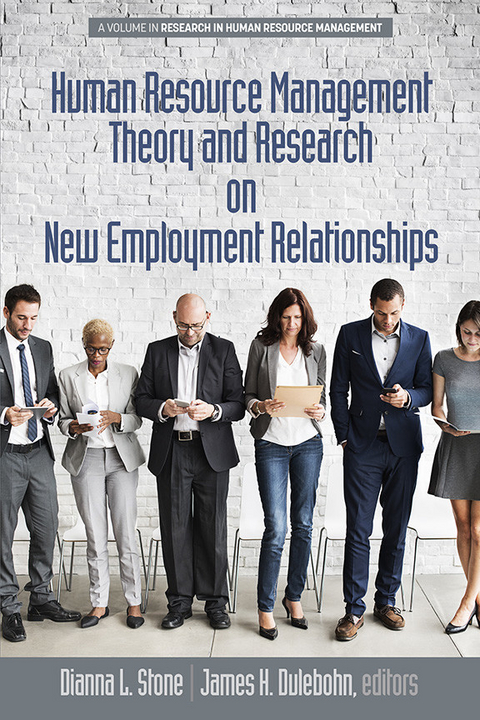
This volume of the series Research in Human Resource Management (HRM) focuses on a number of important issues in HRM and OB including performance appraisal, political skill, gratitude, psychological contracts, the philosophical underpinnings of HRM, pay and compensation messages, and electronic human resource management.For example, the first article by Cleveland and Murphy considers a very controversial issue (i.e., the reasons that organizations are abandoning the use of performance appraisal). The next article by Harris, Ferris, Summers, and Munyon is extremely interesting, and focuses on how composite political skills (e.g., social astuteness, interpersonal influence ) helps individuals develop productive work relationships in organizations. The third article by Scandura and Sharif presents a very innovative model of gratitude in organizations, and the authors argue that gratitude is essential for maintaining positive social relations in organizations.The fourth article by Suazo and Stone-Romero provides an extremely comprehensive review of the theory and research on psychological contracts in organizations from 1960-2015. The subsequent article by Bae, Kang and Kim presents a very unique perspective on HRM, and considers the philosophical underpinnings of the field. The sixth article by Murray, Dulebohn, Roehling, and Werling presents a very innovative model to explain the role that organizational messages about changes in pay or compensation systems have on anticipatory pay satisfaction. The final article in the series by Johnson, Thatcher, and Burleson presents a thought-provoking framework for understanding the key role that information technology (IT) plays in the field of HRM.The series should be useful to researchers and doctoral students in the fields of HRM, OB, and Industrial and Organizational Psychology. It should also be relevant for doctoral courses and scientist-practitioners in these fields.
Cover 1
Series page 2
Human Resource Management Theory and Research on New Employment Relationships 4
Library of Congress Cataloging-in-Publication Data 5
Contents 6
CHAPTER 1: Organizational Challenges That May Prompt Changes in HR Management 8
CHAPTER 2: Organizations Want to Abandon Performance Appraisal 22
CHAPTER 3: The Role of Political Skill in Relationship Development, Work and Social Networks, and Work Effectiveness 56
CHAPTER 4: Gratitude as a Broaden-and-Build Emotion at Work 84
CHAPTER 5: A Review of Theory and Research on Psychological Contracts in Organizations 118
CHAPTER 6: Human-to-Value Creation to Value-to-Human Creation 158
CHAPTER 7: Cognitive Response—Cognitive Structure Framework for Messaging’s Effect on Pay Attitude Formation 202
CHAPTER 8: A Framework and Research Agenda for Studying eHRM 234
| Erscheint lt. Verlag | 1.10.2016 |
|---|---|
| Sprache | englisch |
| Themenwelt | Schulbuch / Wörterbuch ► Lexikon / Chroniken |
| Wirtschaft ► Betriebswirtschaft / Management ► Personalwesen | |
| Wirtschaft ► Betriebswirtschaft / Management ► Unternehmensführung / Management | |
| ISBN-10 | 1-68123-696-6 / 1681236966 |
| ISBN-13 | 978-1-68123-696-4 / 9781681236964 |
| Informationen gemäß Produktsicherheitsverordnung (GPSR) | |
| Haben Sie eine Frage zum Produkt? |
 PDF (Adobe DRM)
Größe: 3,3 MB
Kopierschutz: Adobe-DRM
Adobe-DRM ist ein Kopierschutz, der das eBook vor Mißbrauch schützen soll. Dabei wird das eBook bereits beim Download auf Ihre persönliche Adobe-ID autorisiert. Lesen können Sie das eBook dann nur auf den Geräten, welche ebenfalls auf Ihre Adobe-ID registriert sind.
Details zum Adobe-DRM
Dateiformat: PDF (Portable Document Format)
Mit einem festen Seitenlayout eignet sich die PDF besonders für Fachbücher mit Spalten, Tabellen und Abbildungen. Eine PDF kann auf fast allen Geräten angezeigt werden, ist aber für kleine Displays (Smartphone, eReader) nur eingeschränkt geeignet.
Systemvoraussetzungen:
PC/Mac: Mit einem PC oder Mac können Sie dieses eBook lesen. Sie benötigen eine
eReader: Dieses eBook kann mit (fast) allen eBook-Readern gelesen werden. Mit dem amazon-Kindle ist es aber nicht kompatibel.
Smartphone/Tablet: Egal ob Apple oder Android, dieses eBook können Sie lesen. Sie benötigen eine
Geräteliste und zusätzliche Hinweise
Buying eBooks from abroad
For tax law reasons we can sell eBooks just within Germany and Switzerland. Regrettably we cannot fulfill eBook-orders from other countries.
 EPUB (Adobe DRM)
Kopierschutz: Adobe-DRM
Adobe-DRM ist ein Kopierschutz, der das eBook vor Mißbrauch schützen soll. Dabei wird das eBook bereits beim Download auf Ihre persönliche Adobe-ID autorisiert. Lesen können Sie das eBook dann nur auf den Geräten, welche ebenfalls auf Ihre Adobe-ID registriert sind.
Details zum Adobe-DRM
Dateiformat: EPUB (Electronic Publication)
EPUB ist ein offener Standard für eBooks und eignet sich besonders zur Darstellung von Belletristik und Sachbüchern. Der Fließtext wird dynamisch an die Display- und Schriftgröße angepasst. Auch für mobile Lesegeräte ist EPUB daher gut geeignet.
Systemvoraussetzungen:
PC/Mac: Mit einem PC oder Mac können Sie dieses eBook lesen. Sie benötigen eine
eReader: Dieses eBook kann mit (fast) allen eBook-Readern gelesen werden. Mit dem amazon-Kindle ist es aber nicht kompatibel.
Smartphone/Tablet: Egal ob Apple oder Android, dieses eBook können Sie lesen. Sie benötigen eine
Geräteliste und zusätzliche Hinweise
Buying eBooks from abroad
For tax law reasons we can sell eBooks just within Germany and Switzerland. Regrettably we cannot fulfill eBook-orders from other countries.
aus dem Bereich