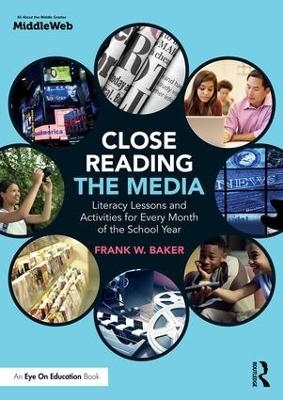
Close Reading the Media
Routledge (Verlag)
978-1-138-21602-0 (ISBN)
Helping students detect fake news;
Unraveling the messages in TV advertising;
Looking at truth vs propaganda in political ads and debates;
Revealing how big media influences the news we read;
Understanding how pictures changed America during the Civil Rights Movement;
Exploring the language of film and the symbols of costume design;
Thinking about how media appeals to our emotions;
Examining branding, product placement, and the role of celebrity;
Reading and interpreting iconic news images;
And much, much more!
In addition, the book’s lesson plans contain connections to key standards and step-by-step activities you can use immediately. With this practical book, you’ll have all the tools and ideas you need to help today’s students successfully navigate their media-filled world.
Frank W. Baker is a renowned media literacy expert who holds workshops for teachers across the country. He is an educational consultant to the Writing Improvement Network and the News Literacy Project, as well as a blogger for MiddleWeb at https://www.middleweb.com/category/close-reading-the-media. He is also the author of Media Literacy in the K-12 Classroom (ISTE, 2016) and co-author of Mastering Media Literacy with Heidi Hayes Jacobs (Solution Tree, 2013). Visit his website, frankwbaker.com
Contents
Meet the Authors
Introduction
1. August
Lesson 1: Exploring Media Literacy with Students
Lesson 2: Close Reading and What it Means for Media Literacy
Lesson 3: What’s Missing from that Media Message?
2. September
Lesson 4: Unraveling the Messages in TV Advertising
Lesson 5: Examining the Political Announcement
Lesson 6: Truth vs Propaganda in Political Ads
3. October
Lesson 7: Media Literacy Week: A Time to Remember Why Media Literacy Is So Important
Lesson 8: Teach Students to Analyze Political Debates
Lesson 9: Students Need Help Detecting Fake News
4. November
Lesson 10: Examining Holiday Toy Ads
Lesson 11: Looking Beyond the Toy Ads to a World Saturated with Marketing Messages
5. December
Lesson 12: Engaging Students in the Study of Parody
Lesson 13: How Big Media Influences the News We Read
6. January
Lesson 14: Looking Deeper into Super Bowl Ads
Lesson 15: Being Savvy About Diet Ad Season
Lesson 16: Studying Black History Through the Vision of Gordon Parks
Lesson 17: Civil Rights: How Pictures Changed America
7. February
Lesson 18: Learning from the Academy Awards
Lesson 19: Exploring the Language of Film
Lesson 20: Reading the Symbols of Costume Design
8. March
Lesson 21: Comparing Hollywood vs. History: Who Gets the Story Right?
Lesson 22: Analyzing the Media Through Docudramas
Lesson 23: How Media Appeals to Our Emotions
9. April
Lesson 24: Examining Product Placement
Lesson 25: Noticing the Power of Branding
10. May
Lesson 26: Understanding Media Messages in Popular Magazines
Lesson 27: Reading and Interpreting Iconic News Images
Lesson 28: The Role of Celebrity in Raising Our Awareness
Conclusion
Glossary
| Erscheinungsdatum | 29.03.2018 |
|---|---|
| Zusatzinfo | 17 Illustrations, black and white |
| Verlagsort | London |
| Sprache | englisch |
| Maße | 174 x 246 mm |
| Gewicht | 272 g |
| Themenwelt | Schulbuch / Wörterbuch |
| Sozialwissenschaften ► Kommunikation / Medien ► Medienwissenschaft | |
| Sozialwissenschaften ► Pädagogik ► Schulpädagogik / Grundschule | |
| ISBN-10 | 1-138-21602-X / 113821602X |
| ISBN-13 | 978-1-138-21602-0 / 9781138216020 |
| Zustand | Neuware |
| Informationen gemäß Produktsicherheitsverordnung (GPSR) | |
| Haben Sie eine Frage zum Produkt? |
aus dem Bereich