Zum Hauptinhalt springen
Nicht aus der Schweiz? Besuchen Sie lehmanns.de
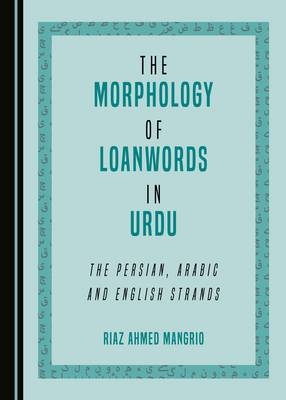
Morphology of Loanwords in Urdu -  Riaz Ahmed Mangrio

Morphology of Loanwords in Urdu (eBook)

The Persian, Arabic and English Strands
eBook Download: PDF
2016
185 Seiten
Cambridge Scholars Publishing (Verlag)
978-1-4438-9663-4 (ISBN)
Systemvoraussetzungen
73,81 inkl. MwSt
(CHF 72,10)
Der eBook-Verkauf erfolgt durch die Lehmanns Media GmbH (Berlin) zum Preis in Euro inkl. MwSt.
  • Download sofort lieferbar
  • Zahlungsarten anzeigen
Although a major language in itself, Urdu has borrowed words from three major languages of the world, namely Persian, Arabic and English, with various loan morphological and phonological features. There have been very few studies on this phenomenon, and many features are still unexplored. This study focuses on loanword morphology, and looks at the nature of loanwords borrowed from these three languages. The book begins by examining the morphological adaptation of loanwords. Secondly, parallels and differences are explored between the relatively recent adaptation of English loans and the older adaptation of words from Arabic and Persian. The descriptive content of the book - covering as it does not only English loanwords, but those from Arabic and Persian as well, in addition to examining native Urdu structures - is refreshingly broad. The study itself is primarily descriptive, carefully teasing apart the sometimes complex interactions between syntax, semantics and linguistic function relative to loanword adaptation. However, even beyond the question of loanword adaptation, there is much to recommend itself descriptively here, with regard to the morphological structures of Urdu, including endocentric, exocentric, copulative, postpositional and verbal compounds. In addition to such derivational processes, this study also considers various inflectional issues, such as gender, number and case morphology, the pluralisation of English nominal loans, and the adaptation of English verbs through the use of Urdu dummy verbs.The book offers a good foundation for a more in-depth examination of the data against current morphological theory. Taken as a whole, it not only presents a large quantity of interesting data in pursuing the immediate question of loanword adaptation in Urdu, but also provides a fruitful starting point for a wealth of further investigations into Urdu and into loanword adaptation more generally.
PDFPDF (Adobe DRM)

Kopierschutz: Adobe-DRM
Adobe-DRM ist ein Kopierschutz, der das eBook vor Mißbrauch schützen soll. Dabei wird das eBook bereits beim Download auf Ihre persönliche Adobe-ID autorisiert. Lesen können Sie das eBook dann nur auf den Geräten, welche ebenfalls auf Ihre Adobe-ID registriert sind.
Details zum Adobe-DRM

Dateiformat: PDF (Portable Document Format)
Mit einem festen Seiten­layout eignet sich die PDF besonders für Fach­bücher mit Spalten, Tabellen und Abbild­ungen. Eine PDF kann auf fast allen Geräten ange­zeigt werden, ist aber für kleine Displays (Smart­phone, eReader) nur einge­schränkt geeignet.

Systemvoraussetzungen:
PC/Mac: Mit einem PC oder Mac können Sie dieses eBook lesen. Sie benötigen eine Adobe-ID und die Software Adobe Digital Editions (kostenlos). Von der Benutzung der OverDrive Media Console raten wir Ihnen ab. Erfahrungsgemäß treten hier gehäuft Probleme mit dem Adobe DRM auf.
eReader: Dieses eBook kann mit (fast) allen eBook-Readern gelesen werden. Mit dem amazon-Kindle ist es aber nicht kompatibel.
Smartphone/Tablet: Egal ob Apple oder Android, dieses eBook können Sie lesen. Sie benötigen eine Adobe-ID sowie eine kostenlose App.
Geräteliste und zusätzliche Hinweise

Buying eBooks from abroad
For tax law reasons we can sell eBooks just within Germany and Switzerland. Regrettably we cannot fulfill eBook-orders from other countries.

Mehr entdecken
aus dem Bereich