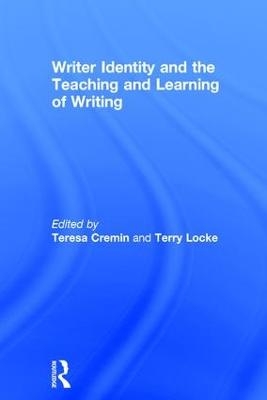
Writer Identity and the Teaching and Learning of Writing
Routledge (Verlag)
978-1-138-94571-5 (ISBN)
Nuanced understandings of how writer identities are shaped and formed;
Insights into how classroom practice changes when teachers position themselves as writers alongside their students;
New understandings of what this positioning means for students’ identities as writers and writing pedagogy; and
Illuminating case studies mapping young people's writing trajectories.
With an international team of contributors, the book offers a global perspective on this vital topic, and makes a new and strongly theorised contribution to the field. Viewing writer identity as fluid and multifaceted, this book is important reading for practising teachers, student teachers, educational researchers and practitioners currently undertaking postgraduate studies.
Contributors include: Teresa Cremin, Terry Locke, Sally Baker, Josephine Brady, Diane Collier, Nikolaj Elf, Ian Eyres, Theresa Lillis, Marilyn McKinney, Denise Morgan, Debra Myhill, Mary Ryan, Kristin Stang, Chris Street, Anne Whitney and Rebecca Woodard.
Teresa Cremin is Professor of Education (Literacy) at The Open University, UK. Terry Locke is Professor of Arts and Language Education at the University of Waikato, New Zealand.
Preface Foreword Section A: Writing, writers and identity 1. Conceptualizing Writing and Identity 2. Professional writers’ identities: The perceived influence of formal education and early reading Section B: Writing identity and the development of teachers 3. ‘I’m not a good writer’: Supporting teachers’ writing identities in a university course 4. Addressing resistance: encouraging in-service teachers to think of themselves as writers 5. Developing the teacher-writer in professional development Section C: Teachers as writers: Shifting practices and positions in the classroom 6. Being a writer and teaching writing on the ‘rackety bridge’: Through the lens of new teachers 7. Teachers’ identities as writers: Teacher, support staff and pupils’ accounts of the role of emotion in the writing classroom 8. Working toward ‘I’m a writer and a pretty good writer’: An elementary teacher legitimising students’ writerly identities while authenticating her own 9. Developing a whole-school culture of writing Section D: Students’ writing identities 10. Being in the world’: Students’ writing identities beyond school 11. Glancing sideways at young writers becoming 12. Taught by bitter experience: A timescales analysis of Amalie’s development of writer identity 13. Writing reflexively: Students and teachers shaping texts and identities Afterword Index
| Erscheinungsdatum | 07.02.2017 |
|---|---|
| Zusatzinfo | 9 Tables, black and white; 6 Line drawings, black and white; 11 Halftones, black and white; 17 Illustrations, black and white |
| Verlagsort | London |
| Sprache | englisch |
| Maße | 156 x 234 mm |
| Gewicht | 640 g |
| Themenwelt | Schulbuch / Wörterbuch |
| Geisteswissenschaften ► Sprach- / Literaturwissenschaft ► Literaturwissenschaft | |
| Geisteswissenschaften ► Sprach- / Literaturwissenschaft ► Sprachwissenschaft | |
| Sozialwissenschaften ► Pädagogik ► Schulpädagogik / Grundschule | |
| ISBN-10 | 1-138-94571-4 / 1138945714 |
| ISBN-13 | 978-1-138-94571-5 / 9781138945715 |
| Zustand | Neuware |
| Informationen gemäß Produktsicherheitsverordnung (GPSR) | |
| Haben Sie eine Frage zum Produkt? |
aus dem Bereich