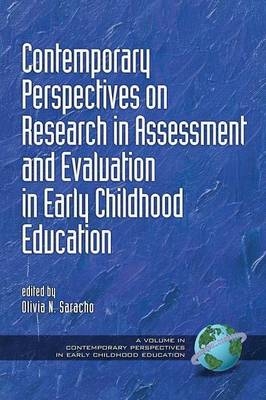
Researchers, educators, professional organizations, administrators, parents, and policy makers have increased their involvement in the assessment and evaluation of early childhood education programs. This interest has developed swiftly during the last decades. The National Association for the Education of Young Children (NAEYC) and the National Association of Early Childhood Specialists in State Departments of Education (NAECS/SDE) developed a position statement titled, "e;Early childhood curriculum, assessment, and program evaluation: Building an effective, accountable system in programs for children birth through age 8,"e; to address related trends, issues, guiding principles, and values. Appropriate and well-designed evaluations need to address several audiences including researchers, educators, policy makers, children, and parents. They need to encourage the implementation of a strong foundation that improves the quality of the children's education. Child assessment and program evaluation can lead to effective results and better accountability for preschool, kindergarten, and primary school programs. The purpose of this volume is to share a collection of research strands on contemporary perspectives on research in assessment and evaluation in early childhood education. It provides a review and critical analysis of the literature on assessment and evaluation of programs, children, teachers, and settings. The volume begins with a brief introductory chapter that presents the reader with a map of the area, laying out the issues and alternatives, and linking these to the chapters that follow. It addresses several areas including (1) understanding assessment and evaluation with young children, (2) schools and assessment implications, (3) teacher evaluation and professional development, (4) social relationships and assessment, (5) content areas in early education assessment, (6) technology and assessment, and (7) conclusion with future research directions in assessment and evaluation in early childhood education. The volume is of interest to researchers, educators, policy makers, university faculty, graduate students, and general readers who are interested in research on assessment and evaluation in early childhood education. The chapters are authored by established scholars in the field.
Cover 1
Series 2
Contemporary Perspectives on Research in Assessment and Evaluation in Early Childhood Education 4
Library of Congress Cataloging-in-Publication Data 5
Contents 8
PART I: INTRODUCTION: UNDERSTANDING ASSESSMENT AND EVALUATION OF YOUNG CHILDREN 12
CHAPTER 1: Research in Early Childhood Educational Assessment and Evaluation 14
CHAPTER 2: Evaluation in Early Childhood Education 34
PART II: SCHOOLS AND ASSESSMENT IMPLICATIONS 52
CHAPTER 3: Assessment and School Readiness 54
CHAPTER 4: Assessing School Readiness in Early Childhood 80
CHAPTER 5: Emergent Curriculum and the Tension Between Relationship and Assessment 104
PART III: TEACHER EVALUATION AND PROFESSIONAL DEVELOPMENT 126
CHAPTER 6: Teacher Effectiveness and Teacher Evaluation in Early Childhood Education 128
CHAPTER 7: Evaluation of Early Childhood Education Environments and Professional Development 164
PART IV: SOCIAL RELATIONSHIPS AND ASSESSMENT 182
CHAPTER 8: Assessment of Caregiver–Child Interactions and Relationships in Infant/Toddler Classrooms 184
CHAPTER 9: Assessing Children's Peer Relationships in Early Educational and Childcare Settings 204
CHAPTER 10: Play as a Method of Assessing Young Children’s Development and Learning 232
PART V: CONTENT AREAS IN EARLY EDUCATION ASSESSMENT 256
CHAPTER 11: Early Literacy Assessment and the Importance of Oral Language 258
CHAPTER 12: Interviewing in Early Childhood Mathematics Education 280
CHAPTER 13: Assessment of English Language Acquisition in Young Dual Language Learners 302
CHAPTER 14: Assessment of Dual Language Learners in Early Education Settings 324
PART VI: TECHNOLOGY AND ASSESSMENT 348
CHAPTER 15: Assessment Using Technology 350
CHAPTER 16: Computer-Based Testing and Young Children 384
CHAPTER 17: Assessing Young Children’s Learning in STEM 408
PART VII: CONCLUSION 438
CHAPTER 18: Future Directions in Assessment and Evaluation in Early Childhood Education 440
About the Editor 454
About the Contributors 456
| Erscheint lt. Verlag | 1.8.2015 |
|---|---|
| Sprache | englisch |
| Themenwelt | Schulbuch / Wörterbuch ► Lexikon / Chroniken |
| Geisteswissenschaften | |
| Mathematik / Informatik ► Informatik ► Theorie / Studium | |
| Naturwissenschaften | |
| Sozialwissenschaften ► Pädagogik ► Vorschulpädagogik | |
| ISBN-10 | 1-68123-154-9 / 1681231549 |
| ISBN-13 | 978-1-68123-154-9 / 9781681231549 |
| Informationen gemäß Produktsicherheitsverordnung (GPSR) | |
| Haben Sie eine Frage zum Produkt? |
 PDF (Adobe DRM)
Größe: 6,1 MB
Kopierschutz: Adobe-DRM
Adobe-DRM ist ein Kopierschutz, der das eBook vor Mißbrauch schützen soll. Dabei wird das eBook bereits beim Download auf Ihre persönliche Adobe-ID autorisiert. Lesen können Sie das eBook dann nur auf den Geräten, welche ebenfalls auf Ihre Adobe-ID registriert sind.
Details zum Adobe-DRM
Dateiformat: PDF (Portable Document Format)
Mit einem festen Seitenlayout eignet sich die PDF besonders für Fachbücher mit Spalten, Tabellen und Abbildungen. Eine PDF kann auf fast allen Geräten angezeigt werden, ist aber für kleine Displays (Smartphone, eReader) nur eingeschränkt geeignet.
Systemvoraussetzungen:
PC/Mac: Mit einem PC oder Mac können Sie dieses eBook lesen. Sie benötigen eine
eReader: Dieses eBook kann mit (fast) allen eBook-Readern gelesen werden. Mit dem amazon-Kindle ist es aber nicht kompatibel.
Smartphone/Tablet: Egal ob Apple oder Android, dieses eBook können Sie lesen. Sie benötigen eine
Geräteliste und zusätzliche Hinweise
Zusätzliches Feature: Online Lesen
Dieses eBook können Sie zusätzlich zum Download auch online im Webbrowser lesen.
Buying eBooks from abroad
For tax law reasons we can sell eBooks just within Germany and Switzerland. Regrettably we cannot fulfill eBook-orders from other countries.
 EPUB (Adobe DRM)
Kopierschutz: Adobe-DRM
Adobe-DRM ist ein Kopierschutz, der das eBook vor Mißbrauch schützen soll. Dabei wird das eBook bereits beim Download auf Ihre persönliche Adobe-ID autorisiert. Lesen können Sie das eBook dann nur auf den Geräten, welche ebenfalls auf Ihre Adobe-ID registriert sind.
Details zum Adobe-DRM
Dateiformat: EPUB (Electronic Publication)
EPUB ist ein offener Standard für eBooks und eignet sich besonders zur Darstellung von Belletristik und Sachbüchern. Der Fließtext wird dynamisch an die Display- und Schriftgröße angepasst. Auch für mobile Lesegeräte ist EPUB daher gut geeignet.
Systemvoraussetzungen:
PC/Mac: Mit einem PC oder Mac können Sie dieses eBook lesen. Sie benötigen eine
eReader: Dieses eBook kann mit (fast) allen eBook-Readern gelesen werden. Mit dem amazon-Kindle ist es aber nicht kompatibel.
Smartphone/Tablet: Egal ob Apple oder Android, dieses eBook können Sie lesen. Sie benötigen eine
Geräteliste und zusätzliche Hinweise
Buying eBooks from abroad
For tax law reasons we can sell eBooks just within Germany and Switzerland. Regrettably we cannot fulfill eBook-orders from other countries.
aus dem Bereich