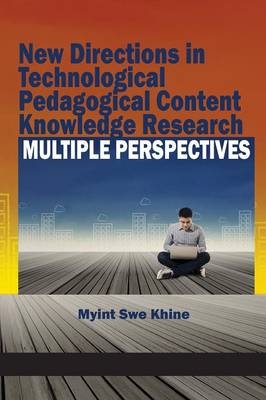
A wide array of topics will be covered in this book including applications in teacher training, designing courses, professional development and impact on learning, intervention strategies and other complex educational issues. Information contained in this book will provide knowledge growth and insights into effective educational strategies in integration of technology with the use of TPACK as a theoretical and developmental tool. The book will be of special interest to international readers including educators, teacher trainers, school administrators, curriculum designers, policy makers, and researchers and complement the existing literature and published works.
In the past decades wide-ranging research on effective integration of technology in instruction have been conducted by various educators and researchers with the hope that the affordances of technology might be leveraged to improve the teaching and learning process. However, in order to put the technology in optimum use, knowledge about how and in what way technology can enhance the instruction is also essential. A number of theories and models have been proposed in harnessing the technology in everyday lessons. Among these attempts Technological and Pedagogical Content Knowledge (TPACK) framework introduced by Mishra and Koehler has emerged as a representation of the complex relationships between technology, pedagogy and content knowledge. The TPACK framework extends the concept of Shulman's pedagogical content knowledge (PCK) which defines the need for knowledge about the content and pedagogical skills in teaching activities. Since then the framework has been embraced by the educational technology practitioners, instructional designers, and educators. TPACK research received increasing attention from education and training community covering diverse range of subjects and academic disciplines and significant progress has been made in recent years. This book attempts to bring the practitioners and researchers to present current directions, trends and approaches, convey experience and findings, and share reflection and vision to improve science teaching and learning with the use of TPACK framework.A wide array of topics will be covered in this book including applications in teacher training, designing courses, professional development and impact on learning, intervention strategies and other complex educational issues. Information contained in this book will provide knowledge growth and insights into effective educational strategies in integration of technology with the use of TPACK as a theoretical and developmental tool. The book will be of special interest to international readers including educators, teacher trainers, school administrators, curriculum designers, policy makers, and researchers and complement the existing literature and published works.
| Erscheint lt. Verlag | 24.6.2015 |
|---|---|
| Sprache | englisch |
| Themenwelt | Schulbuch / Wörterbuch ► Lexikon / Chroniken |
| Schulbuch / Wörterbuch ► Unterrichtsvorbereitung ► Unterrichts-Handreichungen | |
| Geisteswissenschaften | |
| Sozialwissenschaften ► Pädagogik | |
| ISBN-10 | 1-68123-106-9 / 1681231069 |
| ISBN-13 | 978-1-68123-106-8 / 9781681231068 |
| Informationen gemäß Produktsicherheitsverordnung (GPSR) | |
| Haben Sie eine Frage zum Produkt? |
 PDF (Adobe DRM)
Größe: 12,2 MB
Kopierschutz: Adobe-DRM
Adobe-DRM ist ein Kopierschutz, der das eBook vor Mißbrauch schützen soll. Dabei wird das eBook bereits beim Download auf Ihre persönliche Adobe-ID autorisiert. Lesen können Sie das eBook dann nur auf den Geräten, welche ebenfalls auf Ihre Adobe-ID registriert sind.
Details zum Adobe-DRM
Dateiformat: PDF (Portable Document Format)
Mit einem festen Seitenlayout eignet sich die PDF besonders für Fachbücher mit Spalten, Tabellen und Abbildungen. Eine PDF kann auf fast allen Geräten angezeigt werden, ist aber für kleine Displays (Smartphone, eReader) nur eingeschränkt geeignet.
Systemvoraussetzungen:
PC/Mac: Mit einem PC oder Mac können Sie dieses eBook lesen. Sie benötigen eine
eReader: Dieses eBook kann mit (fast) allen eBook-Readern gelesen werden. Mit dem amazon-Kindle ist es aber nicht kompatibel.
Smartphone/Tablet: Egal ob Apple oder Android, dieses eBook können Sie lesen. Sie benötigen eine
Geräteliste und zusätzliche Hinweise
Buying eBooks from abroad
For tax law reasons we can sell eBooks just within Germany and Switzerland. Regrettably we cannot fulfill eBook-orders from other countries.
 EPUB (Adobe DRM)
Kopierschutz: Adobe-DRM
Adobe-DRM ist ein Kopierschutz, der das eBook vor Mißbrauch schützen soll. Dabei wird das eBook bereits beim Download auf Ihre persönliche Adobe-ID autorisiert. Lesen können Sie das eBook dann nur auf den Geräten, welche ebenfalls auf Ihre Adobe-ID registriert sind.
Details zum Adobe-DRM
Dateiformat: EPUB (Electronic Publication)
EPUB ist ein offener Standard für eBooks und eignet sich besonders zur Darstellung von Belletristik und Sachbüchern. Der Fließtext wird dynamisch an die Display- und Schriftgröße angepasst. Auch für mobile Lesegeräte ist EPUB daher gut geeignet.
Systemvoraussetzungen:
PC/Mac: Mit einem PC oder Mac können Sie dieses eBook lesen. Sie benötigen eine
eReader: Dieses eBook kann mit (fast) allen eBook-Readern gelesen werden. Mit dem amazon-Kindle ist es aber nicht kompatibel.
Smartphone/Tablet: Egal ob Apple oder Android, dieses eBook können Sie lesen. Sie benötigen eine
Geräteliste und zusätzliche Hinweise
Buying eBooks from abroad
For tax law reasons we can sell eBooks just within Germany and Switzerland. Regrettably we cannot fulfill eBook-orders from other countries.
aus dem Bereich