Zum Hauptinhalt springen
Nicht aus der Schweiz? Besuchen Sie lehmanns.de
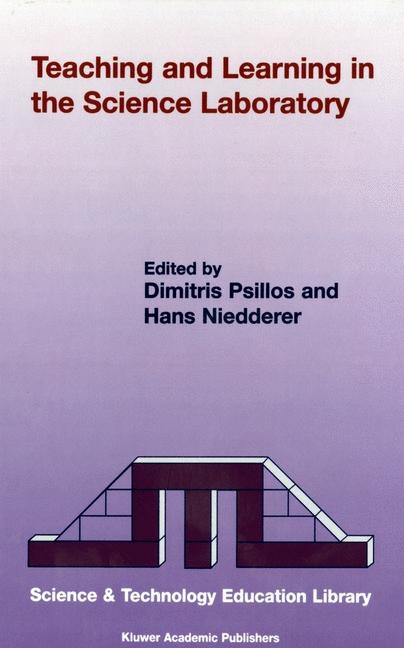
Teaching and Learning in the Science Laboratory -

Teaching and Learning in the Science Laboratory (eBook)

eBook Download: PDF
2006
Springer Netherlands (Verlag)
978-0-306-48196-3 (ISBN)
Systemvoraussetzungen
157,70 inkl. MwSt
(CHF 153,95)
Der eBook-Verkauf erfolgt durch die Lehmanns Media GmbH (Berlin) zum Preis in Euro inkl. MwSt.
  • Download sofort lieferbar
  • Zahlungsarten anzeigen
Scope of the book There is an on-going debate regarding the role of labwork in science education, which dates back several decades and which illustrates the conviction and interest of teachers, researchers and policy-makers world-wide in the value of laboratory work for understanding science. This is evident in more recent books and studies regarding the laboratory, which mainly refer to countries with a considerable tradition in practical work in science education (Woolnough & Alsop 1985, Hodson 1993, Hegarthy-Hazel 1990, Wellington 2000). Yet in discussing research studies on labwork, several authors express their concern about its effectiveness in facilitating students' understanding of various aspects of scientific inquiry. They point out a comprehensive re-conceptualisation of the aims of labwork and, as a consequence, of investigating what the students actually learn in different contexts (Lazarowitz & Tamir 1994, Tobin & Tippins 1993, Lunetta 1998). It has also been argued that the relationship between instructional activities and student learning in labwork needs more attention than it has been given in science education research (Leach & Paulsen 1999). It appears that the case for research-based labwork emerges in several quarters in science education, particularly among researchers. This book presents and discusses a variety of laboratory practices and their effectiveness. The studies take into account recent theoretical developments and empirical results concerning students' understanding of scientific inquiry. A whole chapter is devoted to technological advances offering new learning opportunities for the students and teaching facilities for the teacher.
PDFPDF (Adobe DRM)

Kopierschutz: Adobe-DRM
Adobe-DRM ist ein Kopierschutz, der das eBook vor Mißbrauch schützen soll. Dabei wird das eBook bereits beim Download auf Ihre persönliche Adobe-ID autorisiert. Lesen können Sie das eBook dann nur auf den Geräten, welche ebenfalls auf Ihre Adobe-ID registriert sind.
Details zum Adobe-DRM

Dateiformat: PDF (Portable Document Format)
Mit einem festen Seiten­layout eignet sich die PDF besonders für Fach­bücher mit Spalten, Tabellen und Abbild­ungen. Eine PDF kann auf fast allen Geräten ange­zeigt werden, ist aber für kleine Displays (Smart­phone, eReader) nur einge­schränkt geeignet.

Systemvoraussetzungen:
PC/Mac: Mit einem PC oder Mac können Sie dieses eBook lesen. Sie benötigen eine Adobe-ID und die Software Adobe Digital Editions (kostenlos). Von der Benutzung der OverDrive Media Console raten wir Ihnen ab. Erfahrungsgemäß treten hier gehäuft Probleme mit dem Adobe DRM auf.
eReader: Dieses eBook kann mit (fast) allen eBook-Readern gelesen werden. Mit dem amazon-Kindle ist es aber nicht kompatibel.
Smartphone/Tablet: Egal ob Apple oder Android, dieses eBook können Sie lesen. Sie benötigen eine Adobe-ID sowie eine kostenlose App.
Geräteliste und zusätzliche Hinweise

Buying eBooks from abroad
For tax law reasons we can sell eBooks just within Germany and Switzerland. Regrettably we cannot fulfill eBook-orders from other countries.

Mehr entdecken
aus dem Bereich
Impulse aus Judentum, Christentum und Islam für eine inklusive …

von Annett Abdel-Rahman; Clauß Peter Sajak …

eBook Download (2023)
Vandenhoeck & Ruprecht (Verlag)
CHF 21,45