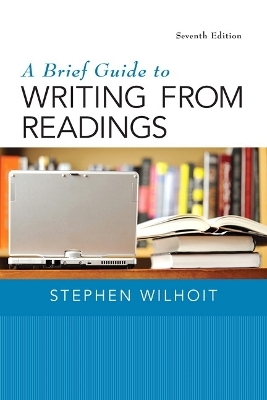
A Brief Guide to Writing from Readings
Pearson (Verlag)
978-0-13-380033-3 (ISBN)
- Titel erscheint in neuer Auflage
- Artikel merken
MyWritingLab should only be purchased when required by an instructor.
For college courses in Writing Across the Curriculum (Composition) and Research Writing (Composition)
Mastering the art of critical essay writing
A Brief Guide to Writing from Readings is a clear, process-oriented guide to academic writing. The guide covers the subtleties of rhetorical analysis and argumentation strategies as well as the technical aspects of writing with sources. Students will learn first to examine texts critically and then to clearly, accurately and creatively respond in essay form. In-text tools including summary charts and revision checklists help students tackle source-based essays step by step. Instructors will rely on the guide as a one-stop reference tool; students can apply their learning to any discipline, whether for class work or independent study.
In the Seventh Edition, in response to student and faculty feedback, Wilhoit includes a new chapter on analyzing readings and composing analytical essays; more coverage of literary analysis and a new short story; eight academic readings; and expanded coverage of how to cite electronic sources in APA and MLA style.
Also available with MyWritingLab™
This text is also available with MyWritingLab — an online homework, tutorial, and assessment program that provides engaging experiences for teaching and learning. Flexible and easily customizable, MyWritingLab helps improve students’ writing through context-based learning. Whether through self-study or instructor-led learning, MyWritingLab supports and complements course work.
1. Critical Reading
Definition and Purpose
Asking Questions about What You Read
o Questions to Ask Before You Begin a Close Reading of a Text
o Questions to Ask While You Read and Reread Material
Marking Texts
o Highlighting Texts
o Annotating Texts
Sample Annotated Reading: “Hard Choices,” by Patrick Moore
Note Taking
o Before Jotting Down Any Notes, Always Write Down the Source Text’s Full Bibliographic Information
o In Your Notes, Carefully Distinguish between Material You Quote and Material You Paraphrase
o Carefully List Page Numbers
o Pay Attention to the Punctuation in the Source Text
o In Your Notes, Clearly Differentiate between the Author’s Ideas and Your Own
o Be Consistent with Your Note-Taking System
Additional Reading: “Getting Serious about Eradicating Binge Drinking,” by Henry Wechsler
Summary Chart: Critical Reading: Asking Questions
Summary Chart: Critical Reading: Marking Texts
Summary Chart: Critical Reading: Note Taking
2. Quotation
Definition and Purpose
Guidelines on When to Quote Material
o Quote Passages When the Author Has Written Something in a Distinctive or Especially Insightful or Interesting Way
o Quote Material That Lends Support to a Position You Are Trying to Make in Your Paper
o Quote Authorities Who Disagree with a Position You Are Advocating or Who Offer Alternative Explanations or Contradictory Data
Guidelines on When Not to Quote Material
o Do Not Quote Passages Merely to Fill Space
o Do Not Quote Passages as a Substitute for Thinking
o Do Not Quote Passages Because You Do Not Understand the Author’s Ideas Well Enough to Paraphrase Them
Integrating Quotations into Your Writing
o Two Basic Types of Quotations
Reading: “Generation Text,” by Mark Bauerlein
o The Block Quotation
o The Integrated Quotation
Altering Quoted Material and Avoiding Misquotations
Leaving Words Out of a Quotation
Adding Words to a Quotation
Noting Emphasis Added to a Quotation
Summary Chart: Guidelines on Quotations
Summary Chart: Integrating Quotations into Your Writing
Quotation Revision Checklist
3. Paraphrase
Definition and Purpose
Qualities of a Good Paraphrase
o Thorough
o Accurate
o Fair
o Objective
How to Paraphrase Material
o Changing Words
o Changing Sentence Structure
o Combining Sentences
o “Unpacking” Sentences
o Combining Strategies: Paraphrasing Longer Passages in Source Texts
o Blending Your Writing with Paraphrased Material
Documentation
Summary Chart: How to Paraphrase Material
Paraphrase Revision Checklist
4. Summary
Definition and Purpose
Types of Summaries
Qualities of a Good Summary
o Comprehensive
o Brief
o Accurate
o Neutral
o Independent
How to Summarize a Text
o Read, Reread, and Annotate the Source Text
o Summarize Each Section of the Source Text
o Check the Section Summaries against the Source Text
How to Write an Abstract
How to Write an Informative Summary Essay
How to Write an Explanatory Summary Essay
Documentation
Reading: “From Animal House to Big Brother: Student Privacy and Campus Safety in an Age of Accountability,” by Ron Chesbrough
o Sample Abstract
o Sample Informative Summary Essay
o Sample Explanatory Summary Essay
Summary Chart: How to Summarize Texts
Summary Revision Checklist
5. Analysis Definition and Purpose
Reading: “The Story of an Hour,” by Kate Chopin
How to Analyze a Text
o Read the Source Text Carefully
o Identify or Choose Which Analytical Criteria to Employ
o Apply the Analytical Criteria to the Text
o Interpret the Text
o Explain and Support Your Interpretation
Qualities of a Good Analysis Essay
o Comprehensive
o Clear
o Consistent
o Tied to the Source Text
o Informative
How to Write an Analysis Essay
o Opening Section
o Body
o Concluding Section
Revising Your Essay
o Accuracy
o Development
o Clarity
o Balance
Documentation
Sample Analysis Essay
Summary Chart: How to Analyze Texts
Summary Chart: How to Write an Analysis Essay
Analysis Essay Checklist
6. Response Essays
Definition and Purpose
Qualities of a Good Response Essay
o Honest
o Informed
o Clear
o Well Supported
Writing the Response Essay
o Carefully Read the Material
o Compose Your Rough Draft
o Write Your Conclusion
o Revise Your Rough Draft
Sample Response Essay
A Response to “From Animal House to Big Brother: Student Privacy and Campus Safety in an Age of Accountability”
Summary Chart: How to Write a Response Essay
Response Essay Revision Checklist
7. Critique
Definition and Purpose
The Film Review as Critique
Writing a Critique
o Step 1 -- Carefully Read and Annotate the Source Text
o Step 2 -- Analyze and Evaluate the Reading
o Step 3 -- Write Your Thesis and Decide Which Aspects of the Reading Will Be the Focus of Your Essay
o Step 4 -- Write Your Rough Draft
o Step 5 -- Rewrite Your Critique
Reading: “The Doctrine of Academic Freedom,” by Sandra Y. L. Korn
Reading: “Academic Freedom vs. Academic Justice,” by Michael LaBossiere
Sample Critique
“An Unconvincing Argument Concerning Academic Freedom”
Summary Chart: How to Write a Critique
Critique Revision Checklist
8. Rhetorical Analysis of Written Texts
Definition and Purpose
The Rhetorical Situation
o Elements of the Rhetorical Situation
Rhetorical Strategies
o Content
o Structure
o Style
Analyzing a Text’s Rhetorical Strategies -- An Example
o Lincoln’s Second Inaugural Address
o A Rhetorical Analysis of Lincoln’s Speech
Writing a Rhetorical Analysis Essay
o Step 1 -- Carefully Read the Assignment
o Step 2 -- Establish the Source Text’s Rhetorical Situation
o Step 3 -- Determine the Author’s Goal
o Step 4 -- Identify and Evaluate the Text’s Rhetorical Strategies
o Step 5 -- Determine Your Thesis
o Step 6 -- Write Your Rough Draft
o Step 7 -- Revise Your Essay
Sample Rhetorical Analysis Essay
o Rhetorical Analysis of Lincoln’s Second Inaugural Address
Summary Chart: How to Write a Rhetorical Analysis Essay
Rhetorical Analysis of Written Texts Revision Checklist
9: Rhetorical Analysis of Visual Texts
Definition and Purpose
Reading Visual Texts Critically
o Questions Concerning the Visual Text Itself
o Questions Concerning the Visual Text’s Creator or Source
o Questions Concerning the Visual Text’s Purpose
o Questions Concerning the Visual Text’s Audience
o Questions Concerning Your Response to the Visual Text
Reading a Visual Text -- An Example
o Questions Concerning the Visual Text
o Questions Concerning the Visual Text’s Creator or Source
o Questions Concerning the Visual Text’s Purpose
o Questions Concerning the Visual Text’s Audience
o Questions Concerning Your Response to the Visual Text
Writing a Rhetorical Analysis of a Visual Text
o Step 1 -- Carefully Read the Assignment
o Step 2 -- Analyze and Describe the Text
o Step 3 -- Establish the Text’s Rhetorical Situation
o Step 4 -- Determine How the Text Attempts to Achieve Its Rhetorical Goals
o Step 5 -- Determine Your Thesis
o Step 6 -- Write a Rough Draft
o Step 7 -- Revise Your Essay
Sample Rhetorical Analysis of a Visual Text
An Effective Advertisment for Literacy Support
Summary Chart: How to Write a Rhetorical Analysis of a Visual Text
Rhetorical Analysis of a Visual Text Revision Checklist
10. Informative Synthesis
Definition and Purpose
Types of Synthesis Essays
Reading: “Humanity 2.? Enhancement, Evolution and the Possible Futures of Humanity,” by Sarah Chan
Reading: “On Designer Babies: Genetic Enhancement of Human Embryos Is Not a Practice for Civil Societies,” by Sheldon Krimsky
Reading: “A Moderate Approach to Enhancement,” by Michael Selgelid
Informative Synthesis
o Definition
o Writing an Informative Synthesis
Sample Informative Synthesis
The Ethical Debate over Human Enhancement and Designer Babies
Summary Chart: How to Write an Informative Synthesis
Informative Synthesis Revision Checklist
11. Argumentative Synthesis
Definition and Purpose
The Elements of Argument
o Claims
o Grounds
o Warrants
Argument and Persuasion
o Appeals Based on Reason
o Appeals Based on Emotion
o Appeals Based on Character and Credibility
Writing an Argumentative Synthesis
o Step 1 -- Analyze the Assignment
o Step 2 -- Annotate and Critique the Readings
o Step 3 -- Formulate a Thesis
o Step 4 -- Choose an Organizational Plan
o Step 5 -- Write Your Rough Draft
o Step 6 -- Revise Your Draft
o Step 7 -- Check Quotations and Documentation
Sample Argumentative Synthesis
Make Human Enhancement Available to All
Additional Reading: “A New Definition of Leadership,” by Josh Misner
Additional Reading: “Understanding Your Leadership Balance,” by Lee Ellis
Additional Reading: “A Question of Leadership,” by Gene Klann and Talula Cartwright
Summary Chart: How to Write an Argumentative Synthesis
Argumentative Synthesis Revision Checklist
12. Plagiarism
Definition
Forms of Plagiarism
o Purchasing a Paper
o Turning in a Paper Someone Else Has Written for You
o Turning in Another Student’s Work without That Student’s Knowledge
o Improper Collaboration
o Copying a Paper from a Source Text without Proper Acknowledgment
o Cutting and Pasting Material from Sources
o Lifting Images from the Web or Other Sources
o Copying Statistics
o Copying Material from a Source Text, Supplying Proper Documentation, but Leaving Out Quotation Marks
o Paraphrasing Material from a Reading without Proper Documentation
o Self-Plagiarism
Why Students Plagiarize Work
How to Avoid Plagiarism
o Do Your Own Work
o Take Good Notes
o Paraphrase Properly
o Supply Proper Documentation
o Online Plagiarism Check
o Clarify Collaboration Guidelines
Summary Chart: Plagiarism
Plagiarism Checklist
13. Documentation
Definition and Purpose
Types of Documentation
Primary Academic Style Manuals
APA Guidelines
o In-Text Documentation
o Footnotes and Endnotes
MLA Guidelines
o In-Text Documentation
o Footnotes and Endnotes
14. Reference Lists and Works Cited Entries
Definition and Purpose
APA Format
o Sample Reference List Entries
o Sample APA-Style Reference List
MLA Format
o Sample Works Cited Entries
o Sample MLA-Style Works Cited List
Credits
Index
| Erscheint lt. Verlag | 13.8.2015 |
|---|---|
| Sprache | englisch |
| Maße | 152 x 229 mm |
| Gewicht | 354 g |
| Themenwelt | Schulbuch / Wörterbuch ► Wörterbuch / Fremdsprachen |
| Geisteswissenschaften ► Sprach- / Literaturwissenschaft ► Literaturwissenschaft | |
| Geisteswissenschaften ► Sprach- / Literaturwissenschaft ► Sprachwissenschaft | |
| Wirtschaft ► Betriebswirtschaft / Management | |
| ISBN-10 | 0-13-380033-4 / 0133800334 |
| ISBN-13 | 978-0-13-380033-3 / 9780133800333 |
| Zustand | Neuware |
| Informationen gemäß Produktsicherheitsverordnung (GPSR) | |
| Haben Sie eine Frage zum Produkt? |
aus dem Bereich