


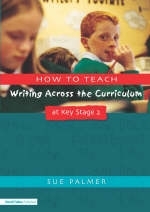
How to Teach Writing Across the Curriculum at Key Stage 2
Developing Creative Literacy
Seiten
2001
David Fulton Publishers Ltd (Verlag)
978-1-85346-803-2 (ISBN)
David Fulton Publishers Ltd (Verlag)
978-1-85346-803-2 (ISBN)
- Titel erscheint in neuer Auflage
- Artikel merken
Zu diesem Artikel existiert eine Nachauflage
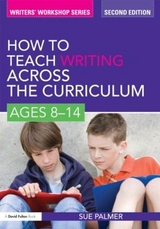
A practical, accessible teaching sequence to help teachers of junior classes teach about the organization and language features of the six non-fiction text types and develop pupils' ability to organize their non-fiction writing appropriately, in terms of text type, layout and paragraphing.
How to Teach Non-Fiction Writing provides a practical, accessible teaching sequence to help teachers of junior classes to teach about the organization and language features of the six non-fiction text types (recount, report, instruction, explanation, persuasion and discussion) and to link non-fiction writing to pupils' work across the curriculum, so they can use content learned in other subject areas as the basis for writing in a particular text type. It will help teachers develop pupils' ability to organize their non-fiction writing appropriately, in terms of text-type, layout and paragraphing and focus on significant language features of the text-types. The teaching sequence is also designed to develop pupils' appreciation of the underlying structures of non-fiction texts, thus linking the acquisition of literacy skills to "thinking skills" in general.
How to Teach Non-Fiction Writing provides a practical, accessible teaching sequence to help teachers of junior classes to teach about the organization and language features of the six non-fiction text types (recount, report, instruction, explanation, persuasion and discussion) and to link non-fiction writing to pupils' work across the curriculum, so they can use content learned in other subject areas as the basis for writing in a particular text type. It will help teachers develop pupils' ability to organize their non-fiction writing appropriately, in terms of text-type, layout and paragraphing and focus on significant language features of the text-types. The teaching sequence is also designed to develop pupils' appreciation of the underlying structures of non-fiction texts, thus linking the acquisition of literacy skills to "thinking skills" in general.
Sue Palmer is a former primary teacher whose interest in practical approaches to cross-curricular literacy began with her first book, I See What You Mean twenty years ago. Since then she has written many books and educational TV programs on literacy teaching. She is a regular contributor to the Times Educational Supplement and Child Education, and acts as a literacy consultant to educational publishers, the BBC and the National Literacy Strategy. Sue has contributed to several NLS initiatives, including Grammar for Writing and non-fiction writing skills.
| Erscheint lt. Verlag | 26.10.2001 |
|---|---|
| Reihe/Serie | Writers' Workshop |
| Verlagsort | London |
| Sprache | englisch |
| Maße | 210 x 297 mm |
| Gewicht | 249 g |
| Themenwelt | Schulbuch / Wörterbuch |
| Sozialwissenschaften ► Pädagogik ► Schulpädagogik / Grundschule | |
| ISBN-10 | 1-85346-803-7 / 1853468037 |
| ISBN-13 | 978-1-85346-803-2 / 9781853468032 |
| Zustand | Neuware |
| Informationen gemäß Produktsicherheitsverordnung (GPSR) | |
| Haben Sie eine Frage zum Produkt? |
Mehr entdecken
aus dem Bereich

aus dem Bereich
für Kinder mit Down-Syndrom, Leseratten und Legastheniker
Buch | Softcover (2023)
Lehmanns Media (Verlag)
CHF 27,90
wie Lehrer, Eltern und Schüler guten Unterricht gestalten
Buch | Softcover (2024)
Klett-Cotta (Verlag)
CHF 33,55
Unterrichtsstörungen, Beleidigungen und Gewalt erfolgreich eingrenzen
Buch | Softcover (2025)
Klett-Cotta (Verlag)
CHF 30,80


