The Race To The Top program strongly advocates the use of computer technology in assessments. It dramatically promotes computer-based testing, linear or adaptive, in K-12 state assessment programs. Moreover, assessment requirements driven by this federal initiative exponentially increase the complexity in assessment design and test development. This book provides readers with a review of the history and basics of computer-based tests. It also offers a macro perspective for designing such assessment systems in the K-12 setting as well as a micro perspective on new challenges such as innovative items, scoring of such items, cognitive diagnosis, and vertical scaling for growth modeling and value added approaches to assessment. The editors' goal is to provide readers with necessary information to create a smarter computer-based testing system by following the advice and experience of experts from education as well as other industries. This book is based on a conference (http://marces.org/workshop.htm) held by the Maryland Assessment Research Center for Education Success. It presents multiple perspectives including test vendors and state departments of education, in designing and implementing a computer-based test in the K-12 setting. The design and implementation of such a system requires deliberate planning and thorough considerations. The advice and experiences presented in this book serve as a guide to practitioners and as a good source of information for quality control. The technical issues discussed in this book are relatively new and unique to K-12 large-scale computer-based testing programs, especially due to the recent federal policy. Several chapters provide possible solutions to psychometricians dealing with the technical challenges related to innovative items, cognitive diagnosis, and growth modeling in computer-based linear or adaptive tests in the K-12 setting.
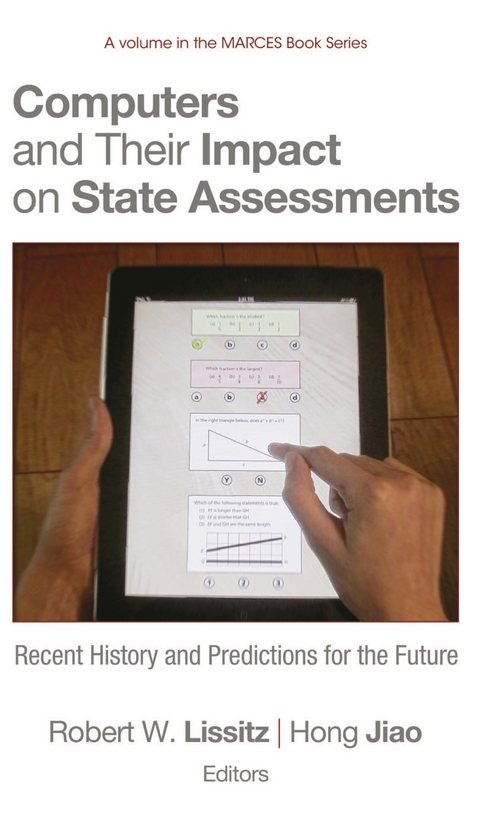
The Race To The Top program strongly advocates the use of computer technology in assessments. It dramatically promotes computer-based testing, linear or adaptive, in K-12 state assessment programs. Moreover, assessment requirements driven by this federal initiative exponentially increase the complexity in assessment design and test development. This book provides readers with a review of the history and basics of computer-based tests. It also offers a macro perspective for designing such assessment systems in the K-12 setting as well as a micro perspective on new challenges such as innovative items, scoring of such items, cognitive diagnosis, and vertical scaling for growth modeling and value added approaches to assessment. The editors' goal is to provide readers with necessary information to create a smarter computer-based testing system by following the advice and experience of experts from education as well as other industries.This book is based on a conference held by the Maryland Assessment Research Center for Education Success. It presents multiple perspectives including test vendors and state departments of education, in designing and implementing a computer-based test in the K-12 setting. The design and implementation of such a system requires deliberate planning and thorough considerations. The advice and experiences presented in this book serve as a guide to practitioners and as a good source of information for quality control.The technical issues discussed in this book are relatively new and unique to K-12 large-scale computer-based testing programs, especially due to the recent federal policy. Several chapters provide possible solutions to psychometricians dealing with the technical challenges related to innovative items, cognitive diagnosis, and growth modeling in computer-based linear or adaptive tests in the K-12 setting.
| Erscheint lt. Verlag | 24.6.2012 |
|---|---|
| Sprache | englisch |
| Themenwelt | Schulbuch / Wörterbuch ► Lexikon / Chroniken |
| Schulbuch / Wörterbuch ► Unterrichtsvorbereitung ► Unterrichts-Handreichungen | |
| Geisteswissenschaften | |
| Mathematik / Informatik ► Informatik | |
| Sozialwissenschaften ► Pädagogik ► Allgemeines / Lexika | |
| Wirtschaft | |
| ISBN-10 | 1-61735-727-8 / 1617357278 |
| ISBN-13 | 978-1-61735-727-5 / 9781617357275 |
| Informationen gemäß Produktsicherheitsverordnung (GPSR) | |
| Haben Sie eine Frage zum Produkt? |
 PDF (Adobe DRM)
Größe: 5,1 MB
Kopierschutz: Adobe-DRM
Adobe-DRM ist ein Kopierschutz, der das eBook vor Mißbrauch schützen soll. Dabei wird das eBook bereits beim Download auf Ihre persönliche Adobe-ID autorisiert. Lesen können Sie das eBook dann nur auf den Geräten, welche ebenfalls auf Ihre Adobe-ID registriert sind.
Details zum Adobe-DRM
Dateiformat: PDF (Portable Document Format)
Mit einem festen Seitenlayout eignet sich die PDF besonders für Fachbücher mit Spalten, Tabellen und Abbildungen. Eine PDF kann auf fast allen Geräten angezeigt werden, ist aber für kleine Displays (Smartphone, eReader) nur eingeschränkt geeignet.
Systemvoraussetzungen:
PC/Mac: Mit einem PC oder Mac können Sie dieses eBook lesen. Sie benötigen eine
eReader: Dieses eBook kann mit (fast) allen eBook-Readern gelesen werden. Mit dem amazon-Kindle ist es aber nicht kompatibel.
Smartphone/Tablet: Egal ob Apple oder Android, dieses eBook können Sie lesen. Sie benötigen eine
Geräteliste und zusätzliche Hinweise
Buying eBooks from abroad
For tax law reasons we can sell eBooks just within Germany and Switzerland. Regrettably we cannot fulfill eBook-orders from other countries.
 EPUB (Adobe DRM)
Kopierschutz: Adobe-DRM
Adobe-DRM ist ein Kopierschutz, der das eBook vor Mißbrauch schützen soll. Dabei wird das eBook bereits beim Download auf Ihre persönliche Adobe-ID autorisiert. Lesen können Sie das eBook dann nur auf den Geräten, welche ebenfalls auf Ihre Adobe-ID registriert sind.
Details zum Adobe-DRM
Dateiformat: EPUB (Electronic Publication)
EPUB ist ein offener Standard für eBooks und eignet sich besonders zur Darstellung von Belletristik und Sachbüchern. Der Fließtext wird dynamisch an die Display- und Schriftgröße angepasst. Auch für mobile Lesegeräte ist EPUB daher gut geeignet.
Systemvoraussetzungen:
PC/Mac: Mit einem PC oder Mac können Sie dieses eBook lesen. Sie benötigen eine
eReader: Dieses eBook kann mit (fast) allen eBook-Readern gelesen werden. Mit dem amazon-Kindle ist es aber nicht kompatibel.
Smartphone/Tablet: Egal ob Apple oder Android, dieses eBook können Sie lesen. Sie benötigen eine
Geräteliste und zusätzliche Hinweise
Buying eBooks from abroad
For tax law reasons we can sell eBooks just within Germany and Switzerland. Regrettably we cannot fulfill eBook-orders from other countries.
aus dem Bereich