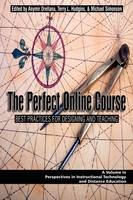
The Perfect Online Course: Best Practices for Designing and Teaching was edited under the assumption that a perfect online course can be delivered following different instructional methods and models for design and for instruction, and by implementing different teaching or instructional strategies. Such methods, models, and strategies are framed within quality educational guidelines and must be aimed towards attaining the online course's learning goals. The book seeks to make a contribution to the existing body of literature related to best practices and guidelines for designing and teaching distance courses, specifically online education. The process of selecting works suitable for this compilation included an extensive review of the journals Quarterly eview of Distance Education and Distance Learning. The book begins by covering literature related to general approaches and guidelines, continues with proposed methods and models for designing and instruction, and ends with instructional strategies to achieve engagement through interaction. The book is divided into four independent, yet interrelated, parts and a concluding section: Part I: Introduction, Part II: Best Guidelines and Standards, Part III: Best Instructional Methods and Models, Part IV: Best Engagement Strategies, and the concluding section, And Finally', with words from Simonson who delineates the structure of a perfect online course.
The Perfect Online Course: Best Practices for Designing and Teaching was edited under the assumption that a perfect online course can be delivered following different instructional methods and models for design and for instruction, and by implementing different teaching or instructional strategies. Such methods, models, and strategies are framed within quality educational guidelines and must be aimed towards attaining the online course's learning goals.The book seeks to make a contribution to the existing body of literature related to best practices and guidelines for designing and teaching distance courses, specifically online education. The process of selecting works suitable for this compilation included an extensive review of the journals Quarterly eview of Distance Education and Distance Learning. The book begins by covering literature related to general approaches and guidelines, continues with proposed methods and models for designing and instruction, and ends with instructional strategies to achieve engagement through interaction. The book is divided into four independent, yet interrelated, parts and a concluding section: Part I: Introduction; Part II: Best Guidelines and Standards; Part III: Best Instructional Methods and Models; Part IV: Best Engagement Strategies; and the concluding section, And Finally..., with words from Simonson who delineates the structure of a perfect online course.
| Erscheint lt. Verlag | 24.6.2009 |
|---|---|
| Mitarbeit |
Herausgeber (Serie): Charles Schlosser |
| Sprache | englisch |
| Themenwelt | Schulbuch / Wörterbuch ► Lexikon / Chroniken |
| Schulbuch / Wörterbuch ► Unterrichtsvorbereitung ► Unterrichts-Handreichungen | |
| Geisteswissenschaften | |
| Sozialwissenschaften ► Pädagogik | |
| ISBN-10 | 1-60752-205-5 / 1607522055 |
| ISBN-13 | 978-1-60752-205-8 / 9781607522058 |
| Informationen gemäß Produktsicherheitsverordnung (GPSR) | |
| Haben Sie eine Frage zum Produkt? |
 PDF (Adobe DRM)
Größe: 22,3 MB
Kopierschutz: Adobe-DRM
Adobe-DRM ist ein Kopierschutz, der das eBook vor Mißbrauch schützen soll. Dabei wird das eBook bereits beim Download auf Ihre persönliche Adobe-ID autorisiert. Lesen können Sie das eBook dann nur auf den Geräten, welche ebenfalls auf Ihre Adobe-ID registriert sind.
Details zum Adobe-DRM
Dateiformat: PDF (Portable Document Format)
Mit einem festen Seitenlayout eignet sich die PDF besonders für Fachbücher mit Spalten, Tabellen und Abbildungen. Eine PDF kann auf fast allen Geräten angezeigt werden, ist aber für kleine Displays (Smartphone, eReader) nur eingeschränkt geeignet.
Systemvoraussetzungen:
PC/Mac: Mit einem PC oder Mac können Sie dieses eBook lesen. Sie benötigen eine
eReader: Dieses eBook kann mit (fast) allen eBook-Readern gelesen werden. Mit dem amazon-Kindle ist es aber nicht kompatibel.
Smartphone/Tablet: Egal ob Apple oder Android, dieses eBook können Sie lesen. Sie benötigen eine
Geräteliste und zusätzliche Hinweise
Buying eBooks from abroad
For tax law reasons we can sell eBooks just within Germany and Switzerland. Regrettably we cannot fulfill eBook-orders from other countries.
 EPUB (Adobe DRM)
Kopierschutz: Adobe-DRM
Adobe-DRM ist ein Kopierschutz, der das eBook vor Mißbrauch schützen soll. Dabei wird das eBook bereits beim Download auf Ihre persönliche Adobe-ID autorisiert. Lesen können Sie das eBook dann nur auf den Geräten, welche ebenfalls auf Ihre Adobe-ID registriert sind.
Details zum Adobe-DRM
Dateiformat: EPUB (Electronic Publication)
EPUB ist ein offener Standard für eBooks und eignet sich besonders zur Darstellung von Belletristik und Sachbüchern. Der Fließtext wird dynamisch an die Display- und Schriftgröße angepasst. Auch für mobile Lesegeräte ist EPUB daher gut geeignet.
Systemvoraussetzungen:
PC/Mac: Mit einem PC oder Mac können Sie dieses eBook lesen. Sie benötigen eine
eReader: Dieses eBook kann mit (fast) allen eBook-Readern gelesen werden. Mit dem amazon-Kindle ist es aber nicht kompatibel.
Smartphone/Tablet: Egal ob Apple oder Android, dieses eBook können Sie lesen. Sie benötigen eine
Geräteliste und zusätzliche Hinweise
Buying eBooks from abroad
For tax law reasons we can sell eBooks just within Germany and Switzerland. Regrettably we cannot fulfill eBook-orders from other countries.
aus dem Bereich