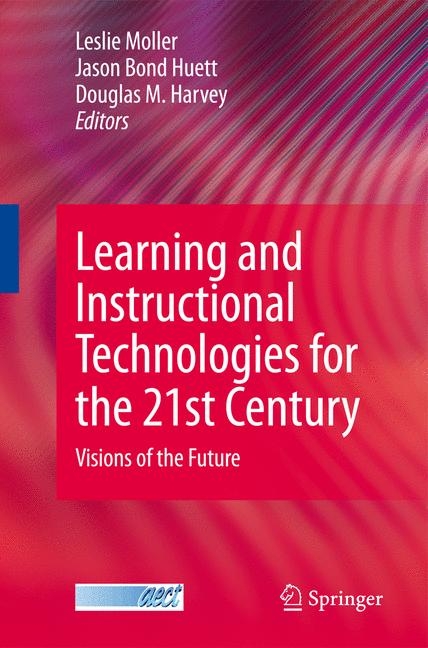
Learning and Instructional Technologies for the 21st Century (eBook)
XVI, 232 Seiten
Springer US (Verlag)
978-0-387-09667-4 (ISBN)
Learning and Instructional Technologies for the 21st Century gathers research which identify models and approaches to improve learning through the inclusion of technology. These papers, from leading researchers and thinkers in instructional technology, begin by refuting the idea that education can be improved through more or better technology. Instead, the contributors emphasize specific, research-based ideas, which re-evaluate learning, reorganize schools, redirect technology, and provide instruction.
Acknowledging the critical role of technology, these contributions explore technology's main advantage--its ability to enable advanced learning designs and emerging paradigms as well as to evolve learning interactions. While each paper explores a specific aspect of the role of technology, the collection shares this common theme. Without sufficient consideration to the process of learning and its many facets, technological availability alone will not provide a sustained impact on the educational process.
Originating from the first AECT Research Symposium, Learning and Instructional Technologies for the 21st Century will be of interest to researchers and practitioners alike.
Learning and Instructional Technologies for the 21st Century gathers research which identify models and approaches to improve learning through the inclusion of technology. These papers, from leading researchers and thinkers in instructional technology, begin by refuting the idea that education can be improved through more or better technology. Instead, the contributors emphasize specific, research-based ideas, which re-evaluate learning, reorganize schools, redirect technology, and provide instruction.Acknowledging the critical role of technology, these contributions explore technology's main advantage--its ability to enable advanced learning designs and emerging paradigms as well as to evolve learning interactions. While each paper explores a specific aspect of the role of technology, the collection shares this common theme. Without sufficient consideration to the process of learning and its many facets, technological availability alone will not provide a sustained impact on the educational process.Originating from the first AECT Research Symposium, Learning and Instructional Technologies for the 21st Century will be of interest to researchers and practitioners alike.
Preface 5
Contents 8
Contributors 10
Adventures and Advances in Instructional Design Theory and Practice 18
Introduction 18
Research on Learning and Instruction 20
Assessing Learning in Complex Domains 23
To Go Where None Have Gone 28
References 29
Coming at Design from a Different Angle: Functional Design 32
Design Metaphors from Many Fields 33
Functional Design 35
Benefits to the Design Process 38
Benefits in the Application of Theory to Designs 39
Conclusion 41
References 41
Robust Designs for Scalability 43
Introduction 43
The Importance of an Innovation’s Scalability 44
Dimensions of Scale 45
Identifying Critical Contextual Features 47
Student Level Variables 47
Teacher Level Variables 48
Technology Infrastructure Conditions 48
School/Class Variables 48
Administrative/School Level Culture Variables 48
Developing a ‘‘Scalability’’ Index for Innovations 49
River City MUVE as a Case Study 50
Research Design 52
Findings 55
Designing Framework for Scalability and Ruggedization 57
Teacher Conditions for Success 58
Professional Development 58
Teacher Ownership and Comfort Level 58
Student Affective Conditions for Success 60
Powers 60
Pedagogical Agents 61
Roles and Collaboration 62
Conclusion 62
References 63
Externally Modeling Mental Models 65
What is Meaningful Learning? 65
What is the Cognitive Residue from Meaningful Learning? 67
Individual Mental Models 68
Structural Knowledge 68
Performance/Procedural Knowledge 68
Image of System 69
Metaphors 69
Executive Knowledge 69
Beliefs 69
Collaborative Group Mental Models 70
Activity-Based Knowledge 70
Conversational/Discursive Knowledge 70
Social/Relational Knowledge 70
Artifactual Knowledge 71
Summary 71
Modeling Mental Models 71
What Is Being Modeled 73
Modeling Domain Knowledge 73
Modeling Problems 75
Modeling Systems 76
Modeling Semantic Structure 79
Modeling Thinking 81
Types of Model-Based Learning Systems 83
Building Deductive Simulations 84
Building Inductive Simulation Models 85
Exploring Black Box Models or Simulations 86
Qualitative Causal Models 86
Semantic Modeling Tools 86
Critical Caveat About Modeling Tools 87
Rationales for Model Construction 87
Summary 88
References 88
Applying a Critical and Humanizing Framework of Instructional Technologies to Educational Practice 91
Introduction 92
Ideologies of Technology 93
Technological Determinism/Social Determinism 93
Technological Utopianism/Dystopianism 94
Conclusion for Ideologies 95
A Humanizing Framework 96
Rationale for a Humanizing Framework 96
Question Technology 97
Abandon the Fiction of the ‘‘Technological Fix’’ 98
Integration of Theory into Practice for Educators and Students 99
Examine Activity System and its Historicity 100
Design ‘‘Minds On’’ Learning 101
Using Tools to Build Community 102
Share Control 104
Participatory Design: Using ‘‘Learners as Designers’’ 105
Conclusion 105
References 106
When a Peer Group Isn’t Needed: Effective Online Learning in an Individual Mentoring Model 110
Introduction 110
The Current LTTS System 111
Overall Evaluation and Impact of LTTS Courses 113
The Initial Design: Commitments and Consequences 114
Relevance to the Teacher 115
Flexible Ease of Access 116
Individualization 117
Evaluating the Initial Design 118
Integrating Interaction in Anytime, Anywhere, Anypace Professional Development 122
Lessons Learned: The Role of a Peer Group and Balancing Design Commitments 126
Conclusions for LTTS and Beyond 128
References 130
Linking the POV-ing Theory to Multimedia Representations of Teaching, Learning, Research in the Age of Social Networking 133
Introduction 133
Are Multimedia Representations New? 137
The Importance of Video in Multimedia Representations 138
The Perspectivity Framework 140
Cases 141
POV-ing Meets MR-TLRs in the Twenty-First Century 142
References 143
Creating Shared Visions of the Future for K-12 Education: A Systemic Transformation Process for a Learner-Centered Paradigm 145
Introduction 145
Idealized Design Versus Leveraged Emergent Design 146
Idealized Design 146
Definitions 146
How it Works 147
Leveraged Emergent Design 149
Definitions 149
How it Works 150
Comparison 152
School-Wide Versus District-Wide Transformation 153
School-Wide Transformation 153
Definitions 153
How it Works 154
NAS 154
CSRP 155
District-Wide Transformation 155
Definitions 155
How it Works 156
Comparison 157
Key-Leader Directed Versus Broad-Stakeholder Directed Transformation 157
Key-Leader Directed Transformation 158
Definition 158
How it Works 158
Broad-Stakeholder Directed Transformation 159
Definition 159
How it Works 160
Comparison 161
Conclusion 161
References 161
Technology as a Change Agent in the Classroom 164
Background 165
Year 1 166
Year 2 166
Year 3 167
Research Design 167
Data Collection 168
Results 169
Year 1 169
Achievement Scores 170
Classroom Observations 170
Surveys, Interviews, and Focus Group Data 170
Year 2 171
Achievement 171
Classroom Observations 172
Surveys, Interviews, and Focus Group Data 172
Year 3 173
Achievement 173
Observations 174
Surveys, Interviews, and Focus Group Data 175
Discussion 175
Research Question 1: Is Teaching Different in a Laptop Classroom? 176
Research Question 2: Do Students Behave Differently in a Laptop Classroom? 177
Research Question 3: Do Students Achieve Differently in a Laptop Classroom? 178
Do Laptop Students Differ from Cart Students in Their Writing Skills? 179
Do Laptop Students Differ from Cart Students in Their Approach to Problem Solving? 179
Do Laptop Students Differ from Cart Students in Their Mathematics, Science, and Social Studies Achievement at the Fifth-Grade Level? 180
How Do Students Perceive the Use and Access of Laptop Computers? 180
What Do Teachers Perceive as the Benefits and Problems of Integrating Technology in Laptop Versus Cart Classrooms? 181
Did the Laptop Computers Serve as a Change Agent? 181
Was the Innovation Sustained? 183
Conclusions 184
References 185
Using Activity Theory to Evaluate and Improve K-12 School and University Partnerships 187
Introduction 188
K-12 School and University Partnerships’ Background 188
Origins of Activity Theory 190
Research Context 192
Participants 192
Partnership Struggles 193
Research Goals and Questions 193
Methods 194
Overview 194
Modifying Activity Systems Analysis Model 195
Develop Discussion Topics 196
Develop Discussion Guide Instruments 197
Data Collection During Partnership Activity Systems Analyses Discussions 197
Data Analysis of Partnership Activity Systems Analyses Discussion 202
Follow-Up on Data Reporting and Planning Improvement Strategies 202
Follow-Up on Evaluating Improvement Strategies Implementations 202
Improving Methodology 203
Results 204
Participant Use of Activity Systems Analysis 204
Activity Systems Analysis Results 205
Tension 1 Initial Findings: Facilitating Effective Communication 206
Tension 1 Follow-Up Findings: Facilitating Effective Communication 208
Tension 2 Initial Findings: Balancing Theory and Practice 208
Tension 2 Follow-Up Findings: Balancing Theory and Practice 209
Tension 3 Initial Findings: Winning Stakeholder Commitment 210
Tension 3 Follow-Up Findings: Winning Stakeholder Commitment 211
Overall Discussion Process Findings 211
What We Learned 211
Practical Implications 212
Theoretical Implications 212
What We Would Do Differently 213
References 214
Reflections: Variations on a Theme 216
‘‘Intro’’ 216
‘‘Progression’’ 217
Chord 1: Education from 30,000 Feet 217
Chord 2: The Power of Politics 218
‘‘Interlude’’ 220
‘‘Modulation’’ 223
References 225
Reflections: Variation on a Theme: Part 2 Is This Jazz, or Are We Singing the Blues? 226
Author Index 229
Subject Index 235
| Erscheint lt. Verlag | 16.12.2008 |
|---|---|
| Zusatzinfo | XVI, 232 p. 20 illus. |
| Verlagsort | New York |
| Sprache | englisch |
| Themenwelt | Schulbuch / Wörterbuch ► Unterrichtsvorbereitung ► Unterrichts-Handreichungen |
| Geisteswissenschaften | |
| Sozialwissenschaften ► Pädagogik ► Schulpädagogik / Grundschule | |
| Schlagworte | Collaboration • Design Architecture • Design Layering • Education • Educational Innovations • Instructional Design • Instructional Technology • K-12 • Learner-centered instruction • learning • Learning and Instruction • mental models • Modeling • Multimedia • Social Networking |
| ISBN-10 | 0-387-09667-1 / 0387096671 |
| ISBN-13 | 978-0-387-09667-4 / 9780387096674 |
| Informationen gemäß Produktsicherheitsverordnung (GPSR) | |
| Haben Sie eine Frage zum Produkt? |
 PDF (Wasserzeichen)
DRM: Digitales Wasserzeichen
Dieses eBook enthält ein digitales Wasserzeichen und ist damit für Sie personalisiert. Bei einer missbräuchlichen Weitergabe des eBooks an Dritte ist eine Rückverfolgung an die Quelle möglich.
Dateiformat: PDF (Portable Document Format)
Mit einem festen Seitenlayout eignet sich die PDF besonders für Fachbücher mit Spalten, Tabellen und Abbildungen. Eine PDF kann auf fast allen Geräten angezeigt werden, ist aber für kleine Displays (Smartphone, eReader) nur eingeschränkt geeignet.
Systemvoraussetzungen:
PC/Mac: Mit einem PC oder Mac können Sie dieses eBook lesen. Sie benötigen dafür einen PDF-Viewer - z.B. den Adobe Reader oder Adobe Digital Editions.
eReader: Dieses eBook kann mit (fast) allen eBook-Readern gelesen werden. Mit dem amazon-Kindle ist es aber nicht kompatibel.
Smartphone/Tablet: Egal ob Apple oder Android, dieses eBook können Sie lesen. Sie benötigen dafür einen PDF-Viewer - z.B. die kostenlose Adobe Digital Editions-App.
Buying eBooks from abroad
For tax law reasons we can sell eBooks just within Germany and Switzerland. Regrettably we cannot fulfill eBook-orders from other countries.
aus dem Bereich