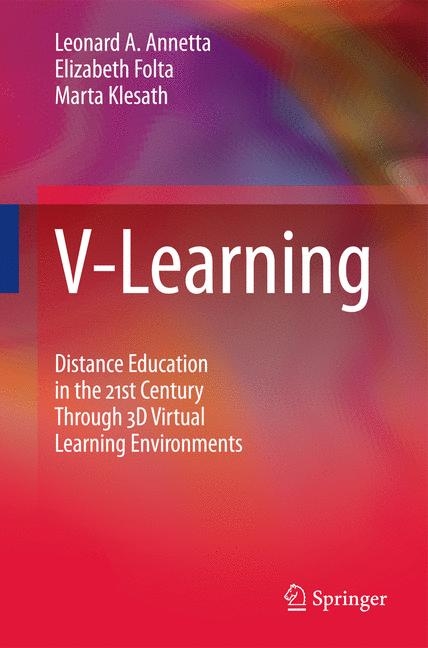
V-Learning (eBook)
XV, 182 Seiten
Springer Netherland (Verlag)
978-90-481-3627-8 (ISBN)
Equally grounded in the research and the practical applications developed by the authors over a number of years, this book shows how virtual learning environments could represent the future of higher education. As academics begin to use environments such as Second Life to reach a broader student audience, this volume offers the distance-learning community (administrators, faculty, and students) a different, yet successful, approach to delivering content over the Internet through 3D virtual learning environments that have the potential to transform higher education. Covering a broad spectrum of frameworks, from commercial multiplayer video games to online learning, the book shows just how powerful these environments can be in the arena of education, and concludes that data-driven practice will ensure almost universal take-up, even among those currently unwilling to use V-learning. The authors provide numerous practical examples of distance learning in its current state of development, as well as making informed predictions about how future environments might evolve. This much-needed book is right at the cutting edge of its subject, and comes at a time when research in both educational gaming and distance learning are converging.
Foreword 8
Acknowledgment 12
Contents 14
1 Distance Learning in the 21st Century 17
21st Century Skills 17
Issues with Distance Education Today 22
Cost of Distance Education 23
Institutional Costs 23
Student Costs 24
Hidden Costs of Distance Education 25
Reach 26
Richness (Cost to the Student) 26
A Case for Synchronous Instruction 27
Meaningful Learning 27
References 29
2 Millennials and Why They Fail in Distance Learning Environments 32
Generation and Gender Lines 33
Why Games and VLEs are Important to Education 35
Conclusion 35
References 37
3 The Power of Serious Games in Education and Why We Are at a Critical Crossroads in Distance Education 39
The Power of Multiplayer Games 39
Presence, Identity, Community, and Play 43
The Critical Crossroad in Distance Education 44
Conclusion 46
References 47
4 Use of Virtual Learning Environments in Distance Education 49
Introduction 49
Creating an Ideal Online Distance Education Course 50
Learning Management Systems 53
Alternatives to LMS 56
Educational Games and Virtual Worlds 57
Learning from Massively Multiplayer Online Role-Playing Games 61
Using 3D VLES in Distance Education 65
Creating a Learning Culture 66
Future Research Needed on 3D VLEs 67
Current Issues 3D VLEs Face in Education 67
References 69
5 Serious Games, Simulations, and Case-Based Reasoning 71
Designing a Game from a Video Case 77
Designing a Case for Athletics 78
Designing a Case for Training and Development 78
Designing a Case from a Field Trip 79
References 82
6 The Role of Synchronous Interactions Within Higher Education Distance Education Courses 84
References 94
7 Presence, Identity, Self-Representation, and Perspective Taking Within Virtual Online Courses 96
Presence and Personality 97
Stimulating Perspective Taking Through Cognitive Conflict 100
Virtual Community 105
References 106
8 Situated Learning and Engagement in Distance Education 110
Situated Learning 113
Student Learning 117
References 120
9 Learning, Psycho-Cognition, and Flow 122
Learning 122
Situated Learning 124
Psycho-Cognition 128
Flow 131
Conclusion 132
References 133
10 Assessing and Evaluating Virtual World Effectiveness 137
Simulation and Game Design 141
Design-Based Research 142
Testing the Intervention 145
Assessment Techniques 146
Usability/Feasibility 147
Usability Data 149
Feasibility Data 150
Server-Side Data Collection 151
Cognitive Ethnography and Discourse Analysis 154
Heuristics 157
Engagement 157
Lessons Learned for Future Growth 158
Conclusion 160
References 160
11 Tri-Hybrid Learning 164
Introduction 164
The Tri-Hybrid Model and the Evolving Role of the Instructor 176
References 180
Appendix A Web Sites for Discovering Virtual Worlds 183
Author Index 185
Subject Index 191
| Erscheint lt. Verlag | 10.3.2010 |
|---|---|
| Zusatzinfo | XV, 182 p. |
| Verlagsort | Dordrecht |
| Sprache | englisch |
| Themenwelt | Schulbuch / Wörterbuch ► Unterrichtsvorbereitung ► Unterrichts-Handreichungen |
| Geisteswissenschaften | |
| Sozialwissenschaften ► Pädagogik ► Schulpädagogik / Grundschule | |
| Sozialwissenschaften ► Politik / Verwaltung | |
| Schlagworte | Distance Education • Distance Learning • E-Learning • Game Theory • Internet • istance education • learning • Learning and Instruction • Second Life • Serious Games • Simulation • Synchronous Interaction • Virtual Environments • virtual learning |
| ISBN-10 | 90-481-3627-X / 904813627X |
| ISBN-13 | 978-90-481-3627-8 / 9789048136278 |
| Informationen gemäß Produktsicherheitsverordnung (GPSR) | |
| Haben Sie eine Frage zum Produkt? |
 PDF (Wasserzeichen)
DRM: Digitales Wasserzeichen
Dieses eBook enthält ein digitales Wasserzeichen und ist damit für Sie personalisiert. Bei einer missbräuchlichen Weitergabe des eBooks an Dritte ist eine Rückverfolgung an die Quelle möglich.
Dateiformat: PDF (Portable Document Format)
Mit einem festen Seitenlayout eignet sich die PDF besonders für Fachbücher mit Spalten, Tabellen und Abbildungen. Eine PDF kann auf fast allen Geräten angezeigt werden, ist aber für kleine Displays (Smartphone, eReader) nur eingeschränkt geeignet.
Systemvoraussetzungen:
PC/Mac: Mit einem PC oder Mac können Sie dieses eBook lesen. Sie benötigen dafür einen PDF-Viewer - z.B. den Adobe Reader oder Adobe Digital Editions.
eReader: Dieses eBook kann mit (fast) allen eBook-Readern gelesen werden. Mit dem amazon-Kindle ist es aber nicht kompatibel.
Smartphone/Tablet: Egal ob Apple oder Android, dieses eBook können Sie lesen. Sie benötigen dafür einen PDF-Viewer - z.B. die kostenlose Adobe Digital Editions-App.
Buying eBooks from abroad
For tax law reasons we can sell eBooks just within Germany and Switzerland. Regrettably we cannot fulfill eBook-orders from other countries.
aus dem Bereich