


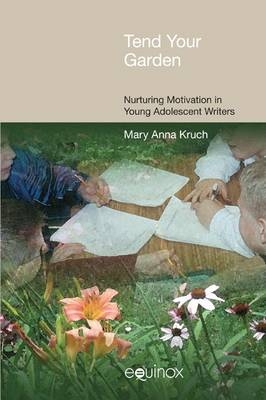
Tend Your Garden
Equinox Publishing Ltd (Verlag)
978-1-84553-450-9 (ISBN)
Literature, drama, music, drawing, and painting are offered both as invitations to writing and as responses to writing, and these are applied within a process-based, workshop format, with teacher modeling of each stage of the writing process. The approach recognizes motivation that is tied to the needs of young adolescent writers and that places responsibility on students in their development as writers and learners, while the teacher assumes a facilitative and supportive role of discovering the strengths, interests, and literacy needs of each student. The holistic, learner-centered process approach represented by the YAMM model nurtures students' motivation for achieving success in writing because it necessitates evolving, facilitative roles for the teacher in a collaborative writing community decidedly focused on the success of all young adolescent writers. A primary purpose for writing the text is to identify and describe the characteristic needs of young adolescents, and what these needs imply for those student writers, to the key adults in their lives-teachers, school officials, and parents-who undoubtedly support these young people's achievements.
The author selects and weaves thirty years of classroom teaching experiences into each chapter, highlighting memorable moments with her students and inserting her own reflections and inspirations of learning to write along with her students.
Mary Anna Kruch is a full-time writer, having taught young adolescents for thirty years. Following retirement from classroom teaching and literacy coaching, she was an Assistant Professor at Grand Valley State University. Kruch is a former officer in the Michigan Council of Teachers of English and an active fellow in the Red Cedar Writing Project, affiliated with the National Writing Project, at Michigan State University.
Preface Foreword by Kia Jane Richmond Editor's Foreword Introduction: How I Came to Tend My Garden Chapter 1: Nurturing the Whole Child in an Inquiry-Rich Environment Chapter 2: Cultivating a Writing Community Chapter 3: Engaging Young Writers with Relevant, High-Interest Lessons Chapter 4: Growing with Process Writing Linked to Arts Chapter 5: Motivating Writing with Choice and Critical Thinking Chapter 6: Learner-Centered Writing in an e-Universe Chapter 7: Sowing the Seeds of Formative, Authentic Assessment Chapter 8: Maxim-izing Motivation via Teacher Imagination Appendices A: Books with Strong, Positive, Global Characters B: Suggested Resources for WarA" Theme C: ADVERB (gray) Activity Cards for You Be the SentenceA" Lesson D: SUBJECT (pink) Activity Cards for You Be the SentenceA" Lesson E. VERB (blue) Activity Cards for You Be the SentenceA" Lesson F. ADJECTIVE (green) Activity Cards for You Be the SentenceA" Lesson G. PHRASE (red) Activity Cards for You Be the SentenceA" Lesson
| Erscheint lt. Verlag | 18.1.2012 |
|---|---|
| Reihe/Serie | Frameworks for Writing |
| Sprache | englisch |
| Maße | 152 x 229 mm |
| Gewicht | 1 g |
| Themenwelt | Schulbuch / Wörterbuch |
| Geisteswissenschaften ► Sprach- / Literaturwissenschaft ► Sprachwissenschaft | |
| Sozialwissenschaften ► Pädagogik ► Schulpädagogik / Sekundarstufe I+II | |
| ISBN-10 | 1-84553-450-6 / 1845534506 |
| ISBN-13 | 978-1-84553-450-9 / 9781845534509 |
| Zustand | Neuware |
| Informationen gemäß Produktsicherheitsverordnung (GPSR) | |
| Haben Sie eine Frage zum Produkt? |
aus dem Bereich


