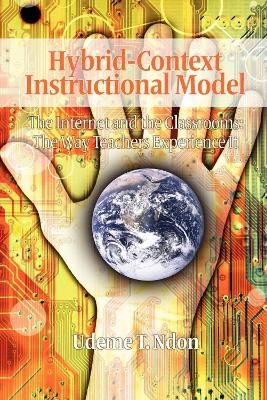
Hybrid-Context Instructional Model
Information Age Publishing (Verlag)
978-1-60752-420-5 (ISBN)
- Titel z.Zt. nicht lieferbar
- Versandkostenfrei
- Auch auf Rechnung
- Artikel merken
This book is a product of a dissertation project that was completed in December 2006. This project investigated teachers’ experiences in relation to teaching and learning using the hybrid-context instructional model. The dissertation itself has been noted as one of the best in providing practical tips for teachers in this area. The study methodology is included as appendix B. To answer the questions raised during the interviews, the findings of the study have been supplemented and supported with extensive literature review of empirical studies to provide theoretical and practical solutions. The literature review draws from total Internet, blended, and hybrid instruction studies. The literature on the total Internet instruction has relevance in that the Internet piece of the hybrid-context course shares the same course management systems and requires the same approaches and principles as do total Internet instruction. The book discusses the conceptual and descriptive presentations of the hybrid-context model, media, applicable teaching philosophies; strategies best accomplished in each medium; various ways of linking the face-to-face and the Internet activities; the why and how the study participants transitioned into teaching hybrid-context courses, teachers’ expectations, etc. The discussion on ‘labor of love’ is the core of this book as the discussion has captured the surprises the study participants met in a way that is not reflected in the current literature. Built into this discussion are the amounts of things teachers had to learn in order to function well as hybrid-context model teachers. The contents of this book will aide teachers who teach in any way using the Internet. Therefore, any establishment/individual using the Internet for teaching and learning will benefit from the contents of this book. Also, the administrators will find this book a selling point to encourage more participation in the adoption of the hybrid-context instructional model as well as realizing what the teachers would need to successfully implement this phenomenon.
Preface
Introduction
Acknowledgments
Section I. Conceptual Hybrid-Context Model.
Chapter 1. Hybrid-Context Components and Tools
Chapter 2. Collaboration Programs and the Trend
Section II. Descriptive Hybrid-Context Instructional Model.
Chapter 3. Descriptive Hybrid-Context Instructional Model
Chapter 4. Implied Philosophies, Principles, and Strategies
Section III. Course Planning, Development, Implementation, and Evaluation.
Chapter 5. Course Planning and Development
Chapter 6. Course Delivery
Chapter 7. Establishing a Community of Learners as Team/Group-Based Strategy
Chapter 8. The Evaluation Process
Section IV. The Resulting Power of Active Learning.
Chapter 9. Interactions
Chapter 10. Feedback
Chapter 11. Learners' Engagement, and Learning
Chapter 12. Critical Thinking
Section V. What Administrators, Teachers, and Stakeholders Need to Know
Chapter 13. Policy and Administrative Concerns
Chapter 14. Teachers' Learning, Processes, and Support
Chapter 15. Professional Digital Teaching Portfolios
Chapter 16. Multiple Teachers' Role Effect
Chapter 17. The Learner
Section VI. Discusses the Hybrid Context Course Journey.
Chapter 18. The Hybrid Context Course Journey
Appendices
A. Samples of Hypothetical Situations
B. Applicable Research Approaches
C. Writer's Curriculum Vitae
Editor's Curriculum Vitae
About the Author
| Erscheint lt. Verlag | 30.12.2010 |
|---|---|
| Sprache | englisch |
| Maße | 156 x 234 mm |
| Gewicht | 1023 g |
| Themenwelt | Schulbuch / Wörterbuch ► Unterrichtsvorbereitung ► Unterrichts-Handreichungen |
| Sozialwissenschaften ► Pädagogik | |
| ISBN-10 | 1-60752-420-1 / 1607524201 |
| ISBN-13 | 978-1-60752-420-5 / 9781607524205 |
| Zustand | Neuware |
| Informationen gemäß Produktsicherheitsverordnung (GPSR) | |
| Haben Sie eine Frage zum Produkt? |
aus dem Bereich