Tai Chi for Seniors Over 60 (eBook)
200 Seiten
Publishdrive (Verlag)
978-0-00-114126-1 (ISBN)
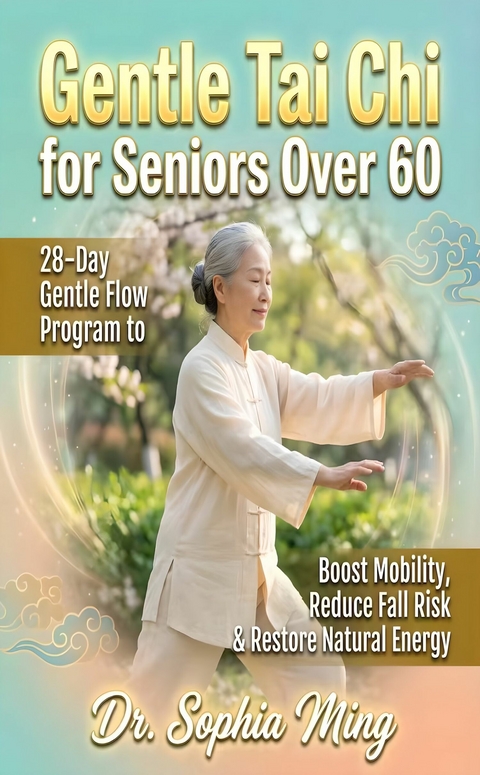
Discover the transformative power of gentle Tai Chi tailored specifically for adults over 60 with Gentle Tai Chi for Seniors Over 60: 28-Day Gentle Flow Program to Boost Mobility, Reduce Fall Risk & Restore Natural Energy by Dr. Sophia Ming.
In this beginner-friendly guide, you'll embark on a safe, step-by-step 28-day program designed to rebuild strength, enhance balance, and awaken your body's natural vitality-without strain or overwhelm. Drawing from traditional Tai Chi principles and adapted for senior bodies, each daily chapter introduces simple, flowing movements that you can practice standing with chair support or seated for maximum comfort.
Why this program is perfect for you:
Boost Mobility: Gentle flows loosen stiff joints, improve flexibility in the hips, knees, and shoulders, and make everyday activities like walking, reaching, and turning easier and more graceful.
Reduce Fall Risk: Proven balance-building postures strengthen legs, core, and coordination, helping you move with confidence and stability.
Restore Natural Energy: Mindful breathing and slow movements circulate Qi (vital energy), reducing fatigue, easing stress, and promoting deeper relaxation and better sleep.
Safe for All Levels: Modifications for limited mobility, arthritis, or back concerns ensure you progress at your own pace-no prior experience needed.
Over four weeks, you'll progress from basic warm-ups and posture to a complete gentle sequence, including classics like Cloud Hands, Grasping the Sparrow's Tail, and Needle at Sea Bottom. Detailed instructions, breath guidance, and safety tips make it easy for older adults to follow and benefit immediately.
Whether you're new to Tai Chi or seeking a low-impact way to stay active, this program supports lifelong vitality, independence, and inner calm. Start your gentle journey today-your body will thank you!
Welcome to your gentle Tai Chi journey, dear reader. As we begin this 28-day program, remember that Tai Chi is a soft, flowing practice designed especially for bodies over 60. Today, we focus on simple warm-ups and deep breathing to awaken your natural energy. Stand or sit comfortably—there's no rush. Breathe slowly, feeling gratitude for your body's wisdom. This is your time to nurture mobility and inner calm.
Before we begin any movements, it is essential to prepare your space and your mind. Find a quiet area where you feel safe and undisturbed, preferably with a flat, non-slippery surface. If standing feels challenging at any point, use a sturdy chair for support—place it beside you or sit in it for seated variations. Wear comfortable, loose clothing and flat, supportive shoes or practice barefoot if that feels stable. Clear your mind of the day's worries; this practice is a gift to yourself, a moment to reconnect with the gentle strength that has carried you through life.
We start with the foundation of all Tai Chi: breath awareness. Proper breathing in Tai Chi is natural, deep, and abdominal—often called diaphragmatic or belly breathing. This type of breathing uses the diaphragm, the large muscle below your lungs, to draw air deeply into the lower lungs, allowing your belly to gently expand on the inhale and soften on the exhale. Unlike shallow chest breathing, which can feel tense and limited, abdominal breathing brings more oxygen to your body, calms the nervous system, promotes relaxation, and enhances circulation. For seniors over 60, this is particularly beneficial as it supports lung capacity, reduces stress on the heart, and helps manage conditions like high blood pressure or mild respiratory issues.
To practice breath awareness, begin in a comfortable position. If standing, place your feet shoulder-width apart, knees softly bent (never locked), and arms relaxed at your sides. If sitting, rest your hands on your thighs, feet flat on the floor, and spine tall but relaxed. Close your eyes gently or soften your gaze downward.
Place one hand on your belly and the other on your chest. Inhale slowly through your nose for a count of four, feeling your belly rise and expand like a balloon filling with air—your chest should remain mostly still. Hold the breath gently for a count of two if comfortable, then exhale slowly through your nose or slightly parted lips for a count of six, allowing your belly to fall naturally. Feel any tension release with the outgoing breath. Repeat this cycle 10 to 20 times, gradually letting go of counting if it feels natural, and simply observe the rhythm of your breath.
As you breathe, notice how this deep, abdominal pattern awakens a sense of calm energy, often referred to in Tai Chi as "Qi" or vital life force. If your mind wanders, gently bring it back to the sensation of your belly rising and falling. This simple awareness is the cornerstone of our practice—it restores natural energy, improves focus, and prepares your body for gentle movement. Many seniors find that regular deep breathing alone reduces feelings of fatigue and enhances overall vitality.
Once comfortable with breath awareness, we transition to gentle warm-ups. These exercises loosen the joints, increase blood flow, and promote flexibility without strain. Always move slowly, within your comfortable range—never force or bounce. If you feel pain (beyond mild stretching sensation), stop and modify or rest. Perform each warm-up 5 to 10 times per side or direction, coordinating with your breath: inhale during preparation or opening, exhale during the movement or release.
Begin with neck warm-ups to release tension that often accumulates in the upper body. Stand or sit tall, shoulders relaxed down away from your ears.
1. Neck Tilts: Inhale as you lengthen your spine. Exhale and gently tilt your head to the right, bringing your ear toward your shoulder (do not lift the shoulder). Hold for a slow breath, feeling a gentle stretch along the left side of your neck. Inhale back to center. Exhale and tilt to the left. Repeat slowly, keeping movements small and controlled. This loosens the neck muscles, improves range of motion, and reduces stiffness common in older adults.
2. Neck Turns: Inhale to center. Exhale and turn your head to look over your right shoulder, keeping your chin level. Hold briefly, then inhale back to center. Exhale to the left. Move only as far as feels comfortable—this enhances rotational mobility, which supports better posture and reduces headache risk from tension.
3. Gentle Neck Circles: If your neck feels stable (avoid if you have cervical issues), inhale and drop your chin to your chest. Exhale and slowly circle your head to the right, up, back (only slightly), and left, like drawing a small circle with your nose. Complete 3-5 slow circles one way, then reverse. Keep circles small to protect the neck vertebrae. This promotes lubrication in the joints and eases daily turning movements.
Next, move to shoulder warm-ups. Shoulders often hold stress and lose mobility with age, so these are vital for upper body ease.
1. Shoulder Rolls: Inhale and lift your shoulders up toward your ears. Exhale and roll them back, down, and forward in a circular motion. Complete 5-10 rolls backward, then reverse forward. Feel the shoulders loosening, releasing stored tension and improving circulation to the arms.
2. Arm Swings: Let your arms hang loosely at your sides. Inhale and gently swing them forward and up to shoulder height if possible. Exhale and let them swing back down and slightly behind you, like a pendulum. Keep swings relaxed—no force. This warms the shoulder joints, enhances blood flow, and prepares for flowing arm movements in Tai Chi.
3. Shoulder Shrugs and Releases: Inhale and shrug both shoulders high. Hold briefly, then exhale and drop them completely, feeling a release. Repeat, imagining melting away any tightness. This counters the forward hunching many experience from daily activities.
Now, warm the wrists and arms, as Tai Chi involves graceful hand movements.
1. Wrist Circles: Extend your arms forward at shoulder height or let them hang. Clasp hands loosely or circle one wrist at a time. Rotate wrists clockwise 5-10 times, then counterclockwise. Start with small circles, gradually larger if comfortable. This lubricates the wrist joints, reduces arthritis discomfort, and improves fine motor control.
2. Finger Stretches: Open your hands wide, spreading fingers apart on inhale. Exhale and gently close into a soft fist. Repeat, then shake hands loosely at the wrists to release. This promotes dexterity and relieves hand stiffness.
Transition to spine and torso warm-ups for core mobility.
1. Gentle Torso Twists: Place hands on hips or let arms hang. Inhale to center, lengthening spine. Exhale and twist gently to the right, leading with your waist, head following naturally. Inhale center, exhale left. Keep twists small—focus on loosening the mid-back and improving rotational flexibility, which aids daily reaching and turning.
2. Side Bends: Inhale arms overhead if comfortable (or hands on hips). Exhale and bend sideways to the right, sliding right hand down your leg. Inhale center, exhale left. This stretches the sides, enhances breathing space in the ribs, and supports better posture.
For the hips and lower body, which are crucial for balance and fall prevention.
1. Hip Circles: Hands on hips, feet shoulder-width. Gently circle hips clockwise 5-10 times, as if hula-hooping slowly. Reverse direction. Keep knees soft—this opens the hip joints, eases lower back tension, and improves walking stability.
2. Gentle Leg Swings: Hold a chair for support. Swing one leg forward and back loosely, like a pendulum, 5-10 times. Switch legs. This warms hips and legs without impact.
Finally, knee and ankle warm-ups to ground your practice.
1. Knee Circles: Feet together, hands on knees, knees slightly bent. Circle knees together clockwise 5-10 times, then counterclockwise. Start small—this strengthens surrounding muscles and lubricates knees safely.
2. Ankle Circles: Lift one foot slightly (hold chair). Circle ankle clockwise and counterclockwise 5-10 each. Switch feet. Or tap heel, then toes, inside and outside edge. This enhances ankle stability, vital for reducing fall risk.
3. Weight Shifts: Feet shoulder-width, softly shift weight side to side, feeling your feet connect to the ground. This awakens balance awareness.
Throughout these warm-ups, continue abdominal breathing—inhale to prepare, exhale to move. If seated, adapt by circling arms, twisting gently, or rotating ankles.
Now, integrate breath and gentle movement with a simple standing meditation. Stand (or sit) with feet shoulder-width, knees soft, arms relaxed. Close eyes or soften gaze. Place hands gently on your lower abdomen (Dan Tien area, below navel). Breathe deeply: inhale, belly expands, feel energy gathering; exhale, belly softens, release tension. Hold for 3-5 minutes, noticing how breath connects to your body's center. This cultivates Qi awareness, restoring natural vitality.
End with a closing breath sequence: Inhale arms slowly out and up (if standing), palms up, to shoulder height. Exhale, turn palms down, lower arms gently to sides. Repeat 5 times, feeling energy settle.
Practice today's session for 15-20 minutes, or longer if desired. Repeat warm-ups and breath awareness daily to build familiarity. Listen to your body—rest as needed. These foundational practices gently increase joint mobility, enhance lung function, calm the mind, and lay the groundwork for better balance...
| Erscheint lt. Verlag | 11.1.2026 |
|---|---|
| Sprache | englisch |
| Themenwelt | Sachbuch/Ratgeber ► Gesundheit / Leben / Psychologie |
| ISBN-10 | 0-00-114126-0 / 0001141260 |
| ISBN-13 | 978-0-00-114126-1 / 9780001141261 |
| Informationen gemäß Produktsicherheitsverordnung (GPSR) | |
| Haben Sie eine Frage zum Produkt? |
 EPUB (Adobe DRM)
Kopierschutz: Adobe-DRM
Adobe-DRM ist ein Kopierschutz, der das eBook vor Mißbrauch schützen soll. Dabei wird das eBook bereits beim Download auf Ihre persönliche Adobe-ID autorisiert. Lesen können Sie das eBook dann nur auf den Geräten, welche ebenfalls auf Ihre Adobe-ID registriert sind.
Details zum Adobe-DRM
Dateiformat: EPUB (Electronic Publication)
EPUB ist ein offener Standard für eBooks und eignet sich besonders zur Darstellung von Belletristik und Sachbüchern. Der Fließtext wird dynamisch an die Display- und Schriftgröße angepasst. Auch für mobile Lesegeräte ist EPUB daher gut geeignet.
Systemvoraussetzungen:
PC/Mac: Mit einem PC oder Mac können Sie dieses eBook lesen. Sie benötigen eine
eReader: Dieses eBook kann mit (fast) allen eBook-Readern gelesen werden. Mit dem amazon-Kindle ist es aber nicht kompatibel.
Smartphone/Tablet: Egal ob Apple oder Android, dieses eBook können Sie lesen. Sie benötigen eine
Geräteliste und zusätzliche Hinweise
Buying eBooks from abroad
For tax law reasons we can sell eBooks just within Germany and Switzerland. Regrettably we cannot fulfill eBook-orders from other countries.
aus dem Bereich