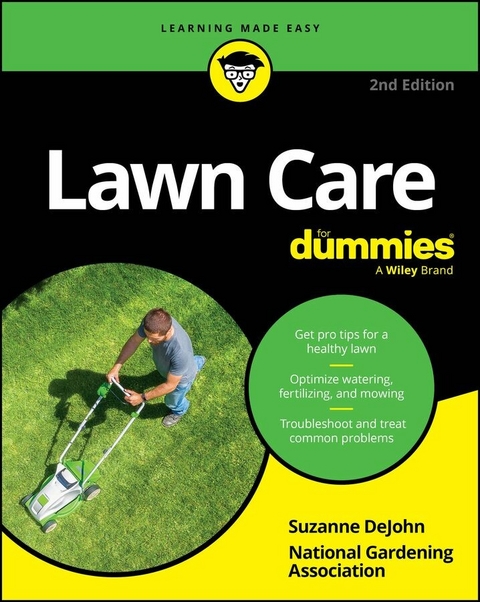
Lawn Care For Dummies (eBook)
449 Seiten
For Dummies (Verlag)
978-1-394-36238-7 (ISBN)
The beginner-friendly guide to creating a lush and thriving lawn
With Lawn Care For Dummies you get the know-how you need to grow a great lawn, improve an existing lawn, or keep your lawn healthy. You'll learn all about the different types of grasses, including where they grow best and what they need to thrive. This book also walks you through the process of installing sprinklers and other irrigations systems, so you'll be set up for grassy success. Then, get advice on figuring out the maintenance schedule that works best for you-watering, fertilizing, mowing, dethatching, aerating, overseeding, and beyond. You also get insight into how to do all of this with an eye on minimizing water need and keeping the rest of the environment healthy.
- Create the best lawn for your climate and your personal lawncare style
- Optimize your upkeep with pro tips on when, how much, and how often
- Get troubleshooting guidance for damaged lawns, and get rid of pests, diseases, and weeds
- Improve the health of your lawn with easy-to-follow advice
This updated edition of Lawn Care For Dummies is perfect for the everyday lawn owner, soon-to-be owner, and DIY lawn care advocate looking to grow a better lawn without breaking the bank.
Suzanne DeJohn has more than 25 of years of experience writing how-to gardening content, in-depth science content for educators, and book projects, including Organic Gardening For Dummies and Container Gardening For Dummies.
The National Gardening Association's mission is to promote gardening to the public through educational materials in print and online at garden.org.
The beginner-friendly guide to creating a lush and thriving lawn With Lawn Care For Dummies you get the know-how you need to grow a great lawn, improve an existing lawn, or keep your lawn healthy. You'll learn all about the different types of grasses, including where they grow best and what they need to thrive. This book also walks you through the process of installing sprinklers and other irrigations systems, so you'll be set up for grassy success. Then, get advice on figuring out the maintenance schedule that works best for you watering, fertilizing, mowing, dethatching, aerating, overseeding, and beyond. You also get insight into how to do all of this with an eye on minimizing water need and keeping the rest of the environment healthy. Create the best lawn for your climate and your personal lawncare style Optimize your upkeep with pro tips on when, how much, and how often Get troubleshooting guidance for damaged lawns, and get rid of pests, diseases, and weeds Improve the health of your lawn with easy-to-follow advice This updated edition of Lawn Care For Dummies is perfect for the everyday lawn owner, soon-to-be owner, and DIY lawn care advocate looking to grow a better lawn without breaking the bank.
Chapter 1
Thinking about Design
IN THIS CHAPTER
Planning a thriving lawn and landscape
Adding eco-friendly features
Sketching a plan for your yard and lawn
Design tips for easier maintenance
Whether you’re starting out with a new lawn installation, considering renovating an existing lawn, or pondering how a lawn fits into your landscape as a whole, you’ll soon be making some important decisions.
Start by asking yourself, “What do I want my lawn to do for me?” You might, for example, want your lawn to be a welcoming place where you and your family can spend time outdoors, relaxing in the hammock, playing croquet, and firing up the grill for weekend barbeques. Perhaps you envision your lawn as an attractive setting for perennial gardens and other ornamental plantings. Or maybe your homeowners association has specific rules about the lawn on your property. (It’s best to check with them first before you make major changes.)
The information in this chapter will help you understand your options so you can design the lawn that’s right for you.
Lawns, Defined
Simply put, a lawn is garden of grasses and other durable plants that together form a ground cover. This carpet of green offers an inviting, resilient surface that can withstand people walking and kids playing. That said, not everyone’s interpretation of a lawn is the same. To some people, a lawn should be neatly manicured. To others, a lawn can be wilder and a little rougher around the edges. Wherever you fit on that spectrum, a healthy, thriving lawn provides you with a host of benefits.
Lawns: A look back
Grasses are some of the few plants that can withstand the repeated cutting back to near ground level (more on that in Chapter 3). The concept of lawns dates back centuries — even millennia — when grazing livestock kept land open by nibbling vegetation and prevented shrubs and other woody plants from taking over.
In medieval Europe, maintaining a perimeter of low-growing plants offered guards at castles and estates an unobstructed view of their surroundings so they could easily scan for threats. Later, settlers in North America cultivated open, treeless spaces around their houses as way to tame the wildness surrounding them.
It wasn’t until the 1700s that landscape designers in England and France began promoting the idea that a well-kept lawn was a symbol of high social status and evidence that the property owners were of sufficient means to have time for recreational activities. Commoners, in contrast, had to use their land for sustenance — for growing vegetables, fruits, and herbs and for grazing their animals. Only the wealthy had the resources needed to maintain unproductive “lawns” (a term that originally referred to a natural open area in the woods), as well as the leisure time to enjoy them. Today, well-maintained, grass-covered yards are the norm, so much so that municipalities and homeowners associations — and sometimes neighbors — demand them. As you read on, keep in mind that highly manicured lawns are a relatively recent phenomenon!
What lawns do for you
There are good reasons that most landscapes incorporate areas of mown grass around the house. Here are some of the benefits of lawns.
- Aesthetic: A well-kept lawn acts as an inviting bridge between your home and landscape elements like patios and ornamental plantings. Green grass offers a backdrop for creative expression, such as flower beds and yard décor. Lawns help trap the road dust kicked up by vehicles, as well as wind-borne debris and pollen.
- Recreational: Where but on a lawn can you play catch with your kids, set up a badminton game, or kick around a soccer ball? Grass is the perfect play surface — it’s soft and forgiving, yet tough and durable. Family get-togethers, summer picnics, and neighborhood gatherings would be much less enjoyable if the yard was just a patch of dirt or filled with prickly weeds.
- Environmental: Like all green plants, lawn grasses absorb carbon dioxide from the air and give back fresh oxygen. In contrast to bare soil and paved surfaces, lawns slow the movement of water and allow rainwater to permeate the soil rather than running off into storm drains and overwhelming sewer systems. Grass plants have deep, fibrous root systems that help hold soil in place, decreasing the erosion of precious topsoil. A lawn maintained using sustainable, environmentally friendly techniques promotes a healthy soil ecosystem that, in turn, supports healthy plants. Replacing heat-absorbing pavement with lawns and landscape plants helps cool the air around your home, reducing the need for air conditioning.
- Financial: “Curb appeal” adds real value to your home. A well-maintained lawn and landscape can increase a property’s value by 15 percent or more, while a bedraggled one may turn away potential buyers before they even get to the front door.
Considering Sustainability
Now that we’ve sung the praises of lawns, let’s look at the other side of the coin. Lawns that are manicured to perfection are significant consumers of limited resources, such as fertilizers and water. In addition, improper application and overuse of the insecticides, herbicides, and fungicides employed by many homeowners and lawn care companies can cause significant harm to the environment. Lawns will always have their place, but it’s important to be practical about them and keep in mind the cost of the “perfect” lawn.
According to the National Wildlife Federation, lawns cover over 40 million acres of land in the United States, and they consume immense resources, including a mindboggling 9 billion gallons of water per day. In return, most lawns offer little in the way of food or habitat for birds, pollinators, and other wildlife. Creating a landscape that serves all life forms — human and wild — starts by envisioning your yard as part of the larger ecosystem. It doesn’t require sacrificing your patch of green lawn! Instead, it invites you to consider how you define your ideal landscape.
As you design your lawn and landscape, consider including features that help counter the environmental challenges posed by expansive, manicured lawns. Learn more about these in Chapter 19, Chapter 22, and Chapter 23.
Here are some landscape options that support wildlife, conserve and protect water supplies, and/or require less maintenance than traditional lawns.
- Pollinator gardens: The plight of pollinators continues to make headlines, with good reason. About one out of every three bites of the food we eat depends on pollinators, so protecting them is of utmost importance. Replacing some of your lawn with wildflowers, incorporating native plants in your landscape, and reducing your use of lawn chemicals are good places to start.
- Xeriscaping: First coined in 1981 by the Denver Water Department, the term xeriscaping (pronounced ZARE-eh-scape-ing or ZEER-eh-scape-ing) refers to a style of landscaping that is focused on water conservation and reducing the need for irrigation while still maintaining an attractive landscape. Denver, Colorado, like many arid and semiarid areas of the western United States, doesn’t receive enough natural rainfall to support lush lawns. Xeriscaping (also known as water-wise or dry landscape gardening) offers alternatives, such as replacing thirsty turfgrass and gardens with drought-tolerant plants — especially native plants that are well-adapted to the climate and support local wildlife. Some municipalities even offer rebates and other incentives for replacing lawns with less water-intensive landscape options.
- Rain gardens: Located in naturally occurring or human-made low spots in your landscape, rain gardens collect water runoff so the soil can slowly absorb it and recharge the groundwater. As a bonus, you can plant your rain garden with water-tolerant native plants to provide food and habitat for pollinators and other wildlife.
- Low-mow and no-mow lawns: Planting slow-growing dwarf grasses allows you to mow less often compared to traditional turfgrasses. The nonprofit Pollinator Partnership (
https://pollinator.org) advocates for the planting of “bee lawns” made up of low-growing flowering ground covers, such as creeping thyme, that don’t need mowing. Although many pollinating insects don’t sting, if you’re hesitant to plant bee-friendly plants in areas that get lots of foot traffic, choose out-of-the-way spots for this alternative. - No Mow May: The goal of this initiative, originally launched in the United Kingdom but now gaining traction in North America, is to pause mowing in May. This allows any flowers in your lawn to bloom so they can provide nectar to pollinators at a time when there may be few other plants in bloom.
- Meadowscaping, wildscaping, and “lazy lawns”: Transforming some of your lawn into a meadow, choosing plants to support wildlife, and allowing some of your lawn to go without regular fertilizing and irrigation are ways to reduce the resources needed to maintain a manicured lawn. Learn more about planting a wildflower meadow in Chapter 21.
Deciding on Design
Although most yards share a few common elements, such as walkways and areas...
| Erscheint lt. Verlag | 11.12.2025 |
|---|---|
| Sprache | englisch |
| Themenwelt | Sachbuch/Ratgeber ► Natur / Technik ► Garten |
| Schlagworte | diy book • diy lawn • gifts for new homeowners • grass lawn • Home Improvement book • homeowner book • home owner essentials • home renovation gifts • landscaping business • lawn care • lawncare book • lawn gardening book • new homeowner gifts • yard care |
| ISBN-10 | 1-394-36238-2 / 1394362382 |
| ISBN-13 | 978-1-394-36238-7 / 9781394362387 |
| Informationen gemäß Produktsicherheitsverordnung (GPSR) | |
| Haben Sie eine Frage zum Produkt? |
 EPUB (Adobe DRM)
Kopierschutz: Adobe-DRM
Adobe-DRM ist ein Kopierschutz, der das eBook vor Mißbrauch schützen soll. Dabei wird das eBook bereits beim Download auf Ihre persönliche Adobe-ID autorisiert. Lesen können Sie das eBook dann nur auf den Geräten, welche ebenfalls auf Ihre Adobe-ID registriert sind.
Details zum Adobe-DRM
Dateiformat: EPUB (Electronic Publication)
EPUB ist ein offener Standard für eBooks und eignet sich besonders zur Darstellung von Belletristik und Sachbüchern. Der Fließtext wird dynamisch an die Display- und Schriftgröße angepasst. Auch für mobile Lesegeräte ist EPUB daher gut geeignet.
Systemvoraussetzungen:
PC/Mac: Mit einem PC oder Mac können Sie dieses eBook lesen. Sie benötigen eine
eReader: Dieses eBook kann mit (fast) allen eBook-Readern gelesen werden. Mit dem amazon-Kindle ist es aber nicht kompatibel.
Smartphone/Tablet: Egal ob Apple oder Android, dieses eBook können Sie lesen. Sie benötigen eine
Geräteliste und zusätzliche Hinweise
Buying eBooks from abroad
For tax law reasons we can sell eBooks just within Germany and Switzerland. Regrettably we cannot fulfill eBook-orders from other countries.
aus dem Bereich