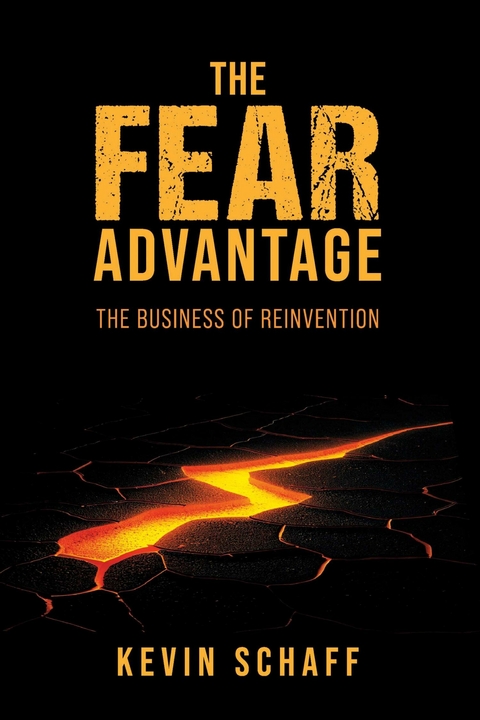
The Fear Advantage (eBook)
200 Seiten
Bookbaby (Verlag)
9798317818043 (ISBN)
Kevin Schaff is a serial entrepreneur and business leader who has built, scaled, and reinvented companies across industries. He is best known as the founder and CEO of (T3Media / Thought Equity Motion), where he pioneered digital video licensing and cloud-based media management, scaling the company into a global enterprise before leading it through acquisition. Over his career, Kevin has lived the very principles in this book-navigating disruption, confronting fear, and turning uncertainty into opportunity. From early ventures in technology to leading companies through rapid growth and market pivots, he has witnessed firsthand how fear can paralyze organizations-or propel them into bold reinvention. Today, Kevin continues to advise and invest in ventures at the intersection of technology, sustainability, and digital transformation. Whether in media, data and analytics, or blockchain, his focus remains the same: helping leaders harness the signals of fear to find their next advantage. He lives in Colorado, where he balances entrepreneurial projects with time outdoors, family, and the constant pursuit of new ideas.
Chapter 2
The Disruption Era
Case Study #1: Blockbuster vs. Netflix
The year was 2000, and Blockbuster was on top of the world. With nearly 9,000 stores, $6 billion in annual revenue, and a brand so dominant it had become a verb, Blockbuster was the king of Friday night. Families piled into minivans, scanned the aisles for the latest releases, and argued over whether to pick up popcorn and candy at the counter.
It felt unstoppable.
Then Reed Hastings showed up.
At the time, Netflix was a scrappy startup mailing DVDs to customers. They were bleeding cash, struggling with growth, and barely surviving the dot-com crash. Hastings approached Blockbuster with an offer: buy Netflix for $50 million. He pitched it as a partnership—Netflix would run the online side while Blockbuster kept its lucrative retail footprint.
Blockbuster laughed him out of the room.
John Antioco, Blockbuster’s CEO at the time, didn’t see streaming or online rentals as a real threat. His fear wasn’t about the future—it was about cannibalizing the present. Late fees made Blockbuster hundreds of millions each year, and the idea of shifting to a subscription model that eliminated them felt like madness.
So Netflix went home empty-handed. And started building the future anyway.
bookbaby-formatting_Section-Title-copy">The Five-Year TurnBy 2005, Netflix had grown to nearly 5 million subscribers. DVDs-by-mail wasn’t sexy, but it was convenient. More importantly, Netflix was learning. They were collecting data on customer preferences, testing algorithms, and refining a subscription model that valued loyalty over penalties.
Blockbuster noticed—but hesitated. Their executives debated rolling out a subscription model, but the fear of killing late fees paralyzed them. Internal memos show arguments not about whether consumers wanted it, but about how much revenue they’d lose if they gave in.
Fear, once again, was present. But instead of pointing them toward reinvention, they treated it as a stop sign.
bookbaby-formatting_Section-Title-copy">2007: Streaming ArrivesThe real disruption came in 2007. Broadband internet speeds had improved enough that Netflix could launch streaming. At first, the service was clunky. Few titles were available. The quality was hit-or-miss.
But Reed Hastings wasn’t trying to perfect it. He was trying to start the next five-year cycle. Hastings later said: “We knew streaming was the future. The question was not if it would work—it was when. We had to be there first.”
Blockbuster had the chance to leap. They had brand recognition, a massive customer base, and enough capital to dominate streaming. But they were too busy defending their stores. Their executives still believed customers valued the in-store experience.
By the time Blockbuster launched its own streaming service in 2010, Netflix had already pulled ahead. Blockbuster filed for bankruptcy that same year.
bookbaby-formatting_Section-Title-copy">Fear Reframed: Netflix vs. BlockbusterThe difference between the two companies wasn’t access to resources. It wasn’t even vision—Blockbuster saw the same trends Netflix did. The difference was how each company responded to fear.
- Netflix’s fear was external: “If we don’t disrupt ourselves, someone else will.”
- Blockbuster’s fear was internal: “If we change too fast, we’ll lose what we have.”
The result? One company reinvented. The other froze.
bookbaby-formatting_Section-Title-copy">The Leadership LensLooking back, analysts often point to Blockbuster’s arrogance. But arrogance is rarely pure. More often, it’s fear in disguise. Fear of admitting weakness. Fear of explaining declining revenue to investors. Fear of being wrong about the future.
In leadership, arrogance is often just fear with armor.
Hastings, by contrast, leaned into vulnerability. He admitted openly that DVDs wouldn’t last. He acknowledged the fear. And then he used it as fuel.
bookbaby-formatting_Section-Title-copy">The Five-Year LessonNetflix’s pivot to streaming in 2007 wasn’t just a technology shift. It was an act of discipline: treating disruption as a cycle, not an anomaly. Hastings understood that every five years, they’d need to bet again. That’s why Netflix later reinvented itself into content creation, global expansion, and even interactive storytelling.
Blockbuster, meanwhile, missed its window because it tried to extend its old cycle. But in the new economy, old cycles don’t extend. They expire.
bookbaby-formatting_Section-Title-copy">Key InsightThe Blockbuster vs. Netflix story isn’t about DVDs or streaming. It’s about fear. Both companies felt it. Only one treated fear as a compass.
Blockbuster’s fear said: “Protect the old model.”
Netflix’s fear said: “Invent the new one.”
And that difference made all the difference.
Case Study #2: Tesla vs. the Auto Industry
In 2008, the American auto industry was in crisis. Gas prices had spiked, consumer demand was collapsing, and the financial crash pushed GM and Chrysler to the brink of bankruptcy. Detroit’s giants were fighting for survival.
Their response? Retreat into familiarity. Executives doubled down on their most reliable sellers—pickup trucks and SUVs. Electric vehicles were treated as fringe experiments. Hybrid models, like Toyota’s Prius, were tolerated but hardly embraced.
The fear was everywhere: fear of alienating loyal customers, fear of costly infrastructure changes, fear of betting big on unproven markets. So they stalled.
Meanwhile, a tiny California startup saw the same fear—and used it differently.
bookbaby-formatting_Section-Title-copy">The Tesla GambleElon Musk has admitted that in 2008, Tesla was weeks from collapse. Funding had dried up, suppliers were nervous, and even employees questioned whether electric cars could ever scale. Musk himself described being “days from bankruptcy.”
And yet, instead of retreating, Tesla doubled down. The fear of irrelevance—the fear that climate change and technology shifts would make gasoline cars obsolete—wasn’t treated as a stop sign. It was treated as a compass.
Tesla pushed forward with the Roadster, then the Model S, staking everything on a conviction: the future would belong to electric.
bookbaby-formatting_Section-Title-copy">Detroit’s Fear vs. Tesla’s FearLegacy automakers framed fear in terms of loss.
- “If we shift too fast, we’ll lose our margins on trucks.”
- “If we invest in batteries and it fails, we’ll waste billions.”
- “If consumers don’t adopt, we’ll be ridiculed.”
Tesla reframed fear in terms of opportunity.
- “If we don’t push forward, the planet loses.”
- “If we fail, at least we force the industry to move.”
- “If consumers resist, we’ll educate them.”
The difference wasn’t the presence of fear—it was its interpretation.
bookbaby-formatting_Section-Title-copy">The Disruption WindowFrom 2008 to 2013—just five years—Tesla went from a fringe startup to the most influential automaker in the world. The Model S wasn’t just an electric car—it was a luxury vehicle that outperformed gasoline competitors on speed, safety, and design.
Consumers began to shift. Governments offered incentives. Infrastructure followed. And suddenly, the very thing Detroit feared—mass adoption of EVs—was happening in real time.
By 2020, Tesla’s market cap had eclipsed the combined value of GM, Ford, and Chrysler. The giants had the money, the factories, the expertise—but not the discipline to reinvent on the cycle.
bookbaby-formatting_Section-Title-copy">Modern Parallel: AI vs. Legacy IndustriesTesla’s story is still unfolding, but the pattern is already visible elsewhere.
- In healthcare, startups using AI for diagnostics are outpacing traditional providers.
- In finance, fintech apps are eating away at banks’ core services.
- In media, independent creators are outpacing studios by adapting faster to platforms.
Just like Detroit in 2008, legacy industries are tempted to cling to what feels safe. Just like Tesla, disruptors are using fear as fuel to accelerate change.
bookbaby-formatting_Section-Title-copy">Lesson from the RoadTesla didn’t win because fear was absent. Musk has been candid about sleepless nights, panic attacks, and existential dread. Tesla won because fear was reframed: not as a reason to retreat, but as a reason to push forward faster.
Detroit had the same fear—and froze. Tesla had the same fear—and reinvented.
That is the essence of the disruption cycle. The fear of change is universal. But failing to act on it is fatal.
Case Study #3: Amazon vs. Shopify
For years, Amazon was the...
| Erscheint lt. Verlag | 11.12.2025 |
|---|---|
| Sprache | englisch |
| Themenwelt | Sachbuch/Ratgeber ► Gesundheit / Leben / Psychologie ► Lebenshilfe / Lebensführung |
| ISBN-13 | 9798317818043 / 9798317818043 |
| Informationen gemäß Produktsicherheitsverordnung (GPSR) | |
| Haben Sie eine Frage zum Produkt? |
 EPUB (Ohne DRM)
Größe: 609 KB
Digital Rights Management: ohne DRM
Dieses eBook enthält kein DRM oder Kopierschutz. Eine Weitergabe an Dritte ist jedoch rechtlich nicht zulässig, weil Sie beim Kauf nur die Rechte an der persönlichen Nutzung erwerben.
Dateiformat: EPUB (Electronic Publication)
EPUB ist ein offener Standard für eBooks und eignet sich besonders zur Darstellung von Belletristik und Sachbüchern. Der Fließtext wird dynamisch an die Display- und Schriftgröße angepasst. Auch für mobile Lesegeräte ist EPUB daher gut geeignet.
Systemvoraussetzungen:
PC/Mac: Mit einem PC oder Mac können Sie dieses eBook lesen. Sie benötigen dafür die kostenlose Software Adobe Digital Editions.
eReader: Dieses eBook kann mit (fast) allen eBook-Readern gelesen werden. Mit dem amazon-Kindle ist es aber nicht kompatibel.
Smartphone/Tablet: Egal ob Apple oder Android, dieses eBook können Sie lesen. Sie benötigen dafür eine kostenlose App.
Geräteliste und zusätzliche Hinweise
Buying eBooks from abroad
For tax law reasons we can sell eBooks just within Germany and Switzerland. Regrettably we cannot fulfill eBook-orders from other countries.
aus dem Bereich